A body that does not yet exist
Coco Moya (2025)Exhibition at Sculpture art Center Museo Antón Carreño, Candás, Asturias. 2025


Download Catalogue here ︎︎︎
Esta exposición en el Centro de Escultura de Candás Museo Antón recoge el trabajo que he realizado en estos últimos dos años. Una serie de esculturas en yeso y cerámica, dibujos en pastel y un videoarte que forman un compendio de aproximaciones a la necesidad de encontrar otra manera de relacionarnos con el entorno. El título de la exposición hace una reinterpretación de la idea de Deleuze sobre el acto de creación, cuando afirma que el arte llama a un pueblo que no existe todavía:
“La obra de arte, estrictamente, no contiene la mínima parte de información. Por el contrario, hay una afinidad fundamental entre la obra de arte y el acto de resistencia.[...] No es el acto de resistencia abstracto, es acto de resistencia y de lucha activa contra la repartición de lo sagrado y lo profano. Y este acto de resistencia en la música culmina con un grito [...] No hay obra de arte que no haga un llamado a un pueblo que no exista todavía.”
Lo que está en crisis es esa división misma: la idea de naturaleza como contraposición a lo humano y lo cultural. Esa repartición tecno capitalista de lo sagrado y lo profano que nos permite explotar la naturaleza o preservarla, en un mismo gesto. Como si no perteneciéramos a ella.
Se hace urgente encontrar otras maneras de relación con la naturaleza. Un nuevo sentido de pertenencia. Porque aunque parezca que hablamos de algo que está ahí afuera cuando nos referimos a lo natural, hablamos en realidad de cómo nos atraviesa el mundo, de cómo hacemos mundo, de cómo somos mundo. Esa naturaleza que pretendemos preservar o explotar, no es otra cosa que nosotros mismos.
Se hace preciso desarrollar otros sentidos,
imaginar un cuerpo que no existe todavía.
Percibir el cosmos en lo más interno,
con un nuevo tacto propioceptivo,
con una nueva ternura.
Encontrar el sentido del sí,
el sentido del todo,
el sentido del miedo,
el sentido del tiempo
y quizás el sinsentido.
Configurar con las formas del arte
figuras imposibles
que nos permitan deslocalizar
el exiguo yo y ejercitar
una empatía radical llena de otras voces.
︎
TEXTO DE CRISTINA RAMOS
Dentro de mí todo ya fluye
( Luce Irigaray, “Marine Lover of Friedrich Nietzsche”. New York: Columbia University Press, 1991. )
Geomancia sonora.
La geomancia —geo, tierra; mancia, adivinación o lectura— se refiere originalmente al arte de interpretar los patrones de la tierra, las piedras, la arena u otros elementos para obtener conocimiento. La geomancia sonora (2 Concepto desarrollado por la artista Coco Moya en su tesis doctoral “Geomancia Sonora, el paisaje como partitura” (2023) como una forma de interpretar el territorio. ) puede entenderse como una práctica,arte o enfoque interdisciplinario que explora la relación entre el sonido y el espacio físico o energético de la Tierra: la “firma sonora” de diferentes terrenos o formaciones geológicas.
El territorio es un resonador.
Las ondulaciones y concavidades de un paisaje generan sonidos cerrados y específicos. Tal es el caso de la “ts vaqueira” en Asturias, una particularidad fonética que aparece en zonas montañosas donde la geografía condiciona la acústica del habla. En las comunidades vaqueiras, esta articulación sibilante funciona como un marcador
sonoro de identidad: una adaptación del habla al entorno, donde la reverberación del valle moldea la pronunciación y la percepción del sonido. La geografía actúa así como un instrumento musical natural, donde la forma del terreno modela la vocalización y la cadencia de la lengua. Cada valle, piedra o colina es un modulador de la voz humana, una especie de eco ancestral que persiste en los fonemas. La lengua se convierte en un registro acústico del territorio: no solo se habla de un lugar, sino que el lugar habla a través de la lengua.
En esta resonancia entre lengua y paisaje se revela la aparición de lo no humano: la voz del territorio, las vibraciones de la piedra, la respiración del valle. El entorno no es un fondo pasivo sino un cuerpo vibratorio que participa en la creación del sonido. La lengua humana no es única en su capacidad de articular; el paisaje también vocaliza, resuena, devuelve una forma de lenguaje que antecede a la palabra.
Geología afectiva.
Palabras sedimentarias, capas dentro de capas. Un cuerpo que aún no existe es capaz de sentir en tiempo geológico, ejerciendo diversas presiones sobre cómo pensamos lo que puede ser sentido en el cuerpo.
El “tiempo profundo” (deep time) se percibe precisamente en lo que no puede verse: como por ejemplo, a través de una laguna en el registro rocoso. Una experiencia cercana a la cognición corporal, donde el cuerpo no es descartado ni disuelto.
La piedra es un espacio sonoro.
Las piedras son cuerpos que conservan vibraciones, huellas del paso del tiempo y de los materiales que las componen.
Cada estrato, cada grieta, cada marca registra una historia física que trasciende la percepción inmediata. El lenguaje asturiano prerromano, inscrito en rocas a través de lápidas y estelas, no solo es un registro visual: también es acústico en su memoria. Los nombres y signos tallados representan vibraciones atrapadas que resuenan en el tiempo, funcionando como instrumentos de comunicación con la energía cósmica y la naturaleza. La piedra mantiene una especie de memoria vibratoria: su forma, densidad y composición generan resonancias que interactúan con el entorno y con quienes lo habitan. Las inscripciones funerarias y símbolos astrales pueden entenderse como partituras de vibraciones petrificadas, donde cada letra y trazo rectilíneo es un fonema congelado que sigue contando la historia de un linaje, y conectando lo humano con lo cósmico. En este sentido, la piedra no es un objeto estático, sino un sujeto vibratorio: un canal donde se cruzan tiempo, materia y lenguaje, capaz de resonar con las voces humanas y con la energía del universo.
La lengua es una vibración energética.
Ixiar Rozas invita a pensar la voz como un sustrato: “Prepara un lugar sonoro en el que el sentido se va conformando y, tal vez, será dicho. Y desde ahí, siempre se transforma. Y alimenta otras voces, otros cuerpos. Agua que fluye”. (3. Ixiar Rozas, “Sonar la voz: 9 ensayos y 9 partituras”. Editorial Consonni, 2022, p.22.)
Un cuerpo que aún no existe es membranoso, meandroso, líquido. Las formas que crea dejan escapar sus voces, conformando pasajes sonoros llenos de fracturas.
Las raíces que entanglan (4 Donna Haraway utiliza el término «entanglement» para describir las relaciones interdependientes entre los seres humanos y todas las demás formas de vida no humanas, destacando que estamos profundamente interconectados y no separados del mundo natural.) las materias son profundas; el agua no está dentro de la voz, sino que el agua y la voz se hacen mundo mutuamente. Estos cuerpos desestabilizan la solidez de la palabra, potenciando su circularidad. La voz es una lombriz que se mueve dentro y fuera de la tierra, revitalizándola, tomando todo el detritus, triturándolo y haciéndolo nuevamente útil. Ese es el proceso. Comprometerse con una comprensión relacional de la temporalidad significa involucrarse no solo con el tiempo contenido en la materia, sino también con el constante devenir.
Las estelas de roca que han recogido múltiples lenguas durante periodos protorrománicos conservan recuerdos de su cultura material, de la materia excavada, de los devenires geológicos; los recuerdos son tanto espaciales como temporales, en lo que puede llamarse una temporalidad transcuerpo, donde todo “deja una huella, un eco del pasado… reteniendo una memoria material”. (5 Astrida Neimanis y R.L.Walker, “Weather: Climate Change and the “Thick Time” of Transcorporeality”, Hypatia, 2: 558-575.) La lengua asturiana, indígena, no institucionalizada y en peligro, posee al mismo tiempo memoria viva y cuerpo. Cada fonema es una marca de pertenencia, un registro físico.
La lengua funciona como un mapa sonoro de relaciones humanas y territoriales, donde la palabra es igual a energía, y la energíaes igual a territorio. La lengua, ese órgano músculo-membranoso tan flexible, se parece al barro. El barro es húmedo, pesado, pegajoso y generativo. El barro está bajo los pies.
“El barro acepta huellas, acepta pesos”. (6 Ursula K. Le Guin, “Being Taken for Granite” en “Una Ola en la Mente”, 2004.)
Esta lengua cambia y es cambiada. El barro captura las huellas del agua. La transformación de la lengua en alfabeto o vocabulario demuestra que el sonido no desaparece, sino que se materializa y se prolonga a través de distintos soportes. En términos de geomancia sonora, esto es un ejemplo de cómo el sonido y la vibración de la lengua se integran en la materia: cada palabra es un registro entre cuerpo, voz y entorno.
La tierra, las piedras y los cuerpos humanos son sujetos vibratorios, no objetos estáticos. La práctica epigráfica es entonces un acto de sintonización sonora con el cosmos,
donde la escritura y la lengua crean un vínculo energético entre lo humano y lo divino. Cantar y escribir se convierte en un acto de escucha y resonancia con la tierra, donde cada palabra es un eco del lugar y del tiempo.
Lenguas de agua.
El agua habla a través del territorio, dibujando corrientes, arroyos y ríos que son partituras naturales. Sus cauces actúan como hidrografías, mapas sonoros que conectan pasado, presente y memoria geológica. Cada flujo es un cantus discantus, una voz que dialoga con otras voces: la voz del viento en las montañas, la de las piedras que vibran con el paso del tiempo, la de los cuerpos humanos que habitan el paisaje. Los ríos, arroyos y manantiales no son solo caminos de agua, sino lenguajes líquidos que transmiten historias del territorio.
Las olas, el goteo, el murmullo subterráneo, todos forman una red de resonancias que articula paisaje, cuerpo y memoria. La lengua humana se encuentra con estas lenguas acuáticas, y juntas tejen un tejido sonoro donde la voz, el agua y la tierra se hacen mundo mutuamente. En este sentido cantar, hablar, escribir y escuchar se
convierten en actos de sintonización con el flujo de la vida geológica y con las vibraciones profundas del planeta.
La geomancia sonora nos enseña los cuerpos que escuchan y resuenan con la tierra y sus lenguajes invisibles.
Relación de obras de la exposición
Cantus/Discantus. 2023. Esculturas en porcelana, yeso y sonido. A modo de coro, cada escultura es también una voz que emite el sonido de la canción “nana requiem”. La pieza está basada en los coros polifónicos pirenaicos.
Sentido del todo. 2025. Serie de dibujos de pastel sobre papel de algodón, y algunas versiones en risografía. Meditaciones en formato dibujo inspiradas en las acuarelas de meditaciones tántricas. El objetivo de estos dibujos no es otro que dibujar en estado de meditación. La serie de Risografía sobre papel blanco es menos metafísica y más juguetona con títulos como “Coño Cósmico”, “Culo doble”, “Caca verde”, “Chicle cerebral”, o “Calabacín Ovárico”. Elige tú mismx a cuál es cuál.
Sentido del sí. 2025. Mesa de madera y metacrilato, luz y agua. La idea de esta pieza surgió durante una sesión de meditación con cacao y de algún modo representa el corazón de la artista. Como cualquier otro corazón, hay partes partidas, trozos recompuestos, y una oscuridad en la que podría caber el infinito.
Sin título. 2023. Barro cocido. Resultado de la performance del vídeo Tríptico Tropos.
Sensorama. Bioestación pública para el refinamiento sensorial íntimo y la recapacitación comunicativa. 2020. Cartel realizado a partir de una escultura de barro crudo junto a Rafael Sánchez-Mateos Paniagua.
Topocosmos. 2021. Campana de cristal, pieza de cerámica cocida y esmaltada, péndulo geomántico de resina e imanes. El término topocosmos, fue introducido por Theodore Gaster en su estudio sobre los mitos, los ritos y el drama para referirse a una ubicación, a un lugar, como un organismo cosmológico, un “ordenamiento imaginativo del clima”.
Cantus / Discantus
Coco Moya (2023)Produced an exhibited at Etopía Art Center (2023-2024)

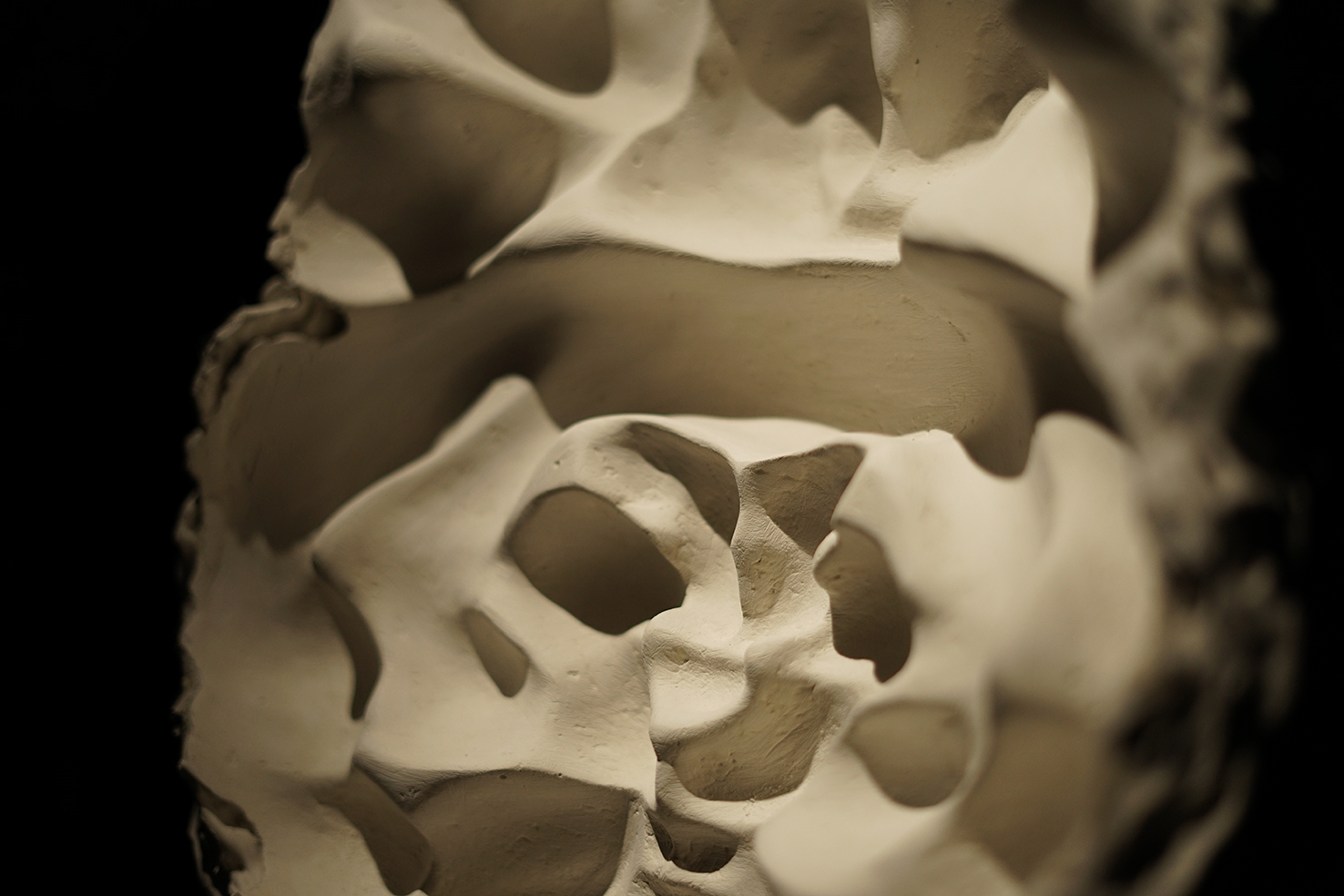

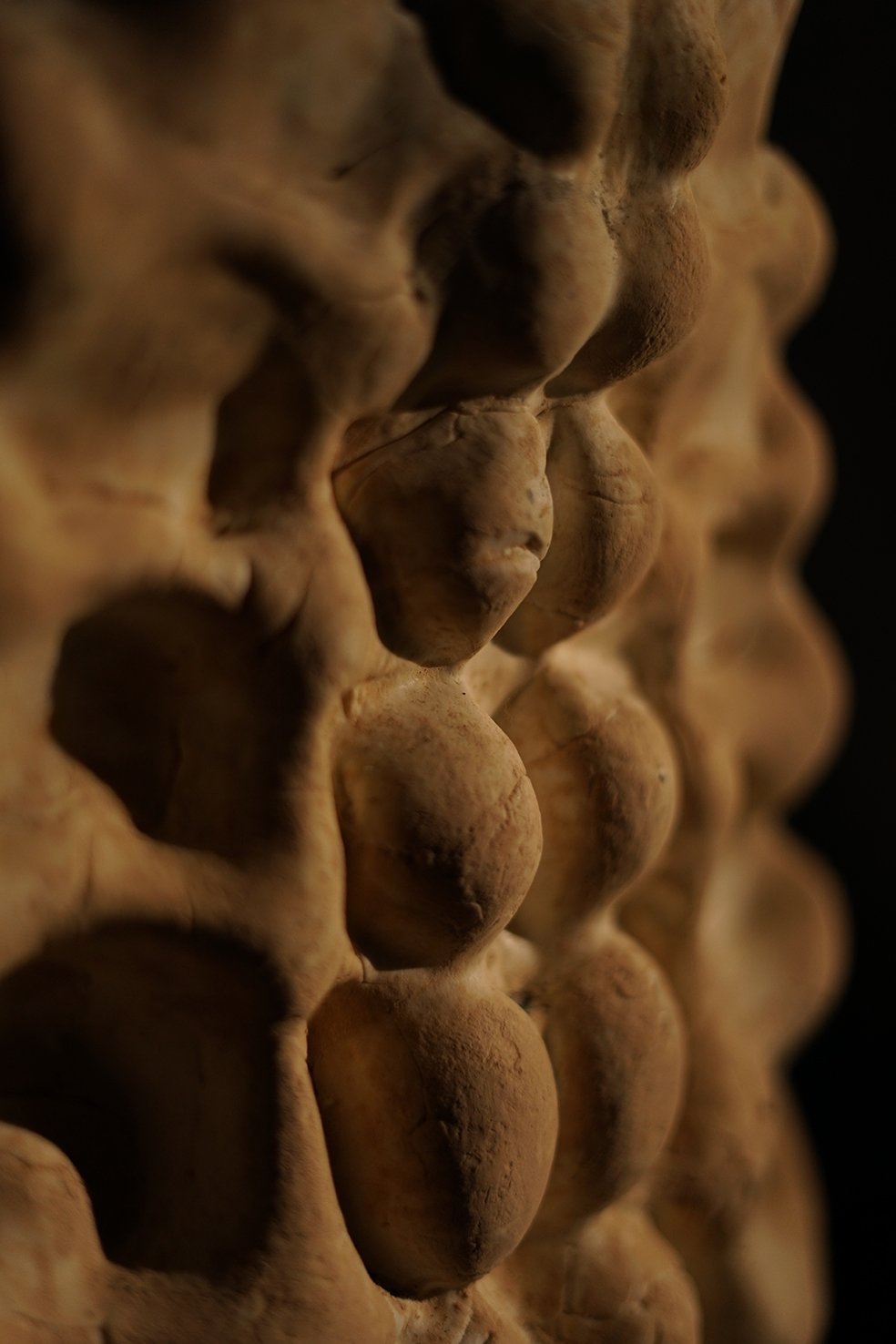


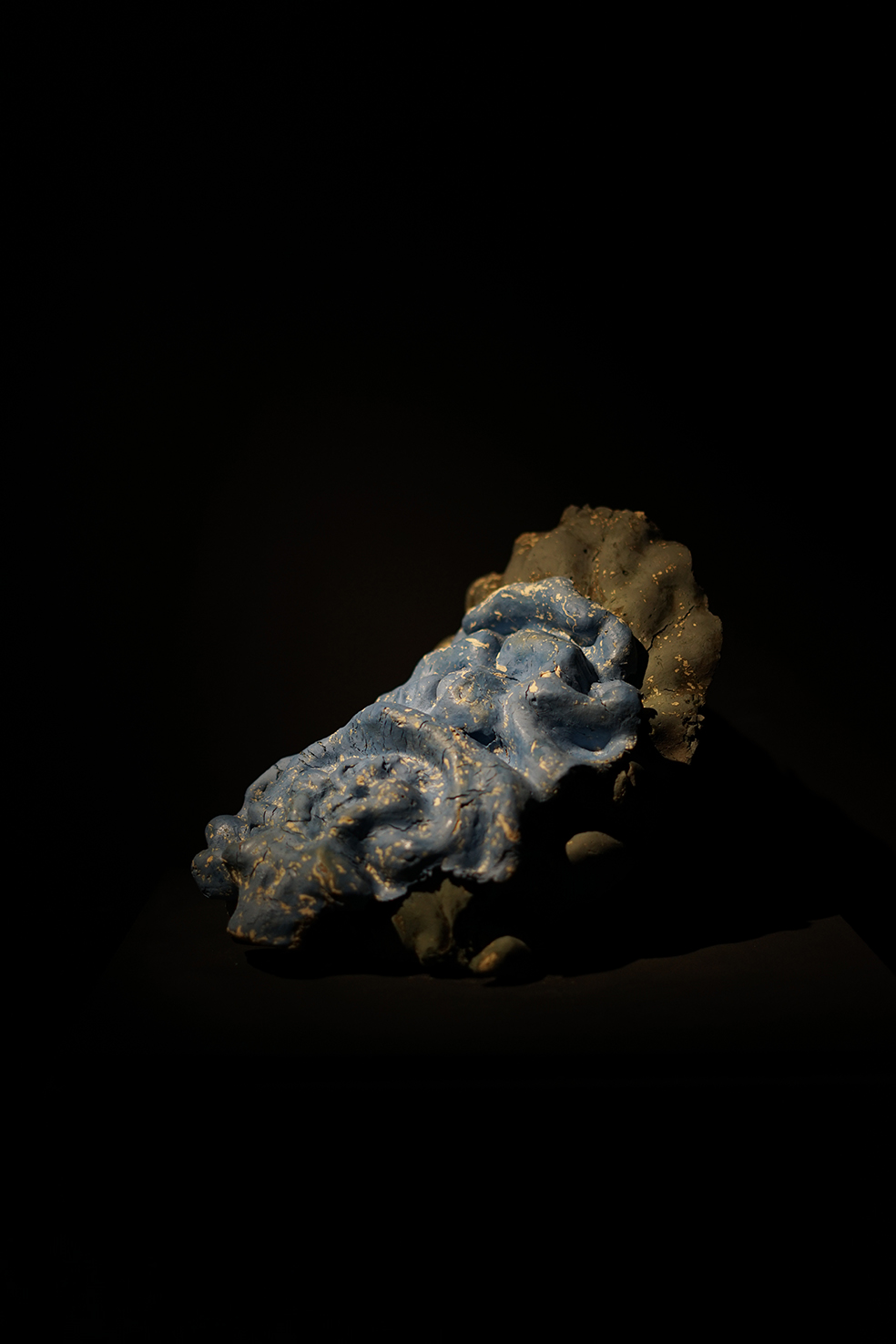

Coco Moya. Cantus Discantus. Exhibition view. 2023. The sculptures are singing and talking, creating an expansive posthuman choir. The exhibition shows the yeast molds and the porcelain results, as other parts of the process.


Coco Moya. Cantus Discantus. Sketches made with AI and 3D Modeeling for CNC. 2023. This forms are imagined together with an AI and build in the fablab using CNC and 3d modelling.
An immersive sound installation of sculptures created with AI
Cantus/Discantus is a research process that has developed in part during Coco Moya's residency in Etopia. The research process was divided into three branches. First, making the sketches with various image generation artificial intelligences. On the other hand, experimenting with materials, mixing porcelain with yeast. And, finally, the Pyrenean polyphonic song as a structure of relationship with the environment. The work focuses on the idea of polyphony beyond human. A choir of earthly voices where each sculptural piece is a mouth that sings. The Cantus / Discantus process is based on a dialogue between the will of the artist and artificial intelligence, clay and yeast, thus delegating authorship in a format coral that exceeds the human. This idea of a head that sings, of a person (being that sounds), of a character or mask, is the symbol of that need to find points of contact, binding surfaces between the internal and external, which swell and deflate. Stomach-heads that process, return, incorporate and regroup the materials. If all art is made for a people that does not yet exist, say Deleuze and Guattari, this is a song that sings to a place that does not yet exist. A radical de-territorialization, in permanent openness, birth and therefore also death - a song of lullaby and requiem -, a place where everything begins and everything ends, in that porous, concave, convex, cave skin.
This interdisciplinary methodology hybridizes the artisan and digital manufacturing, the sound with the haptic, which it is not known if it travels to prehistory or to posthistory. A collective imagination is thus intertwined, which brings together voices of many others, to return to us like an oracle a speculative vision of the world “that could be.” The reflection of a polymorphic, mutant, strange collective subconscious... Repellent and attractive at the same time. An uncomfortable soft power, psychedelic but sensitive, where every ambiguous lump, every gap, every concave and convex surface excites our aesthetic-mystical imagination.
More info: Etopia Art Centre
Triptych Tropes
Coco Moya (2023)Performed and exhibited at UCM Fine Arts School (2023)


![]()
![]()
![]()
Coco Moya. Triptych Tropes. Performative conference. Video Capture. 2023.
Coco Moya. Triptych Tropes.
Performative conference. 2023.
︎ ENGLISH SUBTITLES AVAILABLE ︎
Download PDF ︎︎︎
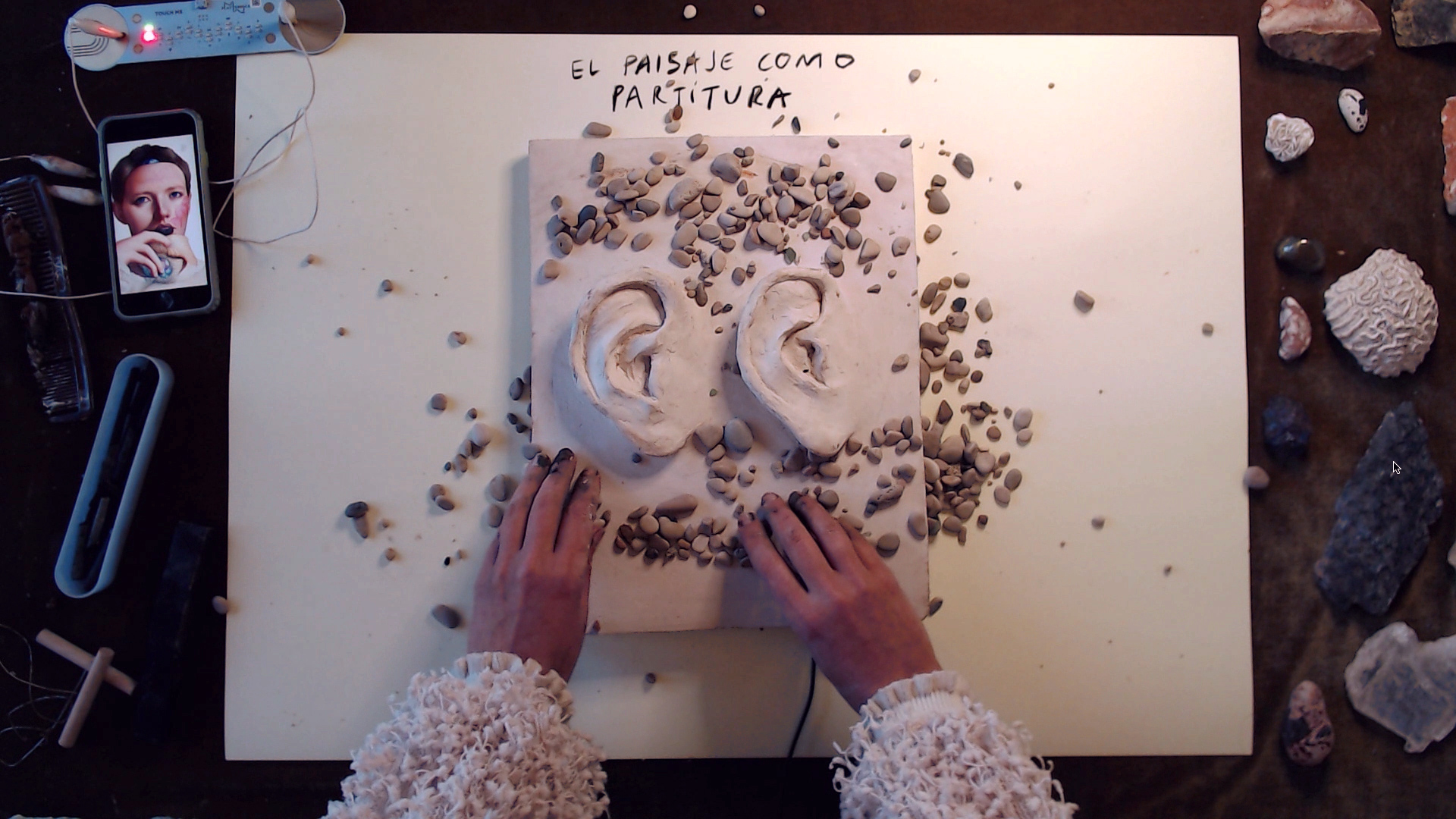
Sound Geomancy, Landscape as score

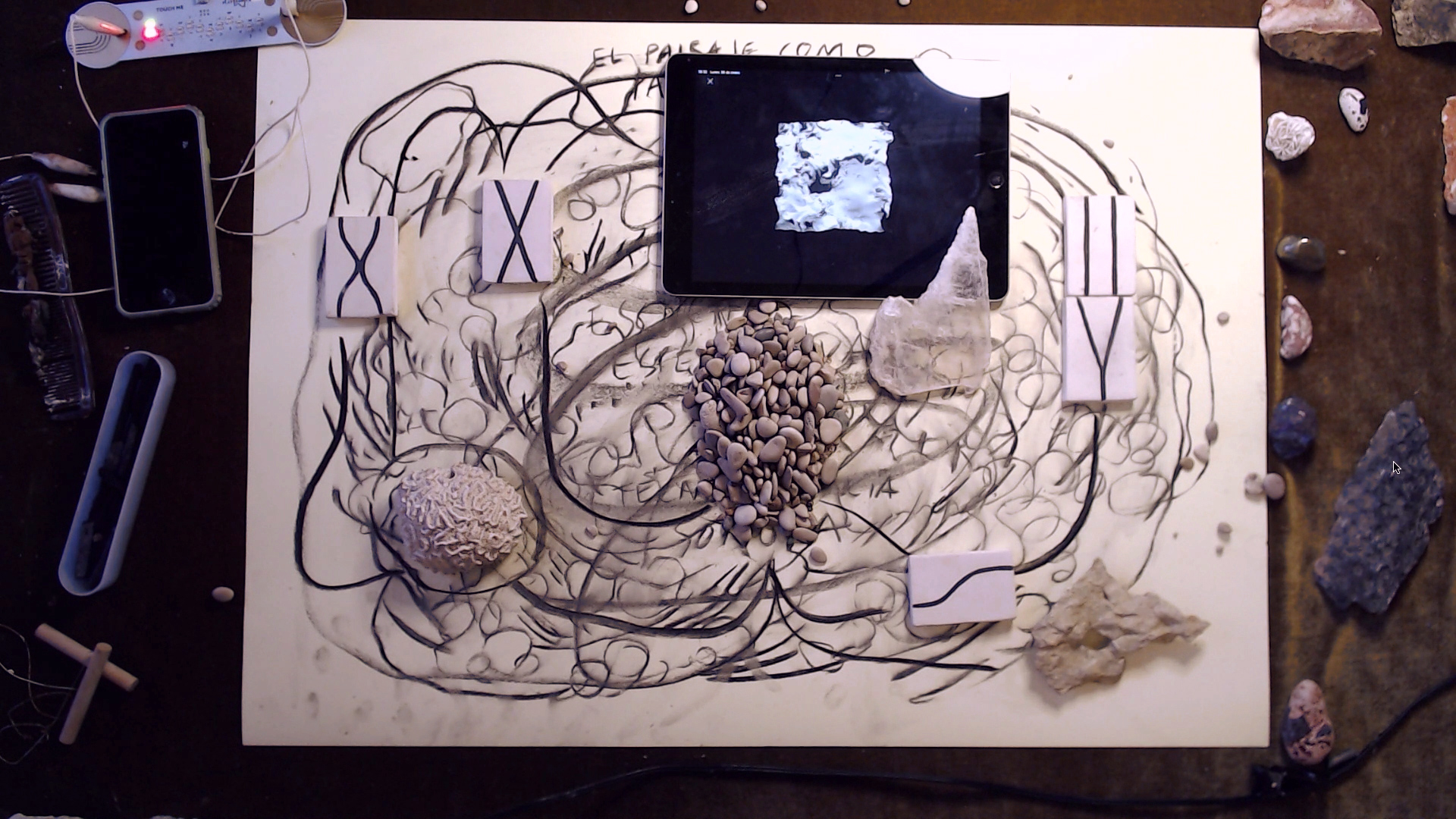
Abstract
This research, entitled «Sound geomancy. The landscape as a score», deals with how aural thinking is essential to establish a dialogue with our environment and with our inner selves. It wonders how technology, music and nature are assembled in the landscape through the metaphors of sound. Introducing references from the art practice, the musical ethnology, the field of archaeoacoustics and the media archeology, a geo-sonological story is is presented, beginning in prehistory and continuing in Post-history.
When it comes to give meaning, create knowledge, and navigate the world, we can find echoes between indigenous cosmologies, -intended as popular, pagan, and ancestral practices of relationship with matter/spirit-, and the technological culture. Post-internet network culture relies again on magical thinking, according to which all beings -living, non-living, almost living, human, non-human and more than human- are intertwined in resonant kinships. Sonic imagination becomes a geological imagination that crosses the strata of history through musical metaphors and metonymies. In contemporary art practices that use technology to create intelligent objects and places, giving them a voice, listening to their inaudible lives, there is the same ancestral need as human beings to integrate into the world. The place, overcrowded with materials that are media, objects that are alive, voices and memories, is the starting point for works and compositions that are trying to read the landscape.
The territory is crossed by telluric energies and inhabited by cyborg amalgams, shaping a polyphonic writing. One can take it as a score that can be interpreted using rhythms and melismas playing with all this elements and putting them in contact. This is what we call speculative listening of a place, which can intuit with the sound the forces that inhabit it. Under these premises, sound geomancy is formulated as an open tool. A methodology for the interpretation of a place through a more relational than representational kind of music. Transcendental in its wildest materiality. Sound geomancy, in short, proposes a sort of interaction with a complex and interdependent environment, which includes the immense human capacity to imagine, inhabit, and create the world through hearing.
Keywords: sound art, site-specific, geomancy, speculative listening, antropocene, interactive media, sound studies, media archaeology, archaeoacoustics, ethnomusicology, contemporary art.
*********
PhD Presented at Complutense University of Madrid, 16th January 2023, classified as «Excellent» with a distinction «cum laude» given unanimously for her doctoral thesis.
Thesis Committee: Bárbara Fluxá, Concha García, Paz Tornero, Mikel Arce y Miguel Molina Alarcón.
Magic by contagion
Coco MoyaPerformed and exhibited at
Cruce Gallery, Madrid (2021)
La Panera Art Center, Lleida (2022)


 Lithophones, Stones, Speakers, Sound, Coco Moya (2021)

 Tenebrescencies, Drawings A4, Graphite and invisible ink, Coco Moya (2021)


 Not everything is connected to everything, but everything something is connected to something. Copper wire, ceramic, tin, arduino, speakers, sound. Coco Moya. (2021-22)


 Soroll. Drawing on wall, ceramics, speakers, audio. Coco Moya, (2021)
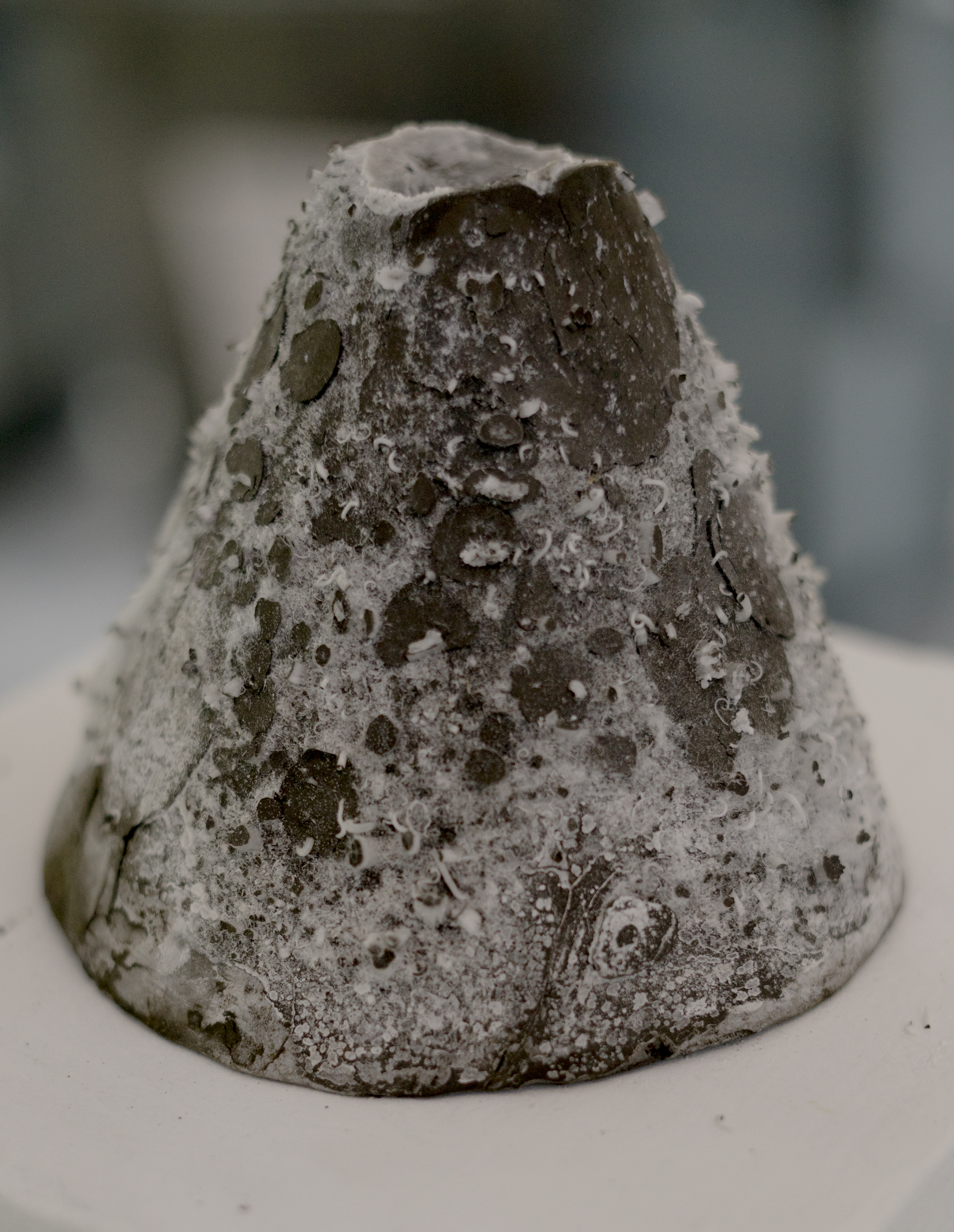 The water meditation. (For Menhir) Ceramic and salt. 20x20cm, Coco Moya, 2019-2020

Salt clock. Installation. Salt and stethoscope, Coco moya (2021)


Geomantic pendulum. Installation, Ceramic, glass, meteorite, magnet, resine, quartz, aluminium. 40x40x50cm. Coco Moya (2020-21)


Self ASMR. Set space for a self-ASMR (using a piece from a previous project “We do not even know if we exist”, made with Rafa SMP) Ceramic, Microphones, headphones, stones. Variable sizes. Coco Moya and Rafa SMP. (2020-21)
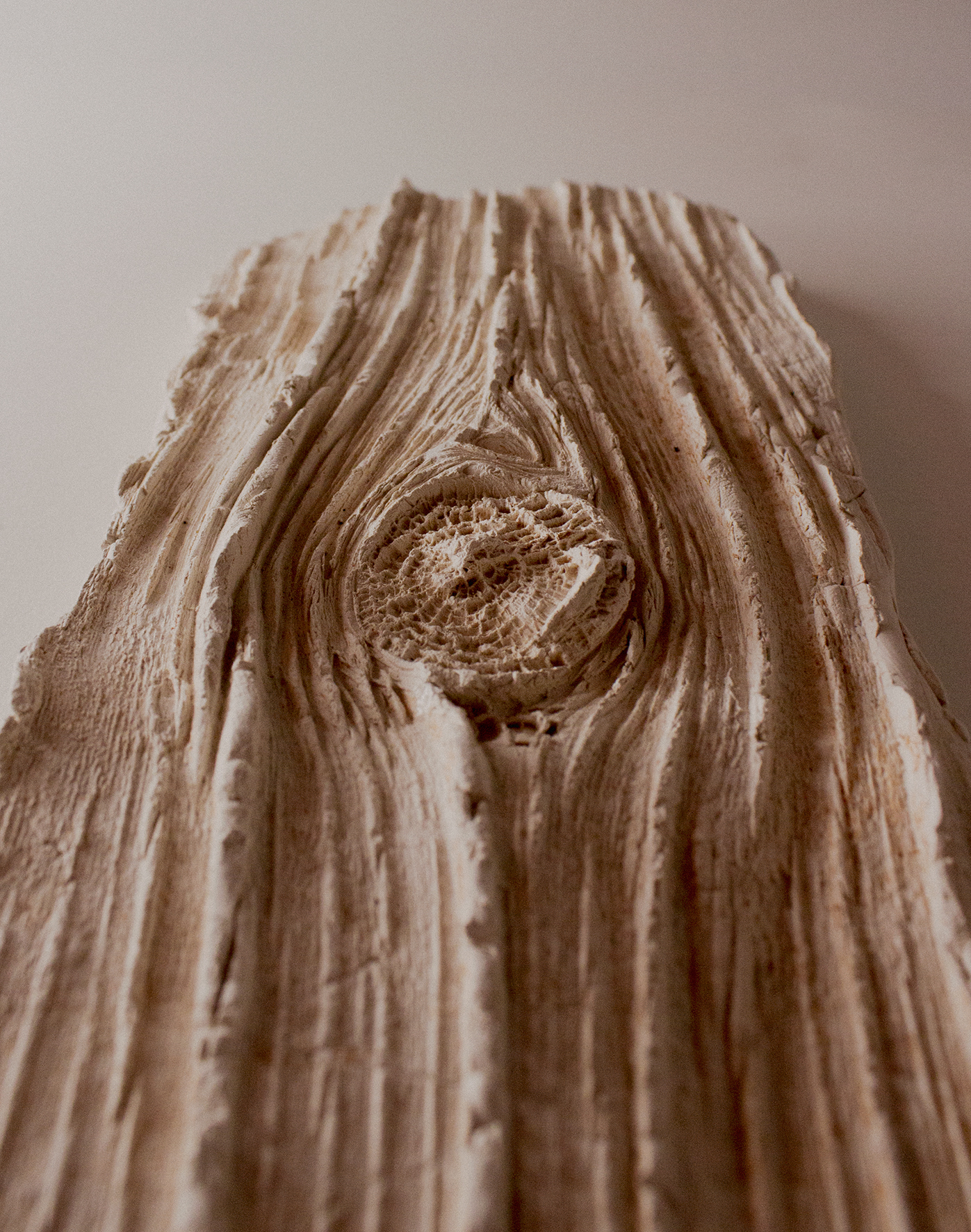
 Ceramic. Various Sizes. Coco Moya (2021)
 Video of the exhibition
Magic by Contagion -speculative listening and geological imagination-, is an exhibition about the resonances between indigenous thought, -popular, pagan, and ancestral practices of relationship with matter/spirit- and technological culture, when it comes to making sense, forming knowledge, and navigating the world.
Is about how sound and musical strategies are put into play again and again, before and now, when it comes to establishing a dialogue and a relationship with our environment, and with our intern. How technology, culture, nature and the material are related within the landscape from the metaphor of sound and tactile?
The territory, traversed by telluric energies, and inhabited by cyborg amalgams, forms a polyphonic writing that can be interpreted, through rhythms and melismas that touch the places and put them in contact. Post-internet networked culture re-emerges the idea of magical thinking where all beings, living, non-living, near-living, human, non-human, and more than human, are intertwined in "alien kin."
The minerals in my body also live in my phone and in the mines.
Listening and sound imagination become a geological thought and imagination, which navigates and crosses the strata of all these stories in metaphors and musical metonymies, the basis for a sympathetic, empathetic or contagious magic. In this game of reflections and reverberations, the environment is also our interior, in a mirror game with the landscape.
The works shown, almost all with a tactile or interactive component, invite the listener to experience and experiment, and make up an archive of plastic and sound essays that arise, on the one hand, from my doctoral research entitled "De techno- sound geomancy, the landscape as a score”, where I investigate the interpretation of the territory from intuition and what I call speculative listening. On the other hand, these pieces also arise from work in the Menhir collective, together with the musician Iván Cebrián, and in other experiences with Rafa Sánchez Mateos-Paniagua, María Collado, or Vanesa Bejarano. All networks that also make up a creative space permeable to contagion.
In the works, a way of knowing from the body is manifested above all, which must move, act, and investigate things with the palms of its hands and its palpitations, in an aesthetic proprioception. If listening is a form of contact at a distance, as Murray Schafer would say, it would be about making that contact more intimate, perceiving the sound going through the materials to our skin and our bones.
The sound happens, (from ad-proximity and contingere: touch), in that event, we put ourselves in closeness and contact with everything that in turn listens to us. And in that capacity of the metaphorical imagination to transport ourselves, we discover ourselves on a journey towards microcosmic scales, as Caillois would say about his stones.
Topocosmos that enable us to listen speculatively to the landscape, an interpretive reading of the genius loci that opens up new unpredictable sound territories. An attention to materials and to matter as a medium in itself, as a means of transmitting energy and memory. Common stones and ordinary materials, which activate their metallic, ceramic, resinous or saline flows, through sound.
Coco Moya (2020-ongoing)
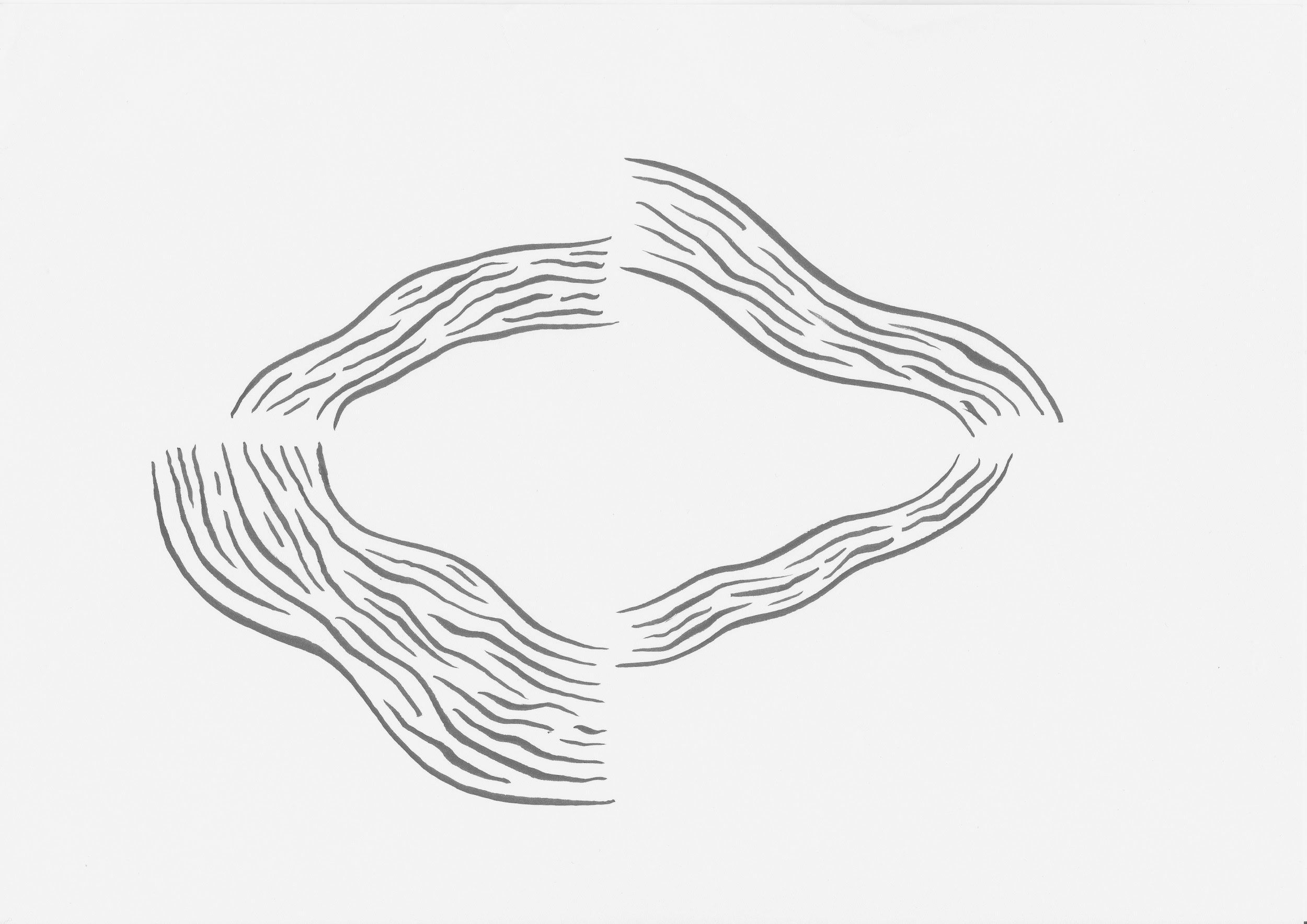
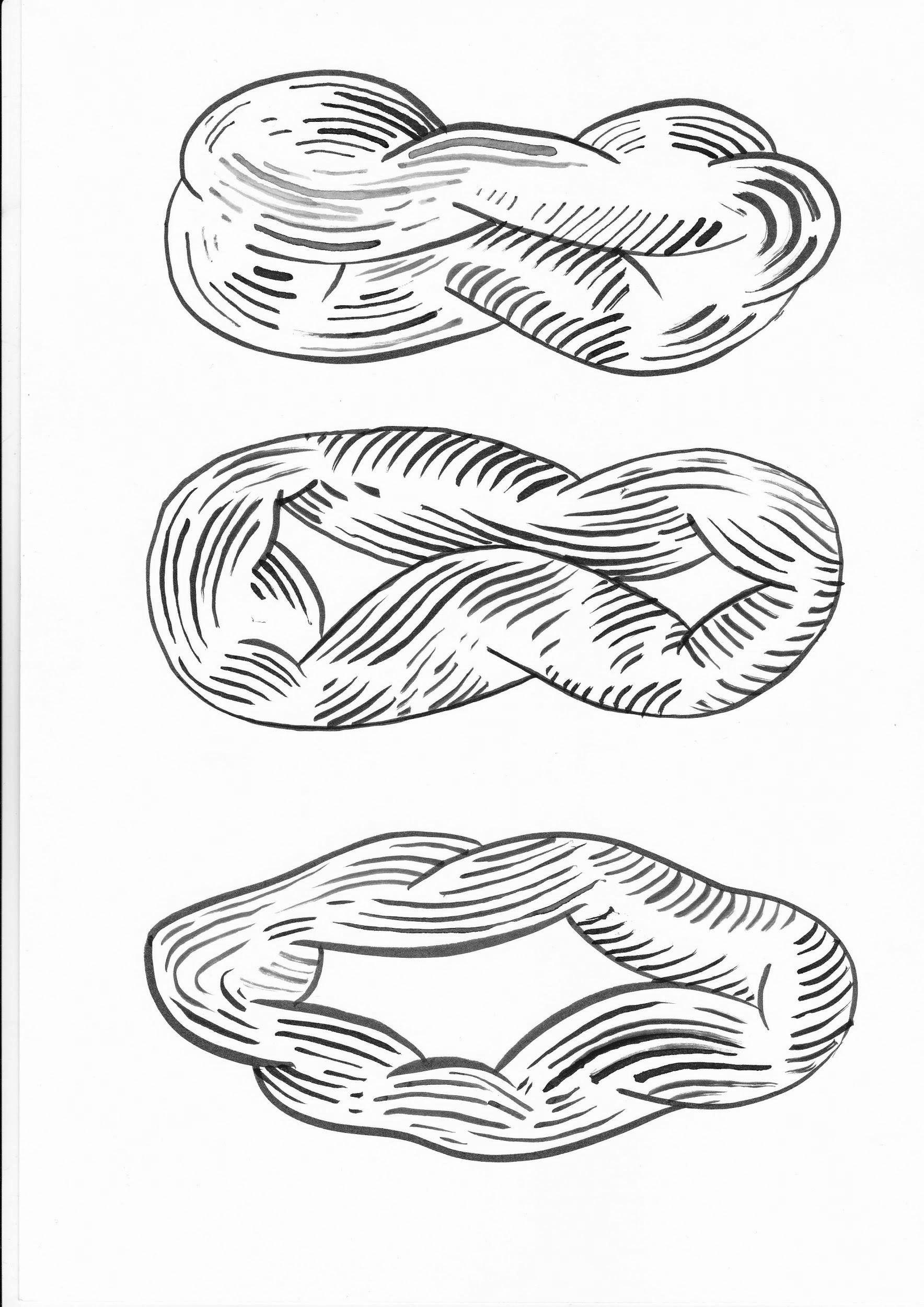
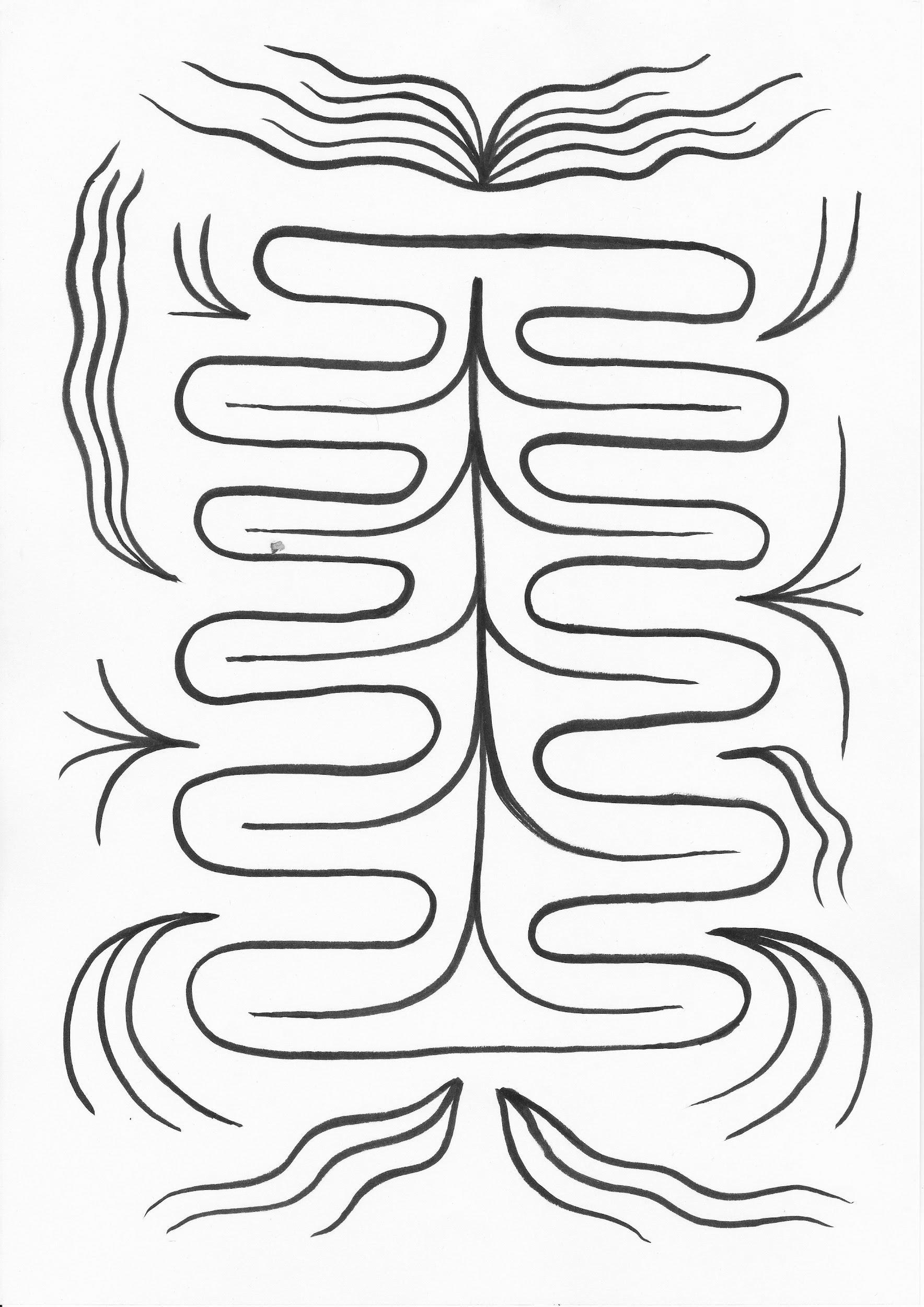
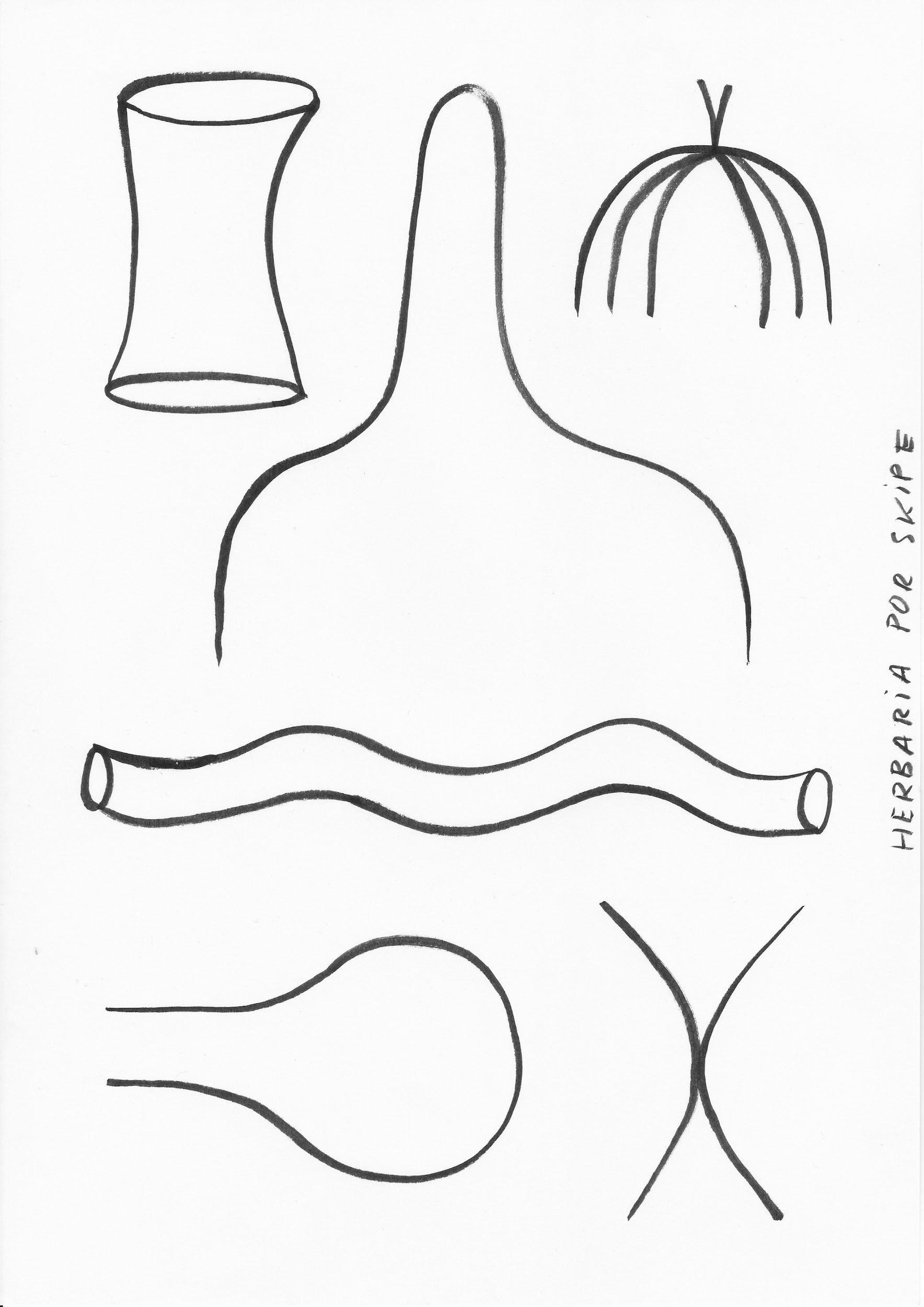
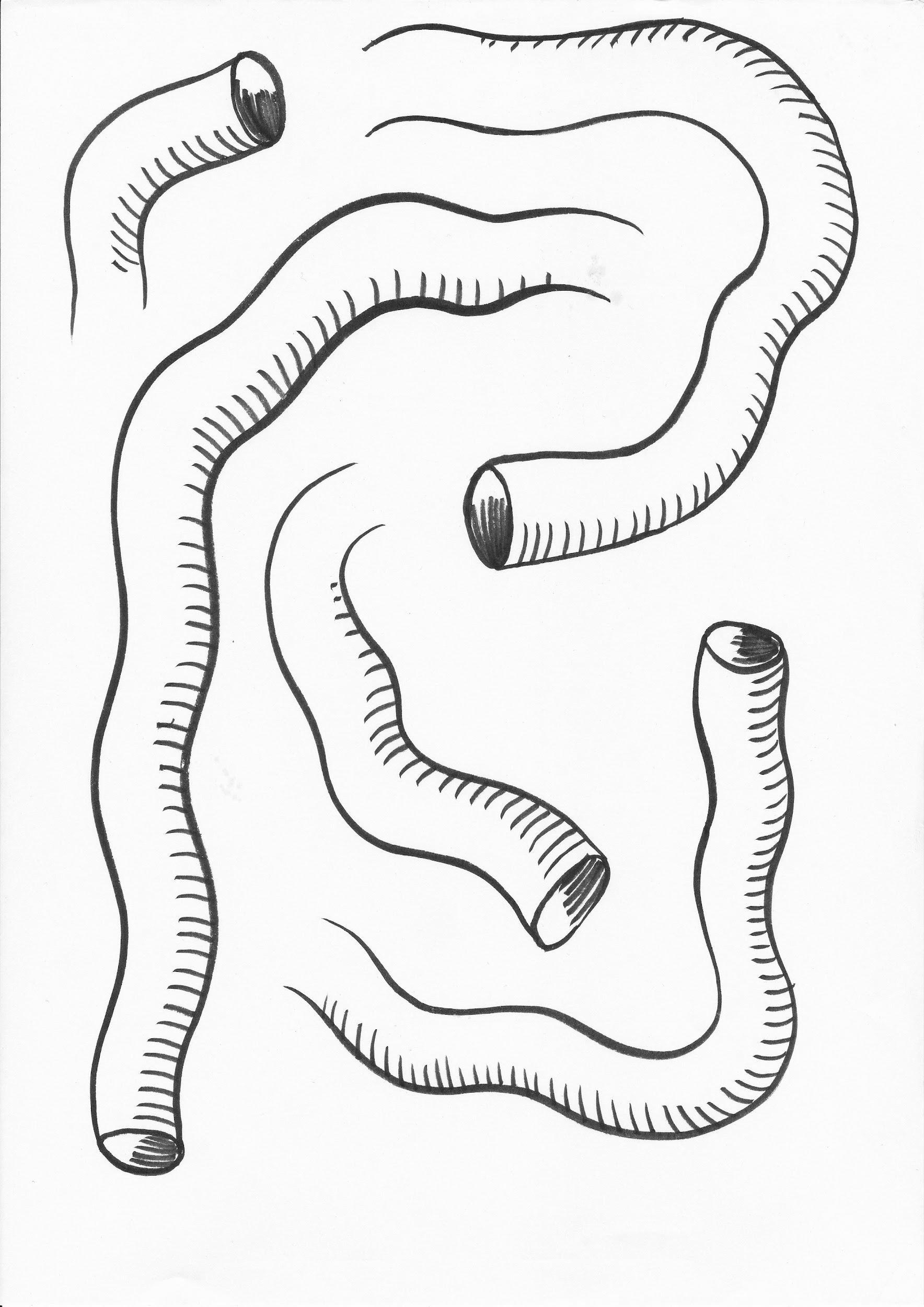
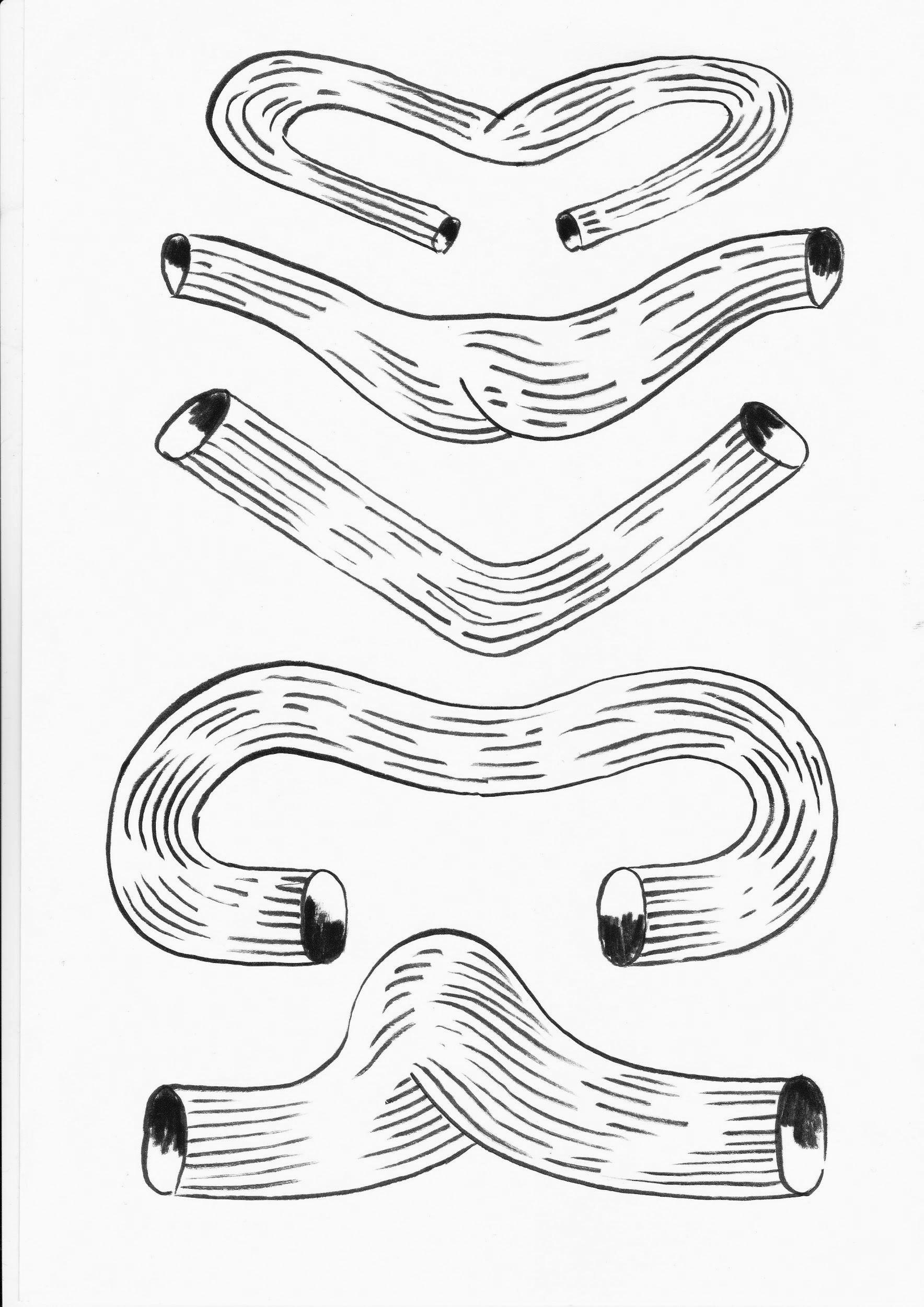
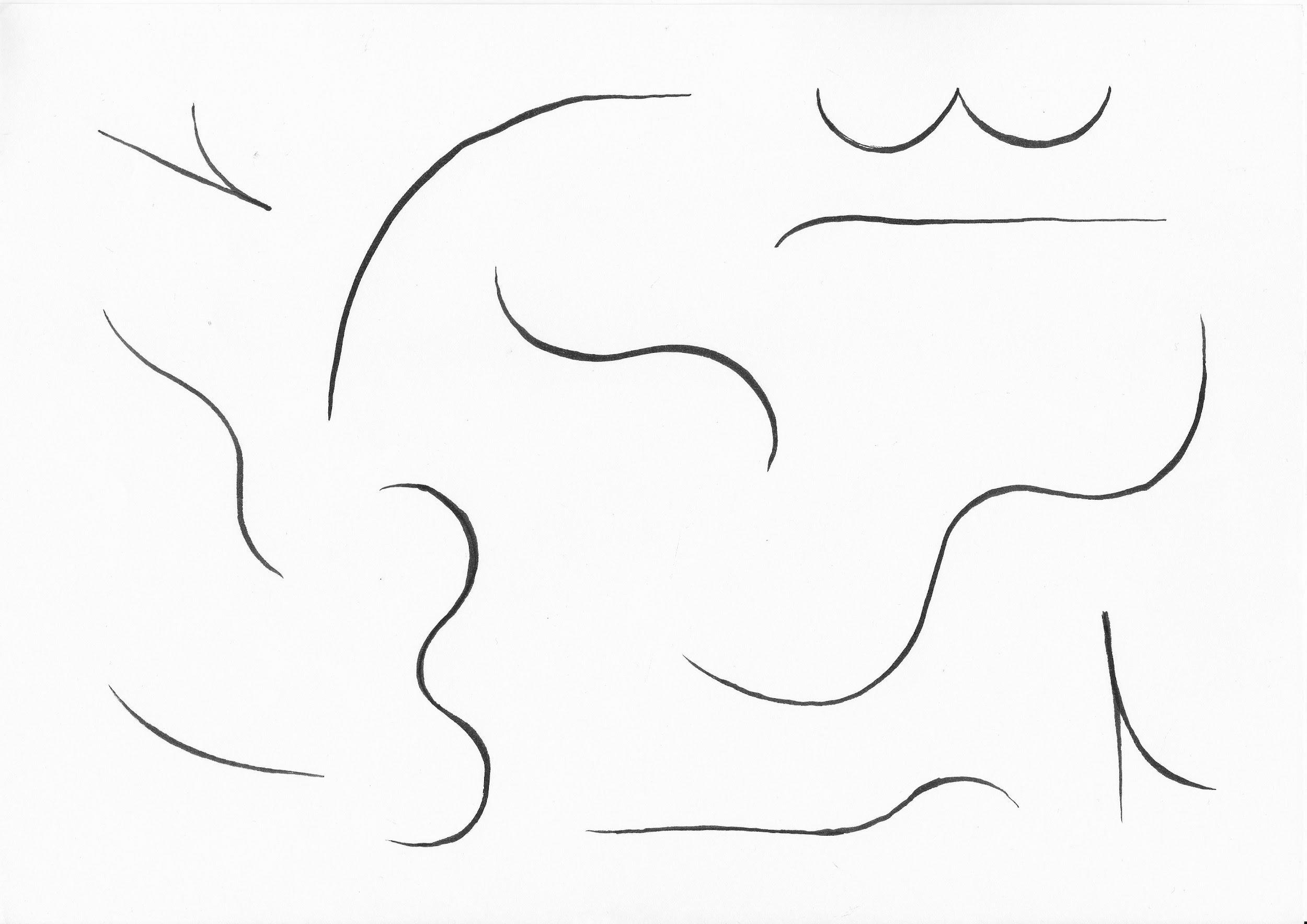
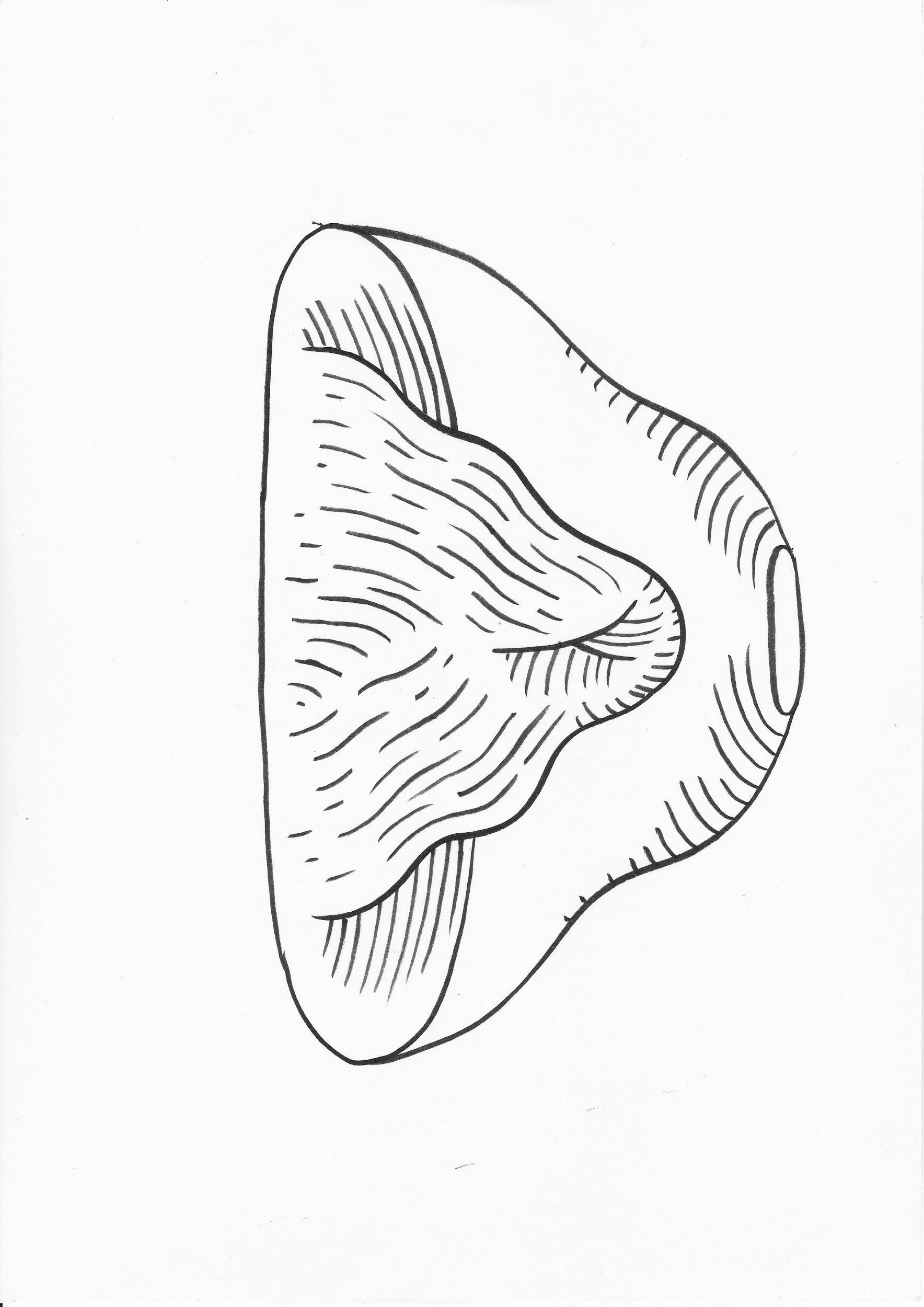
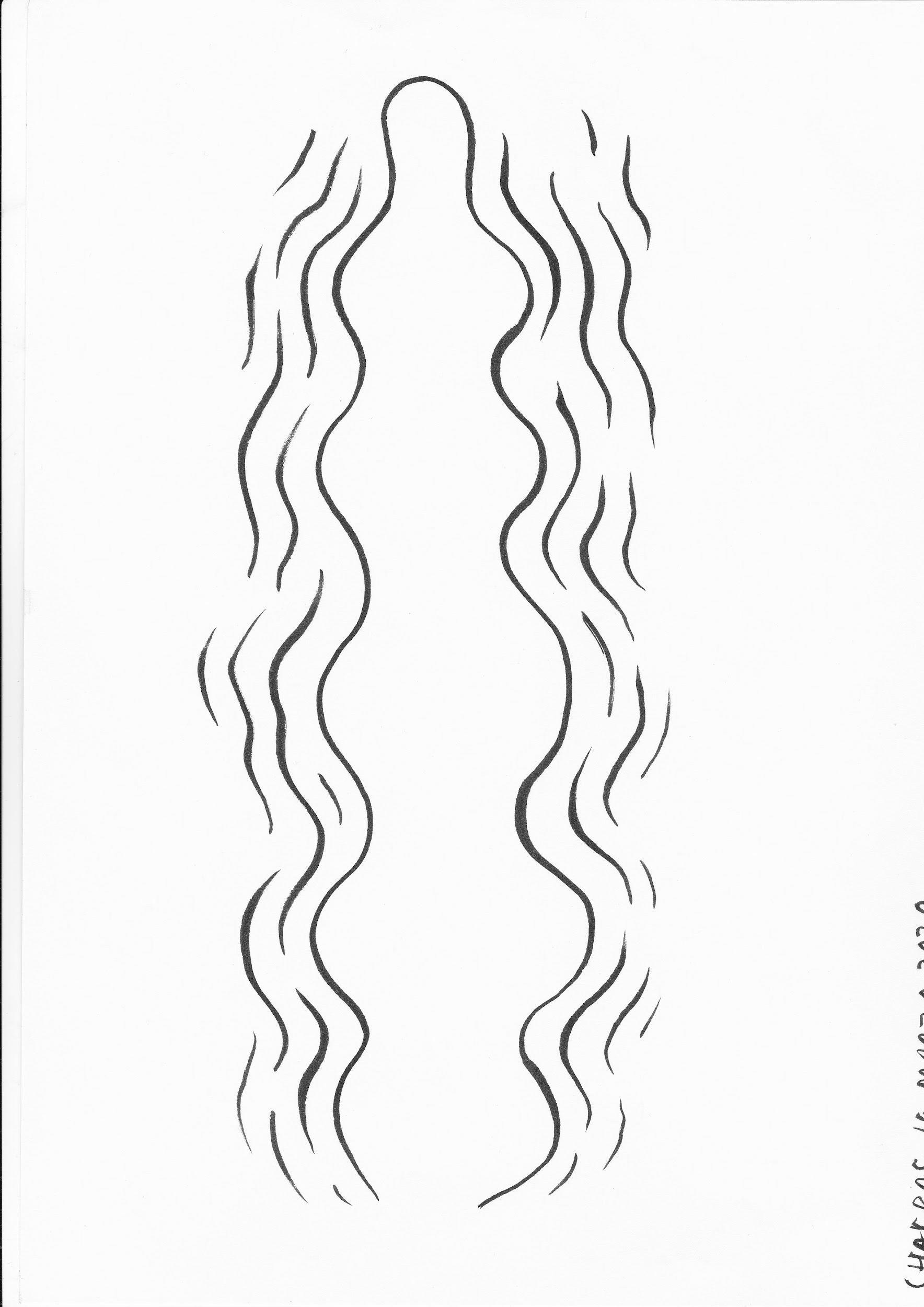
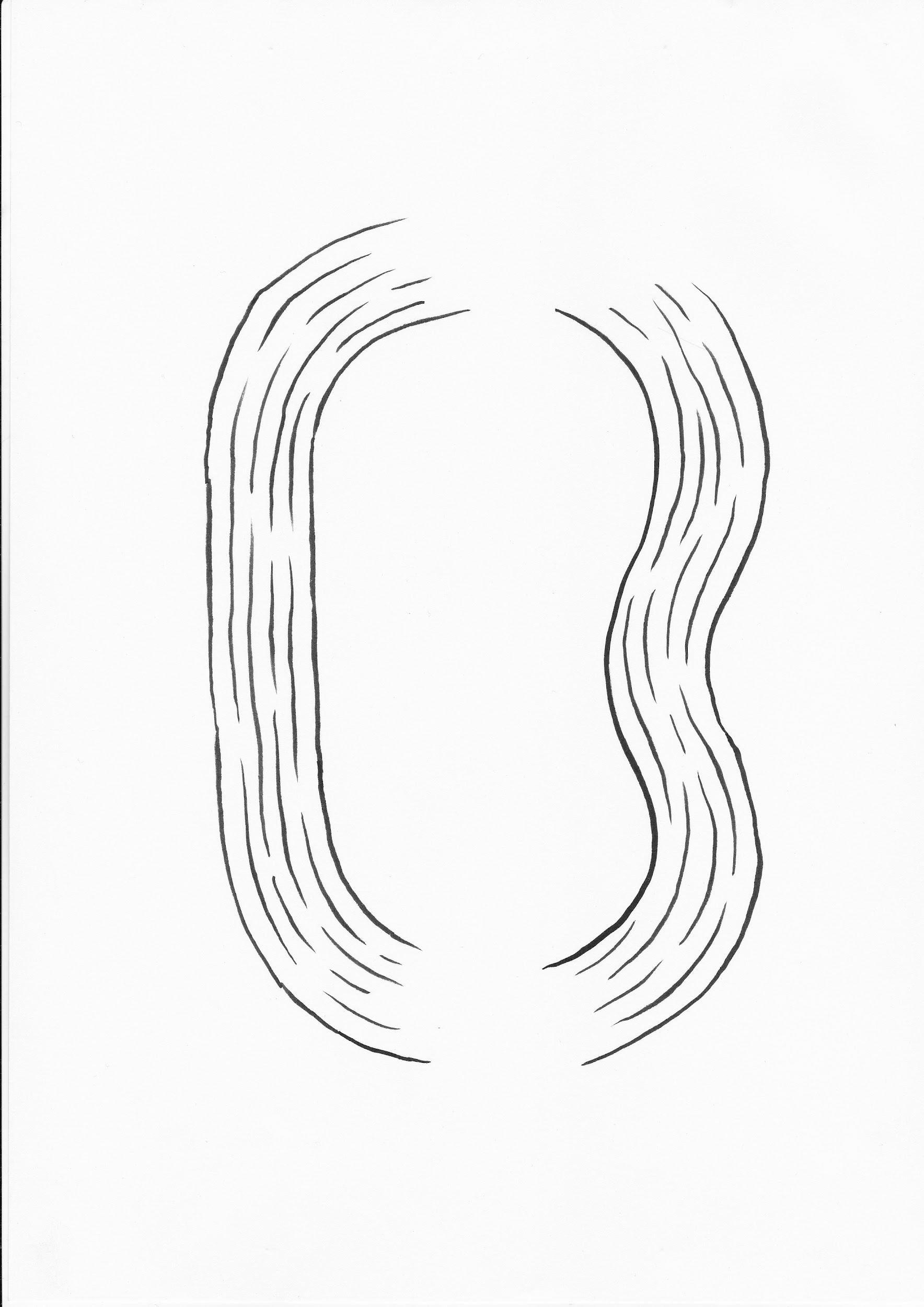
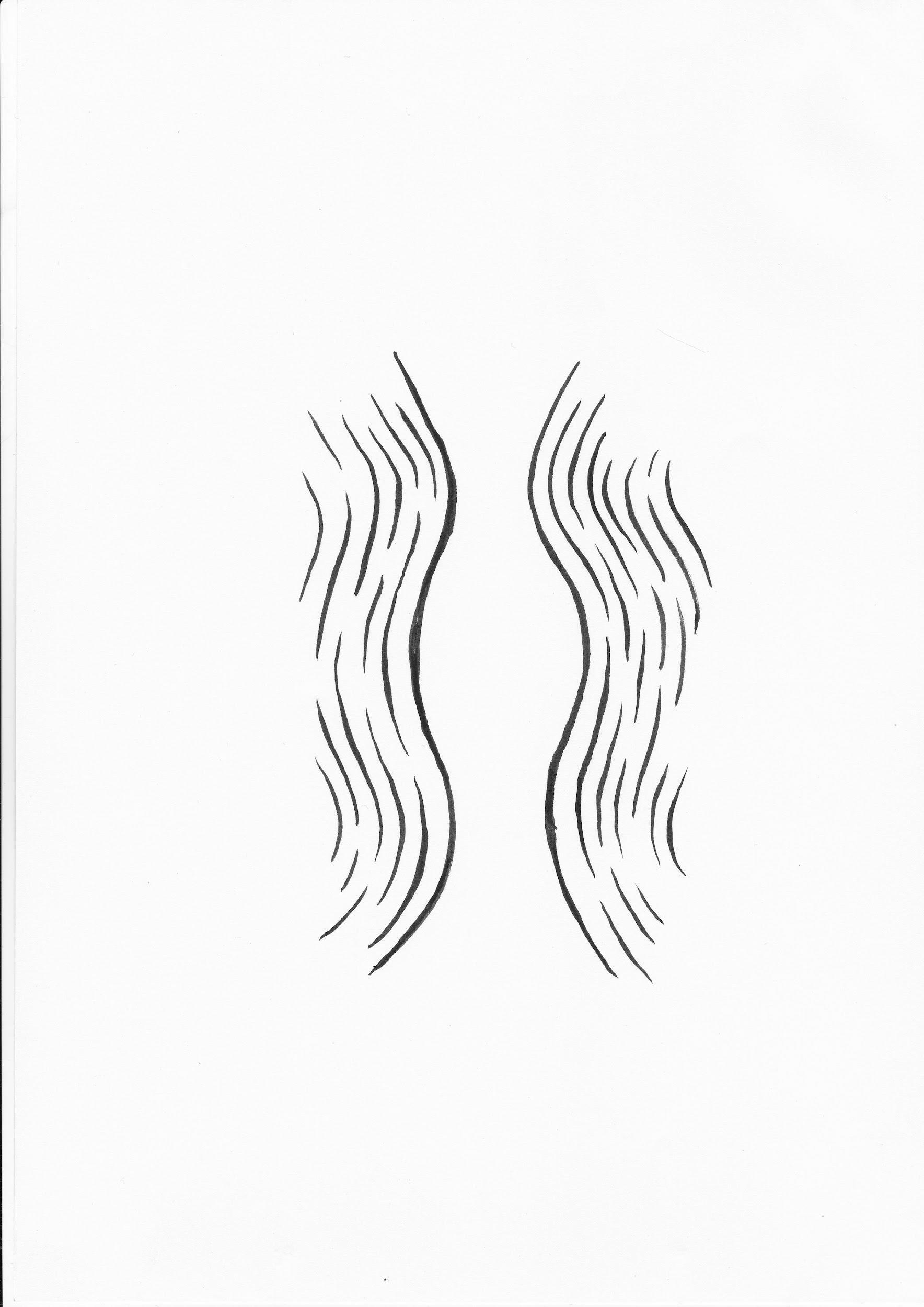
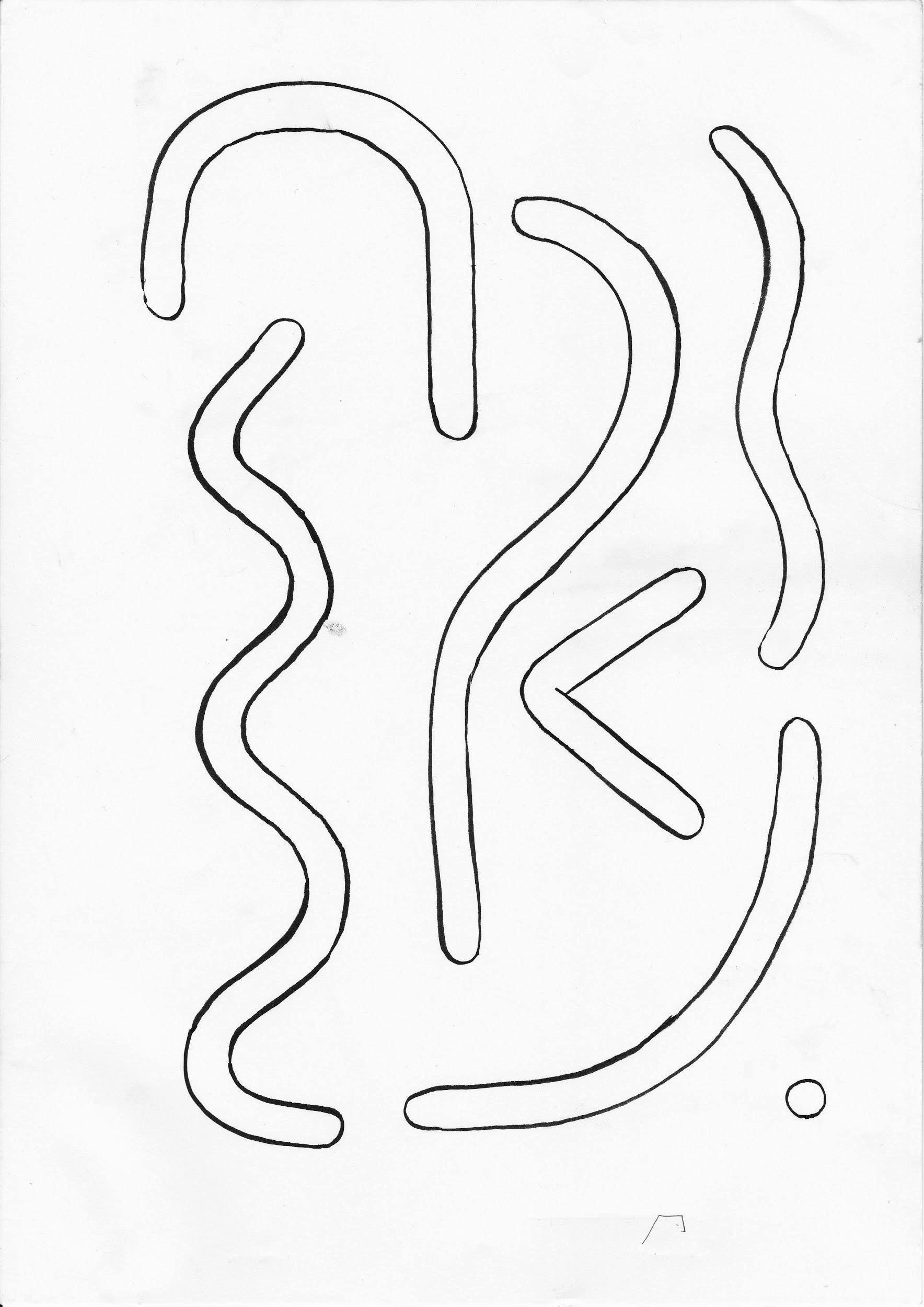
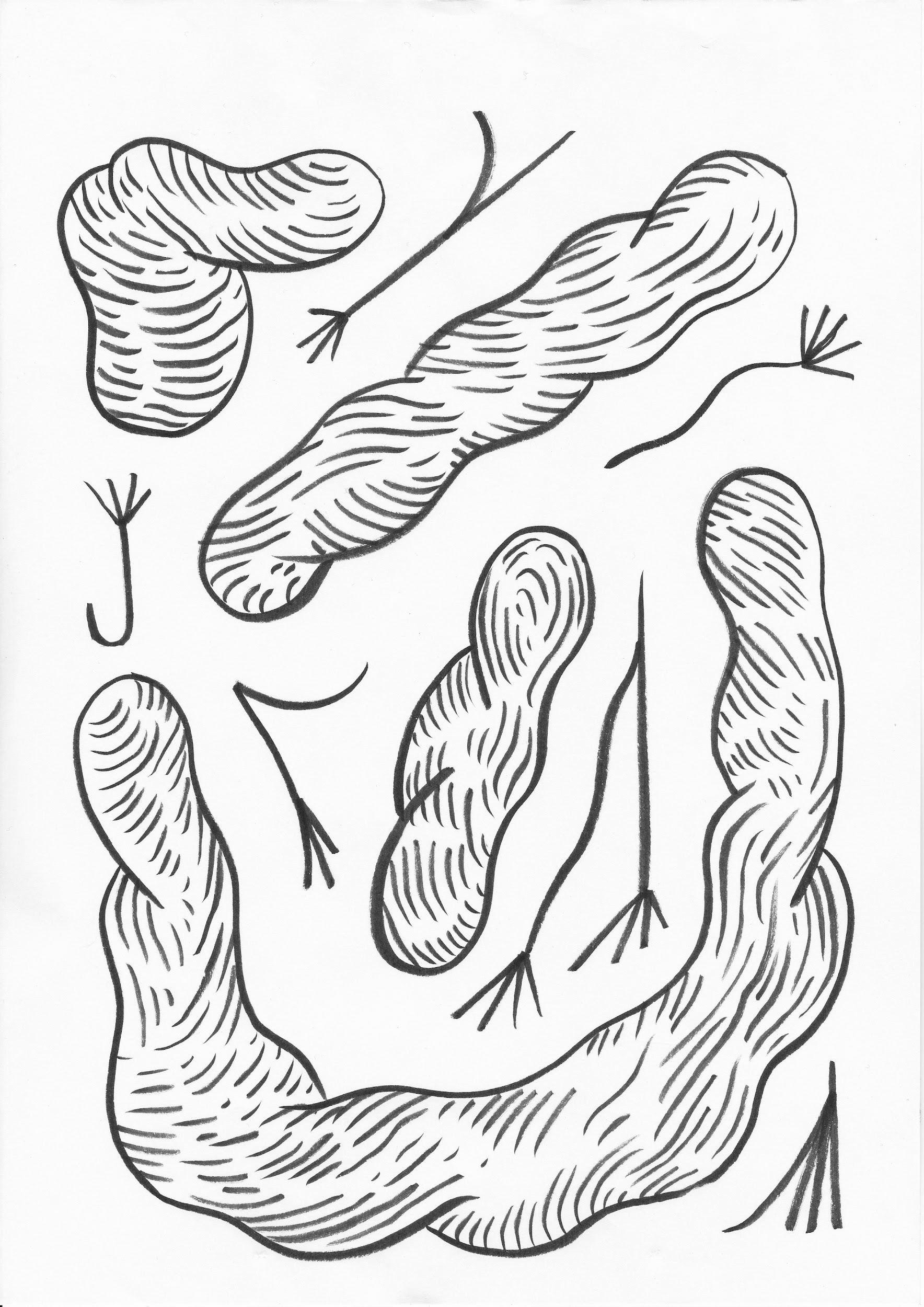
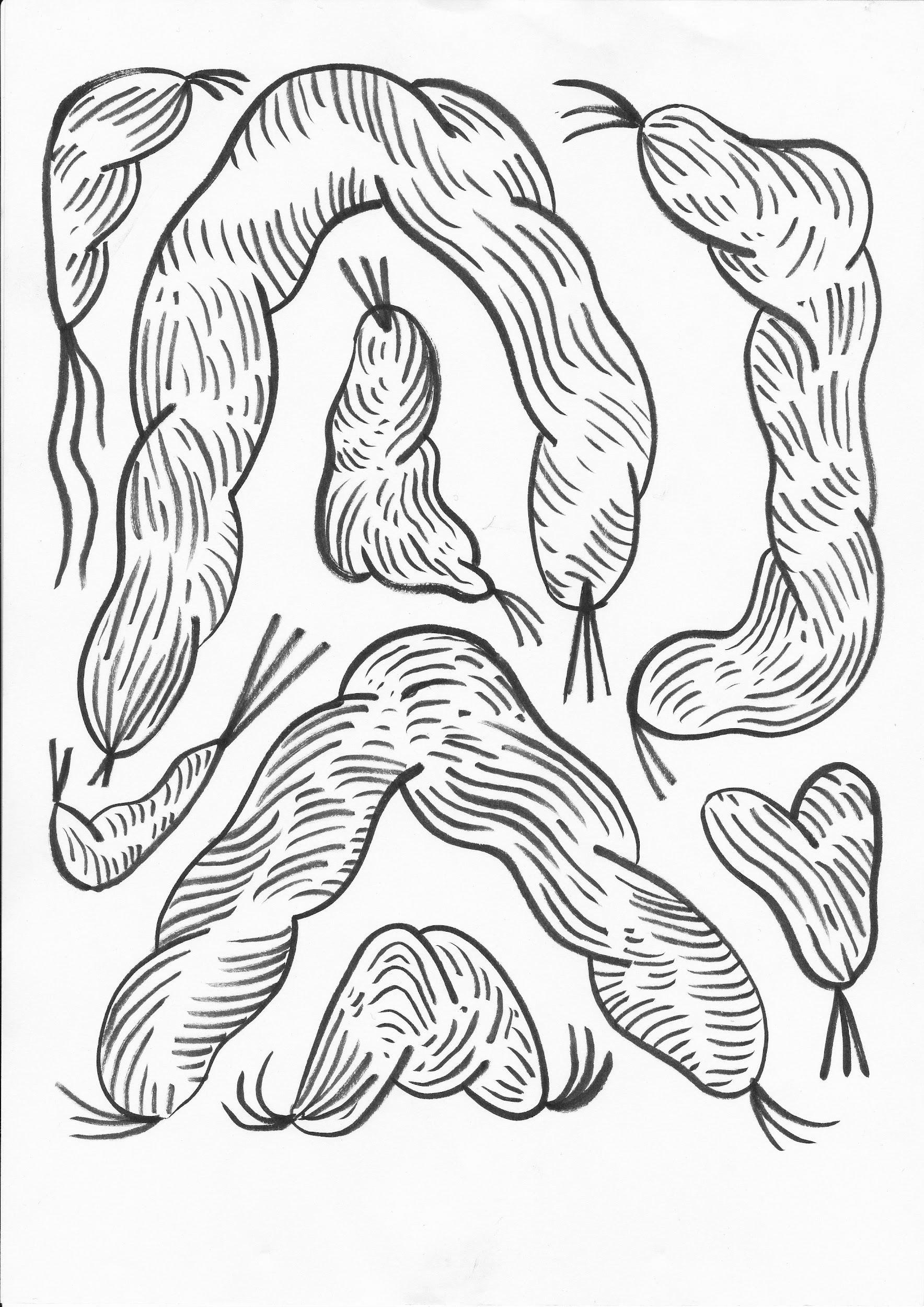
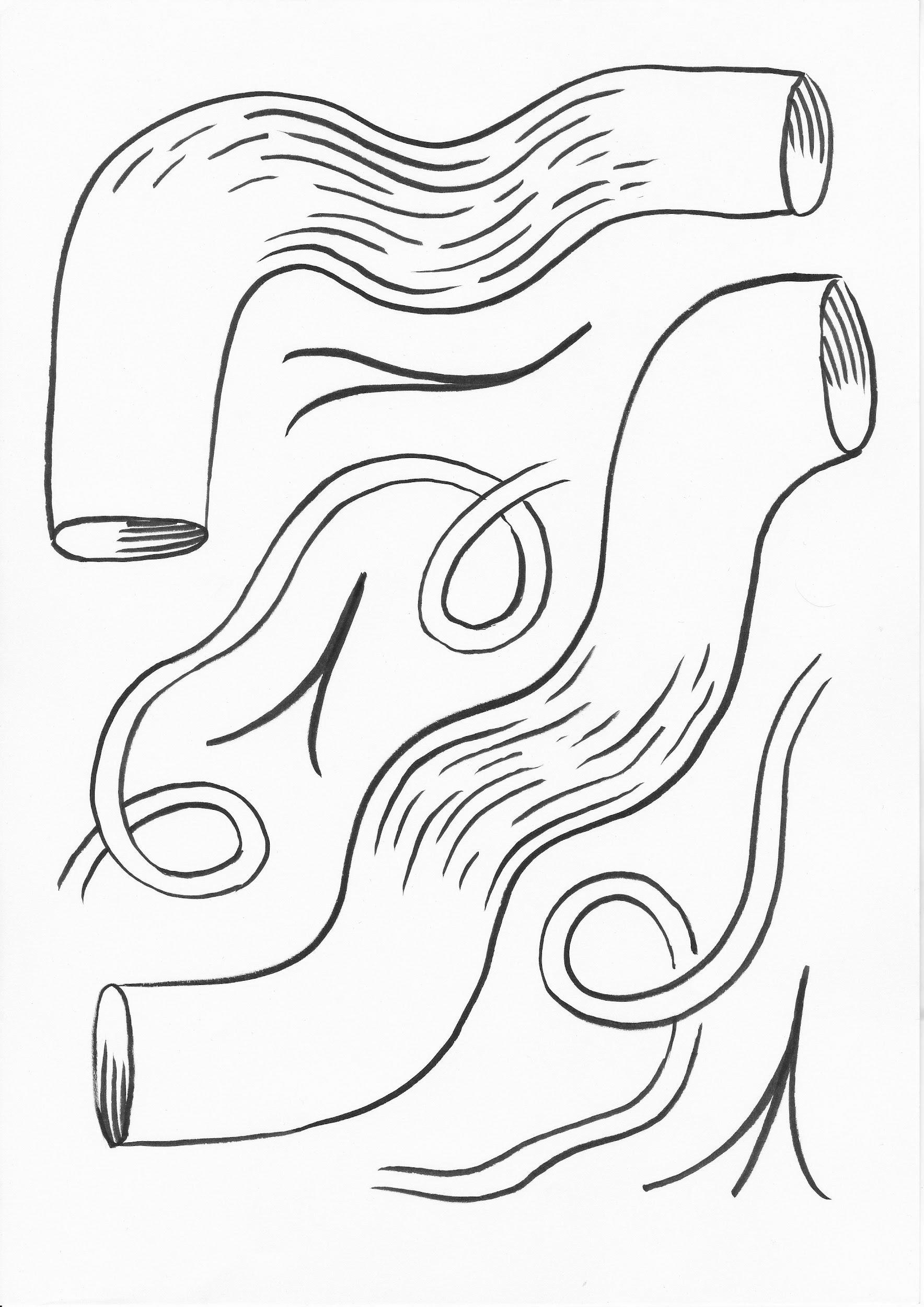
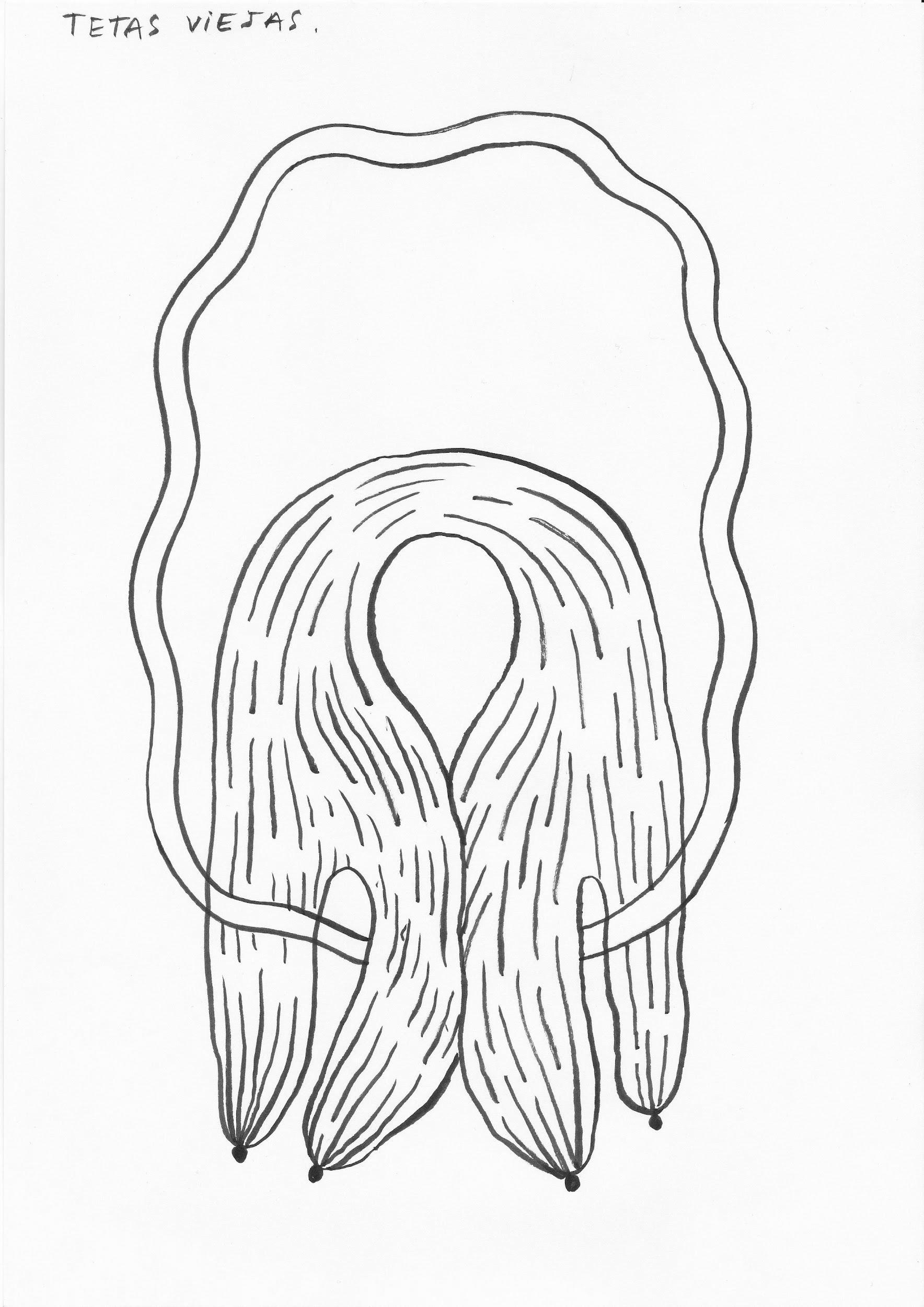
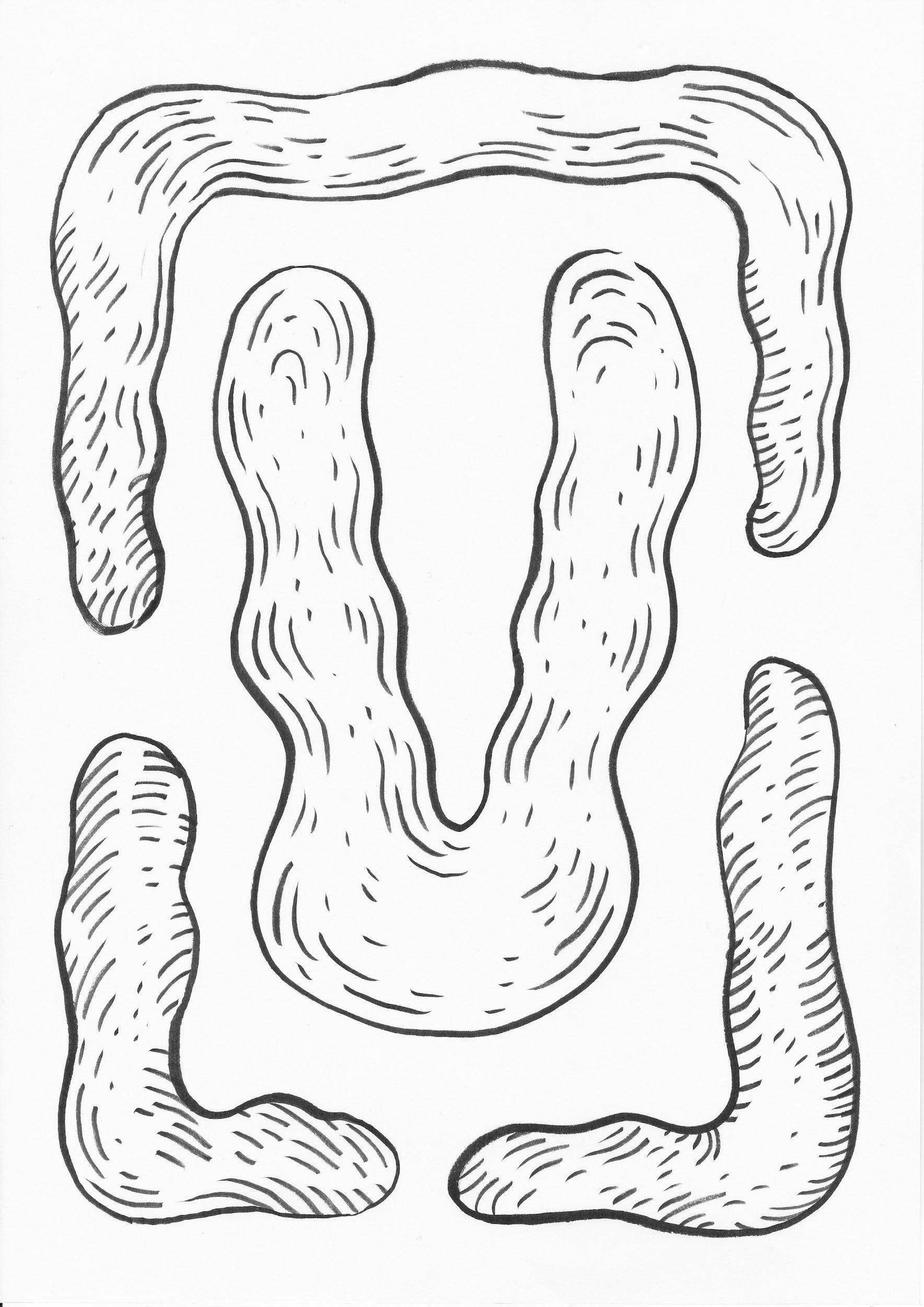
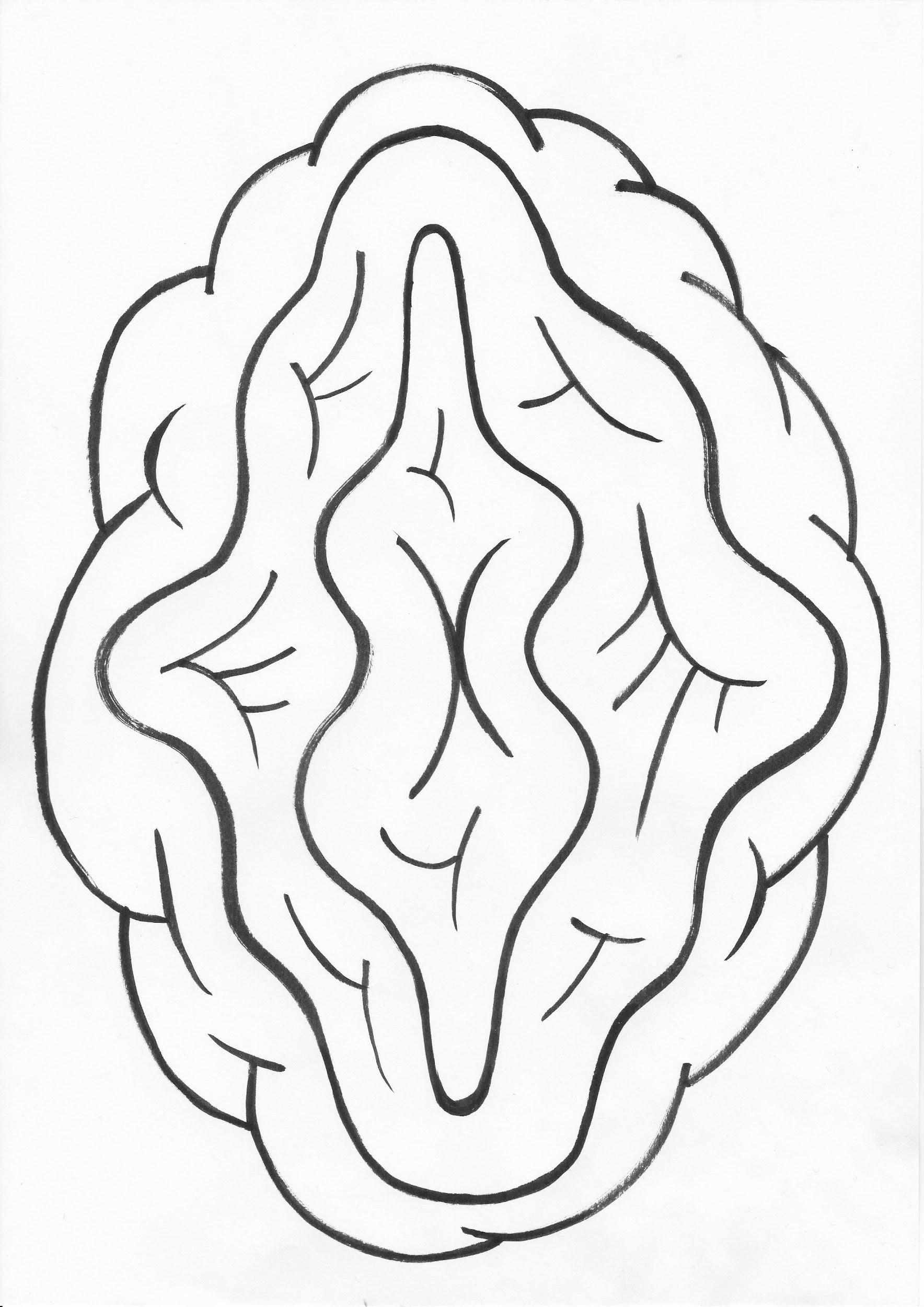
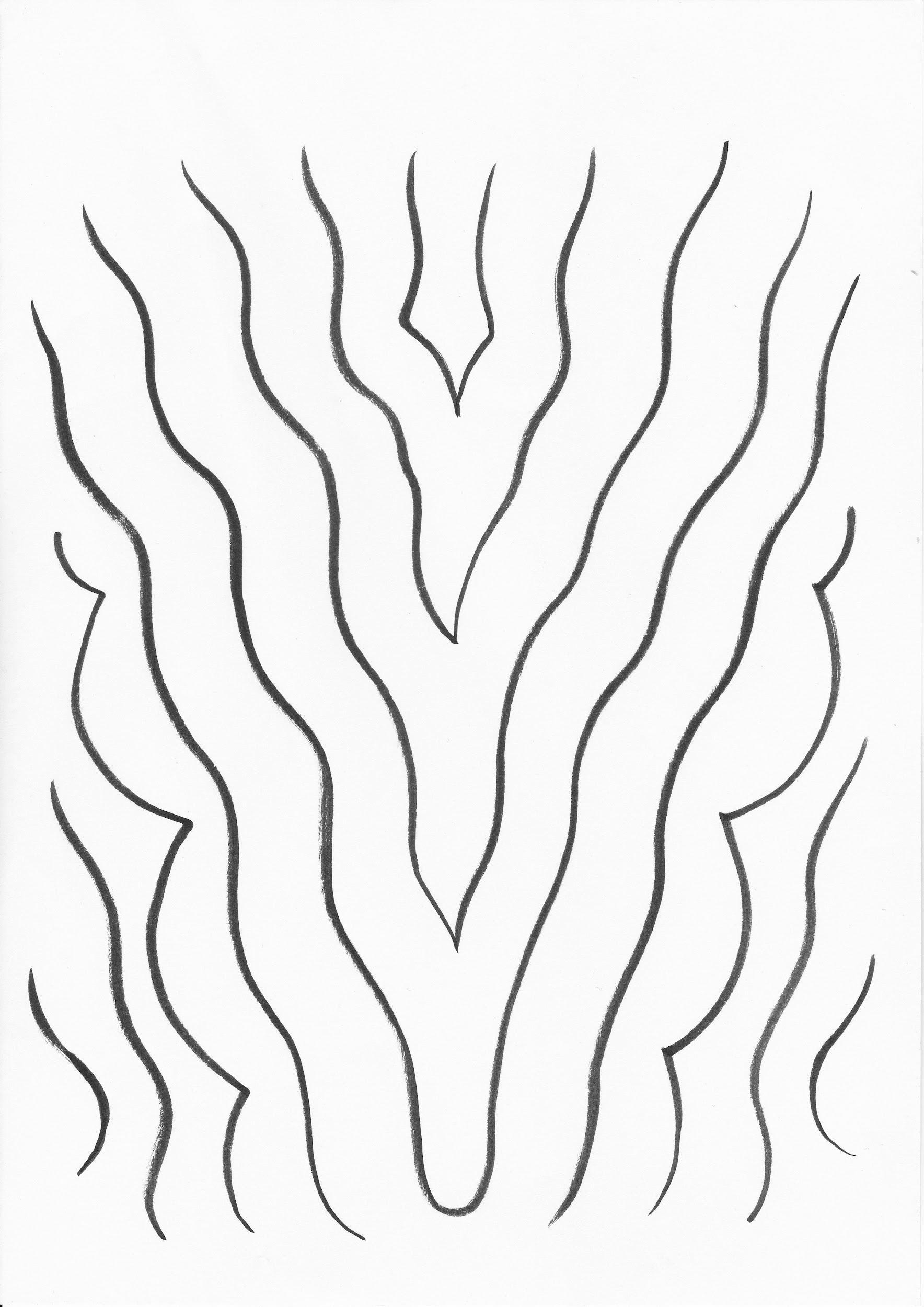
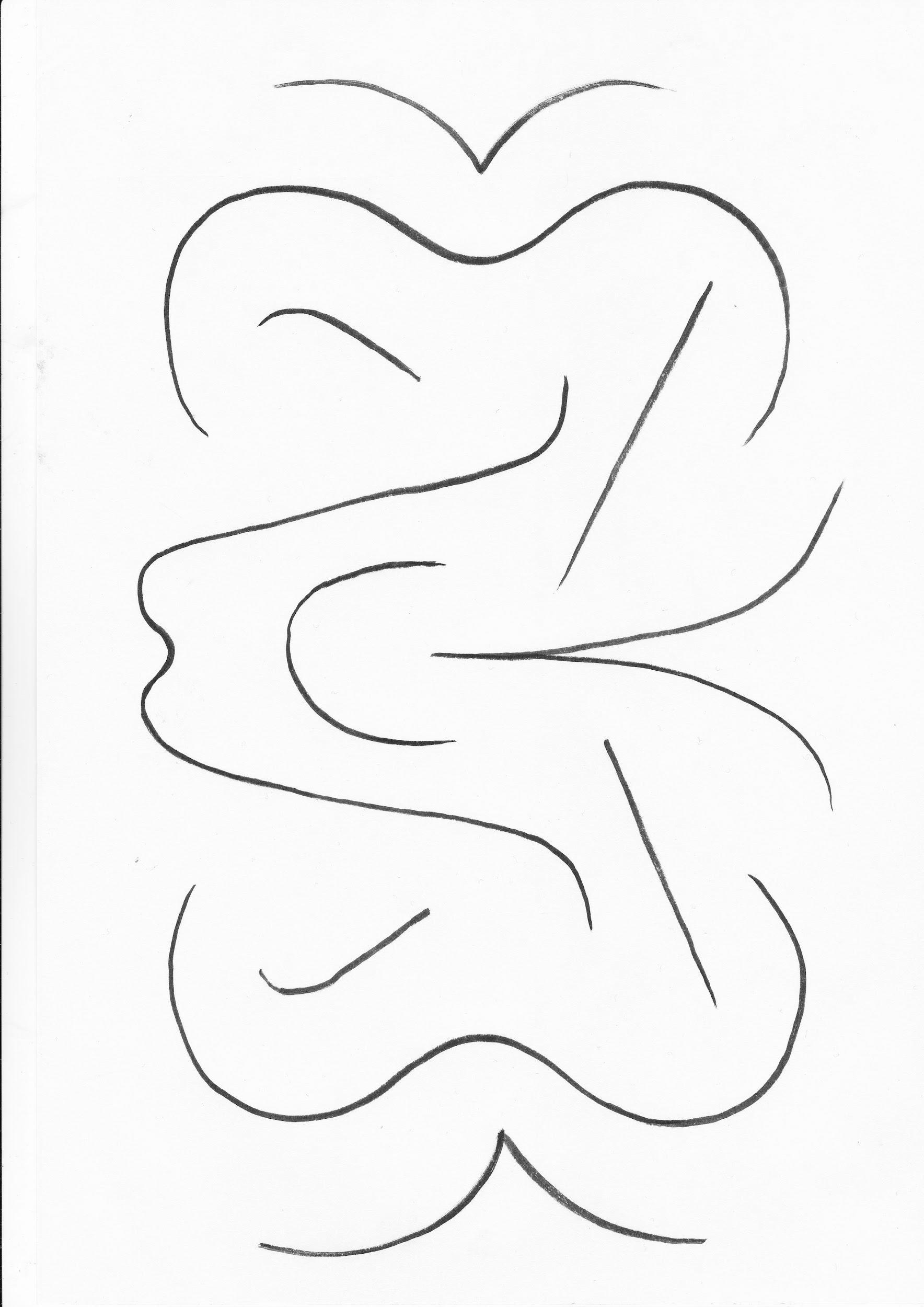
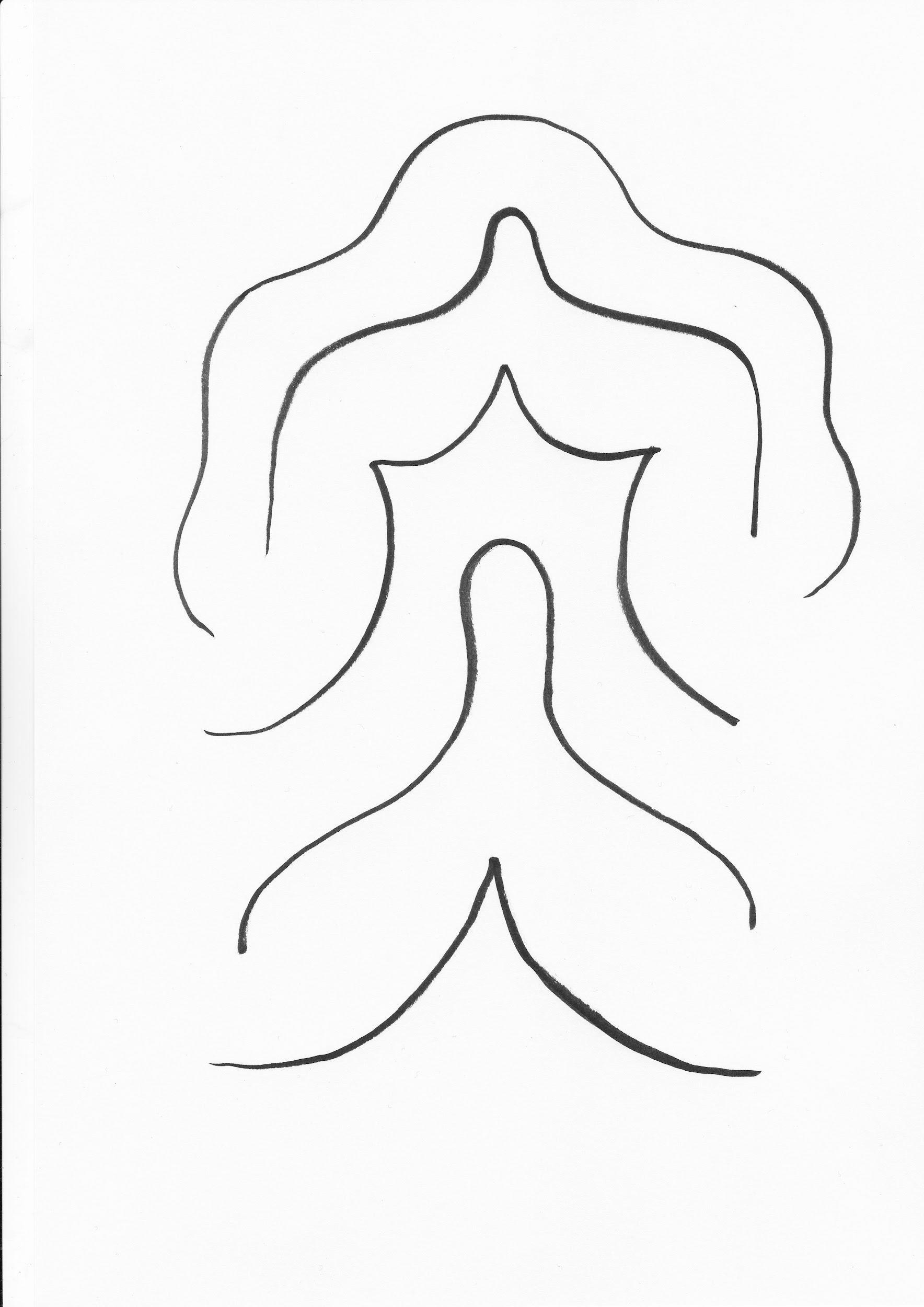
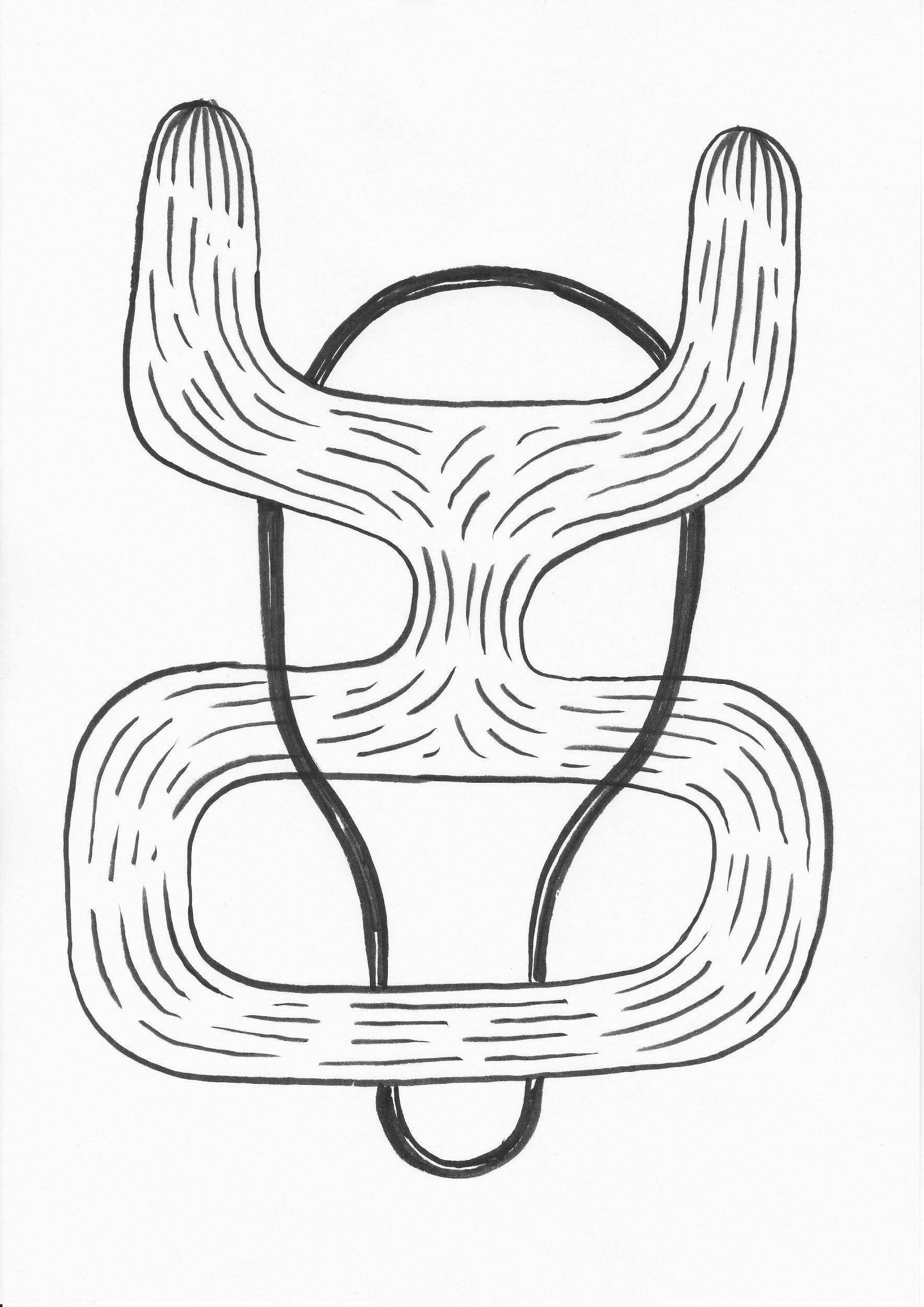
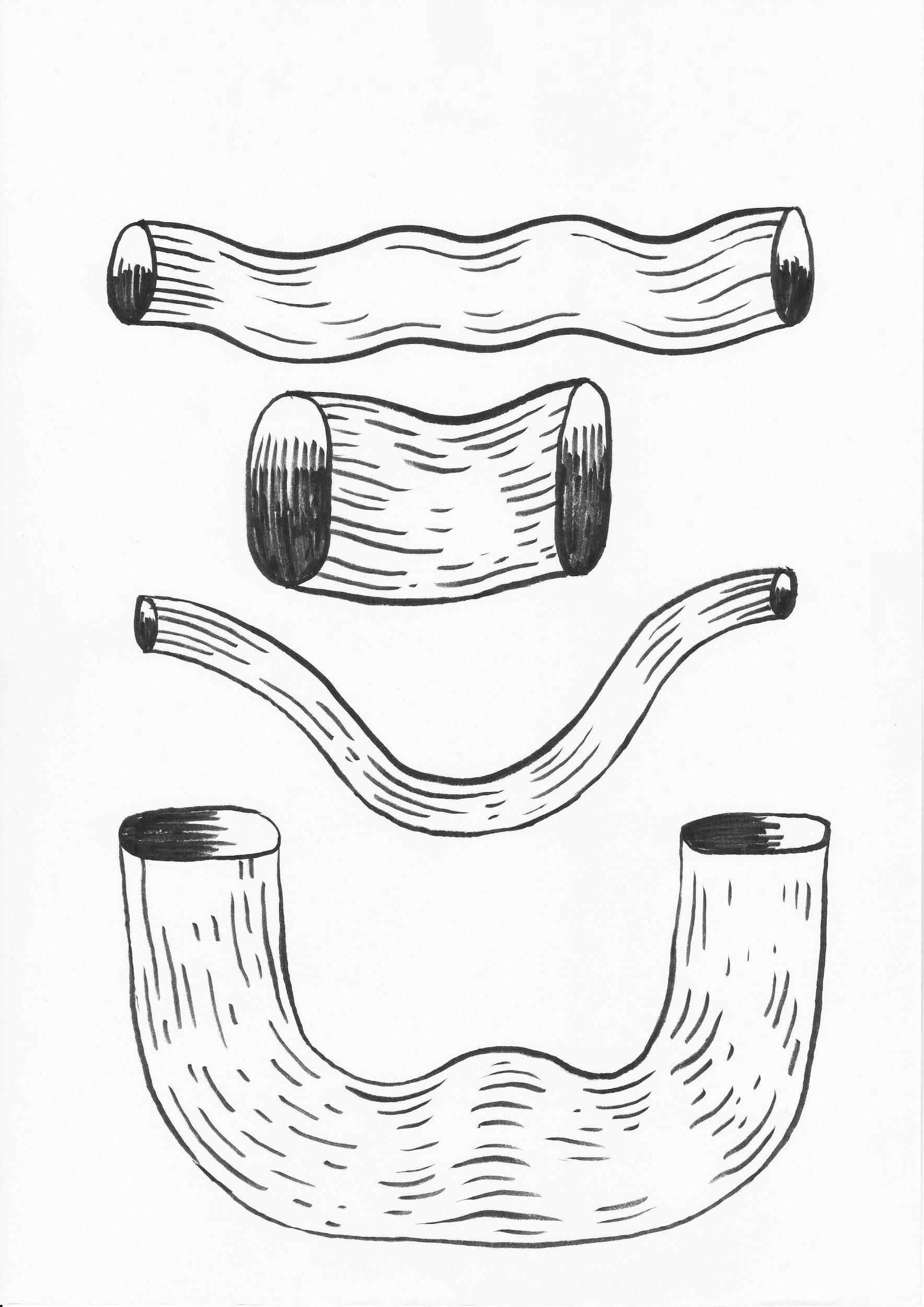


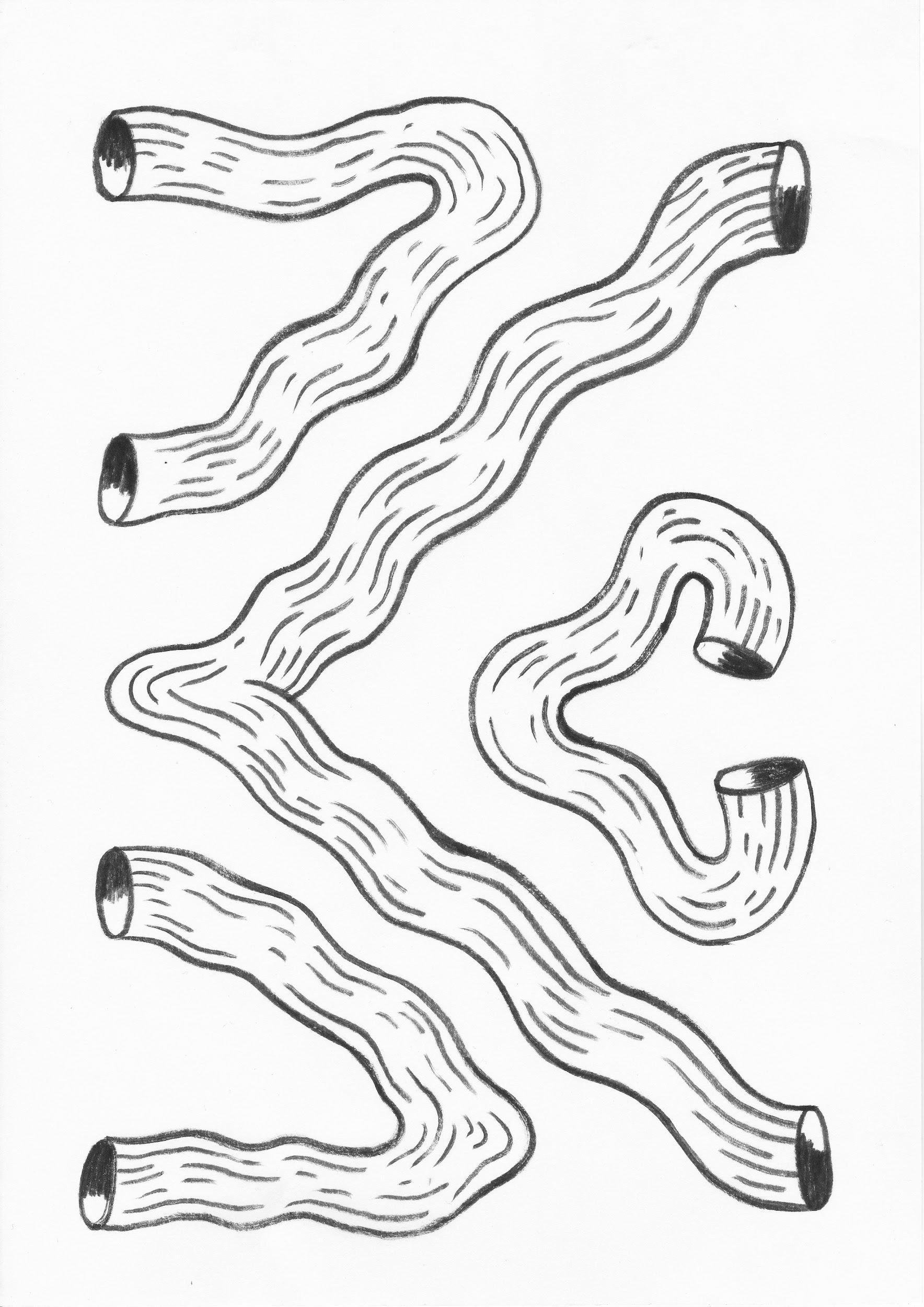

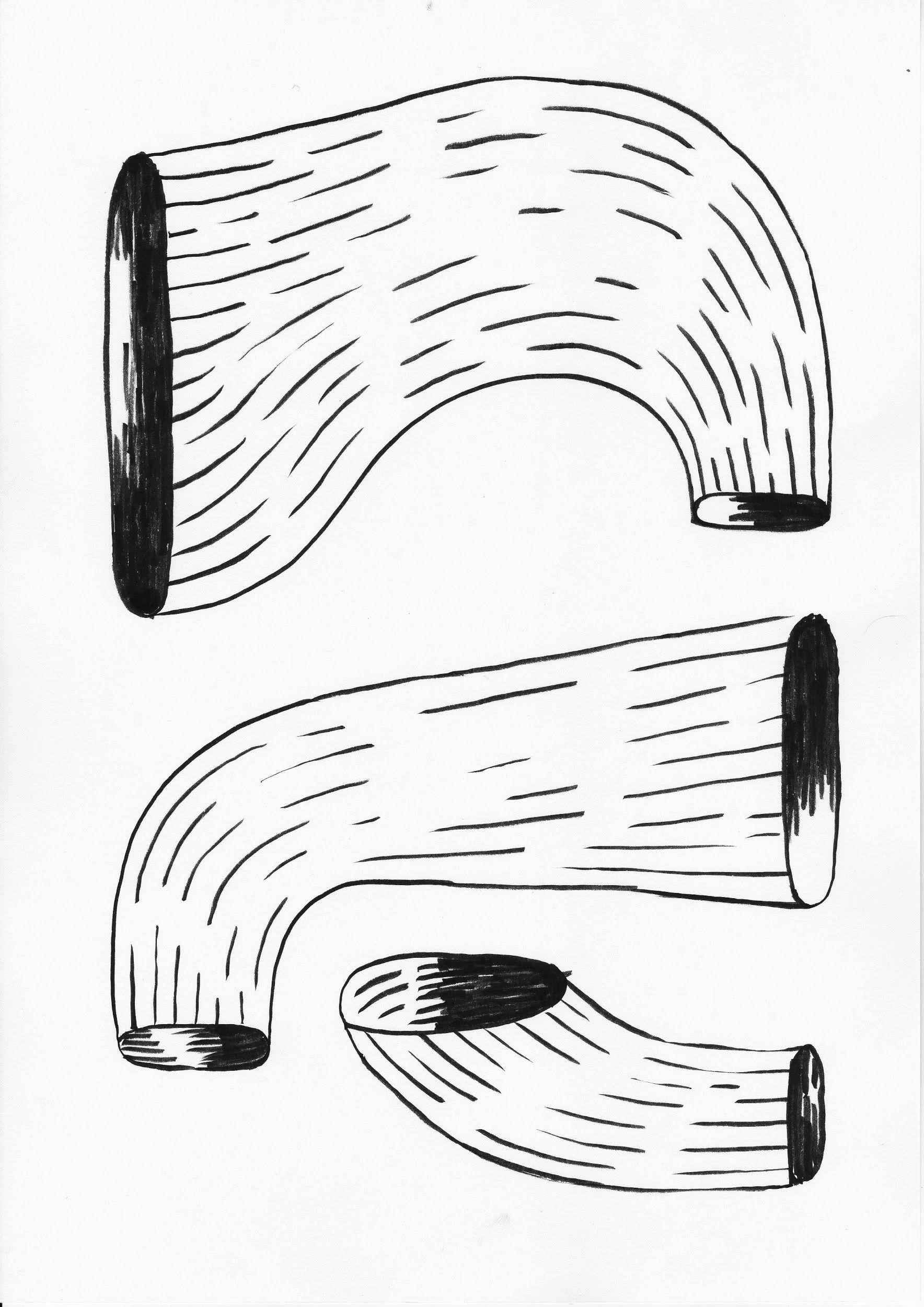

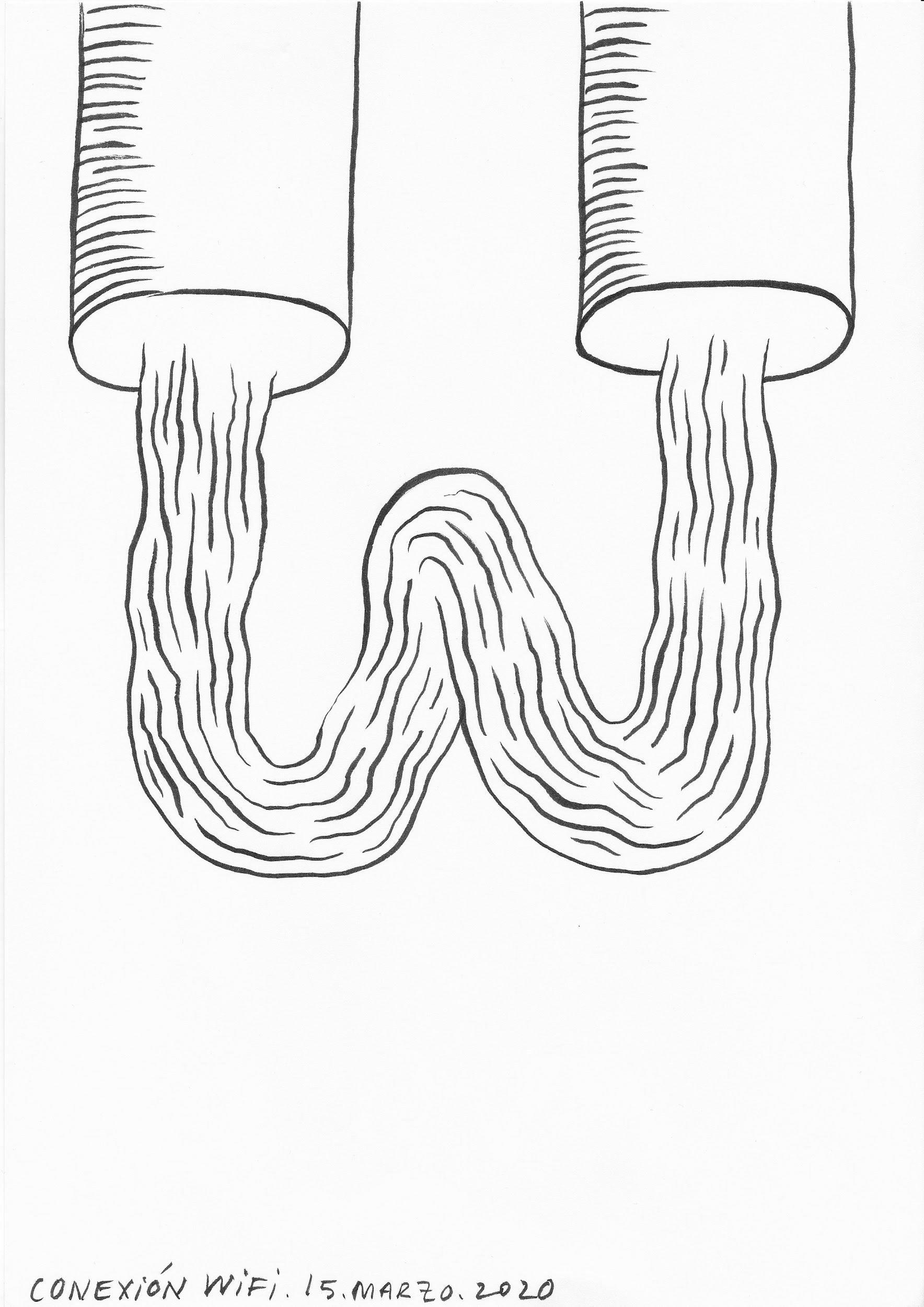
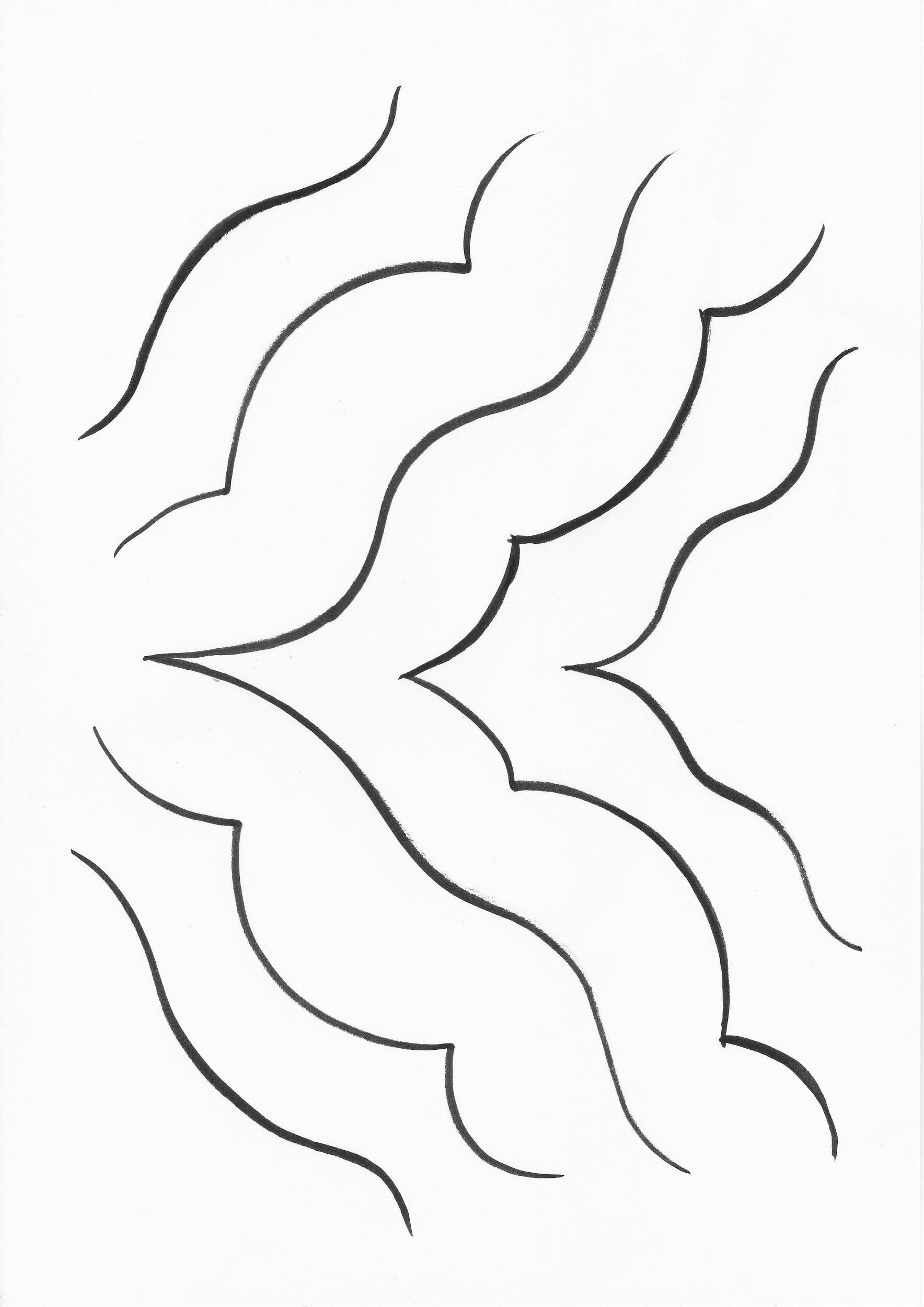
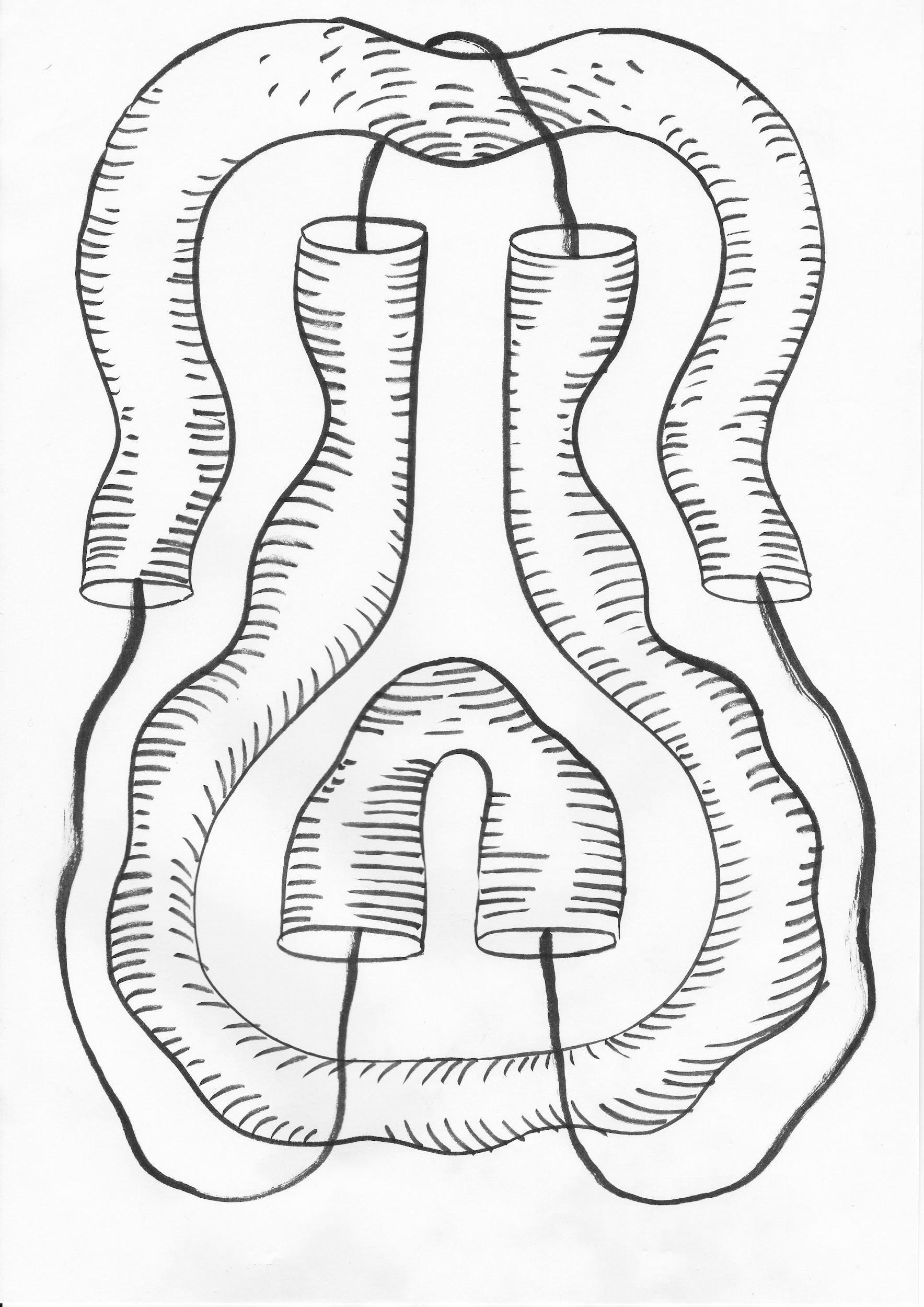
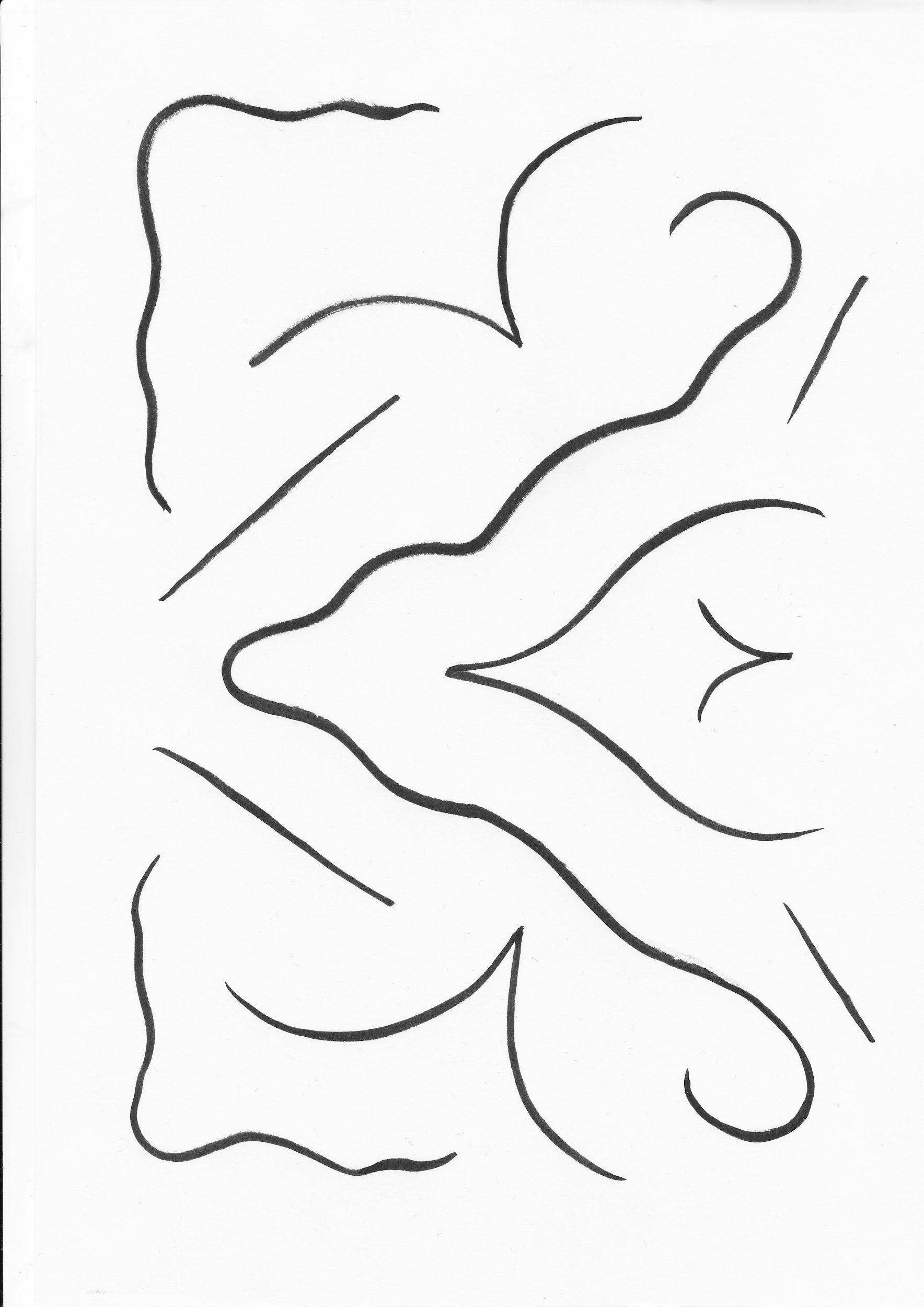

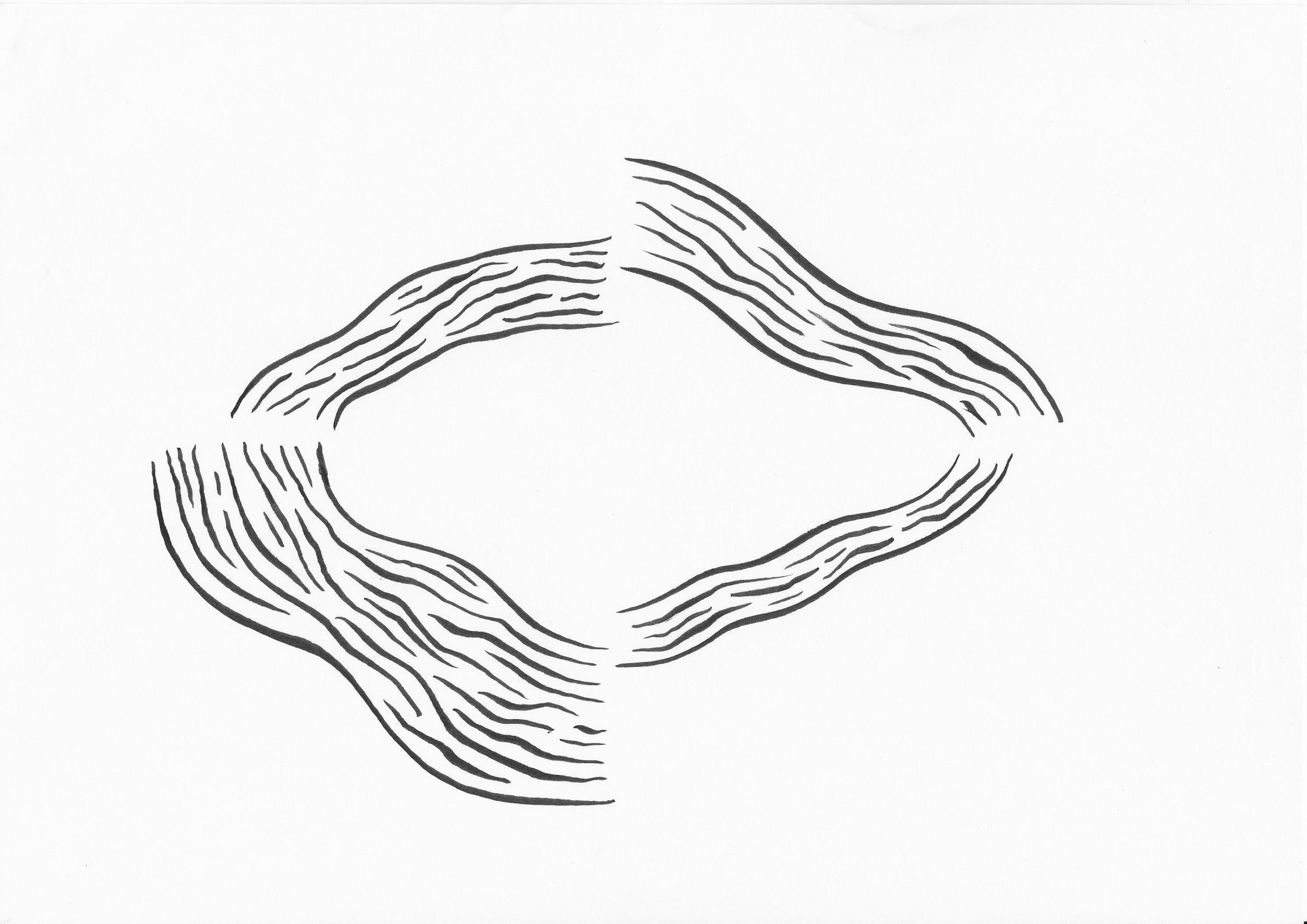
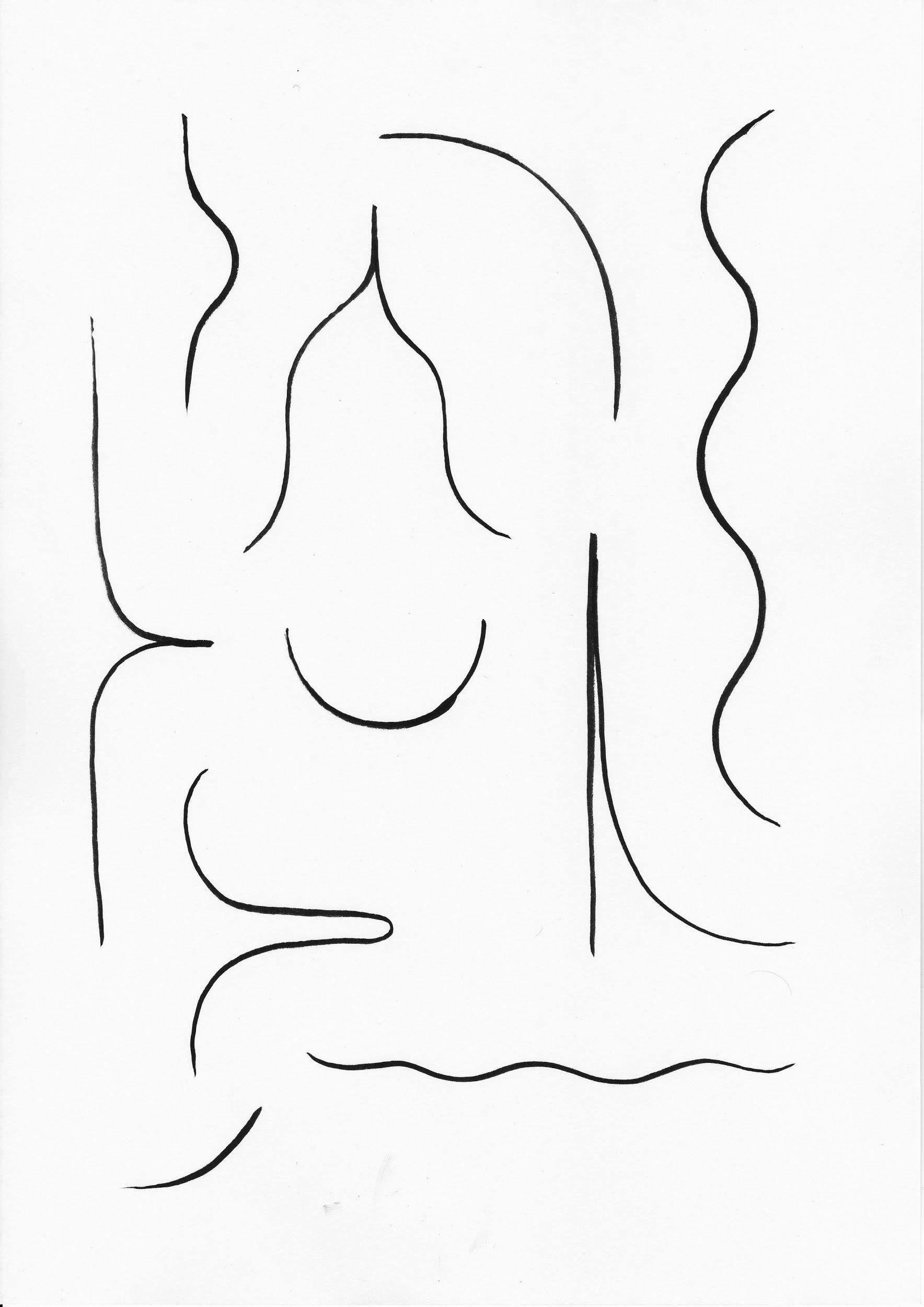
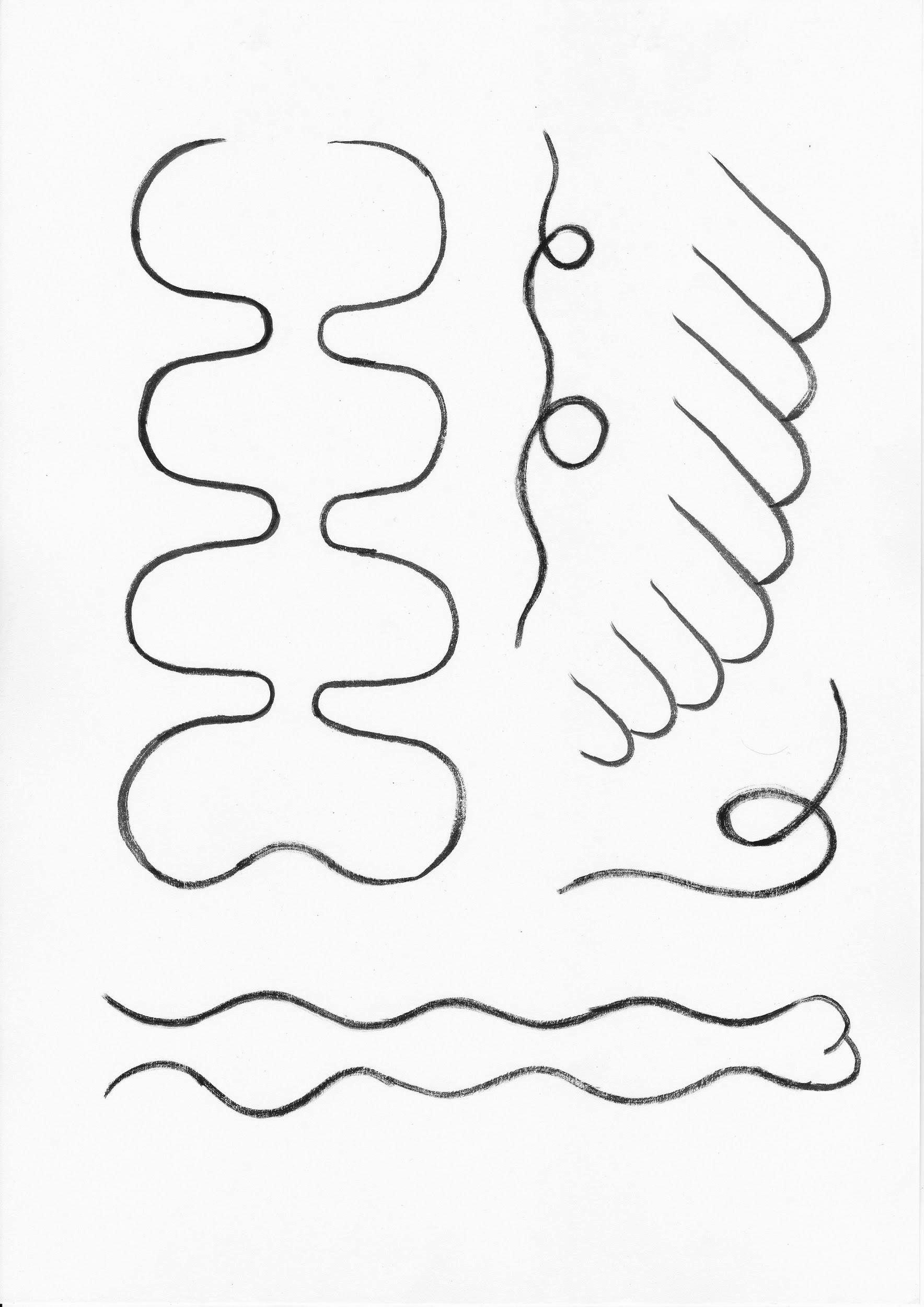
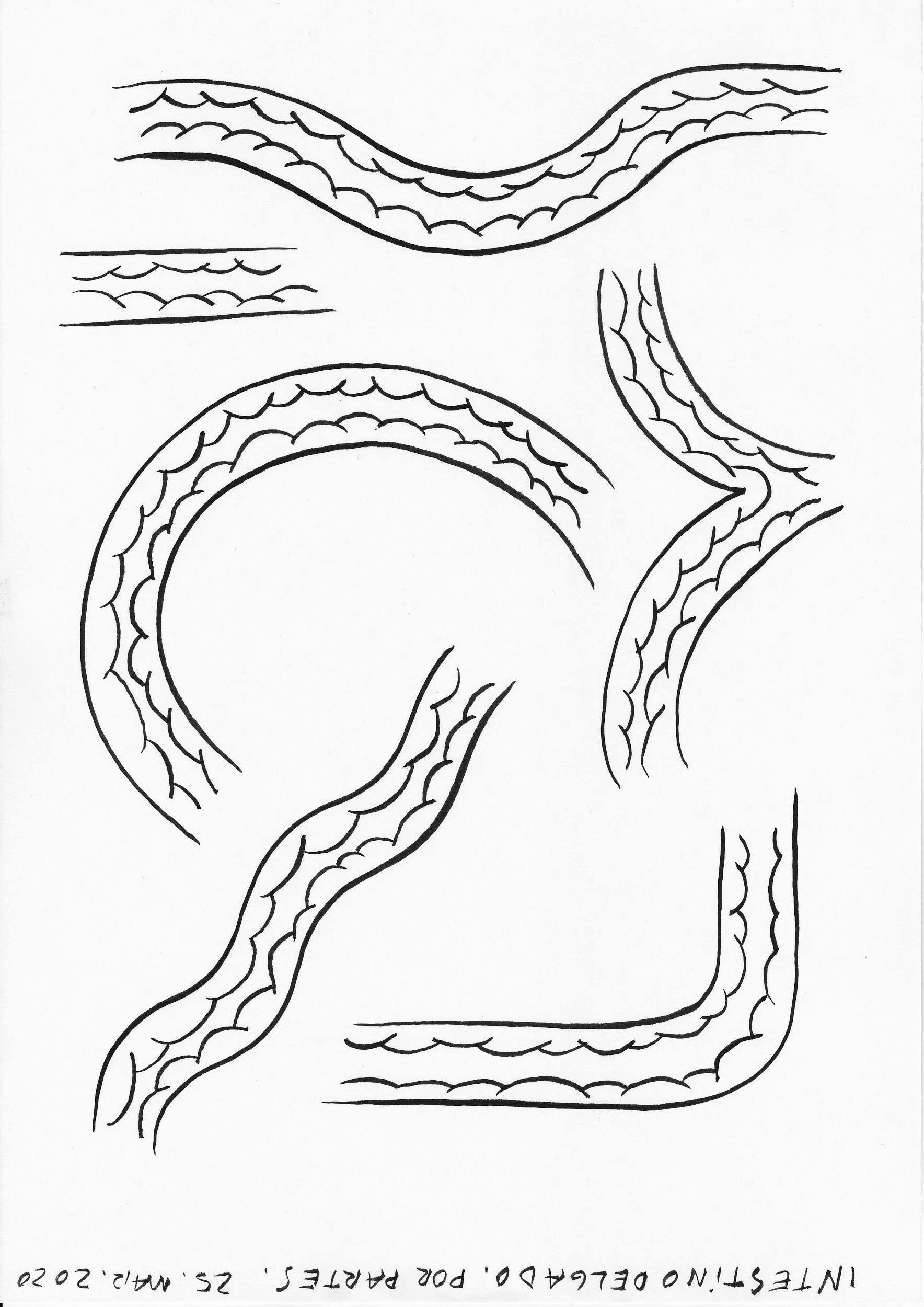
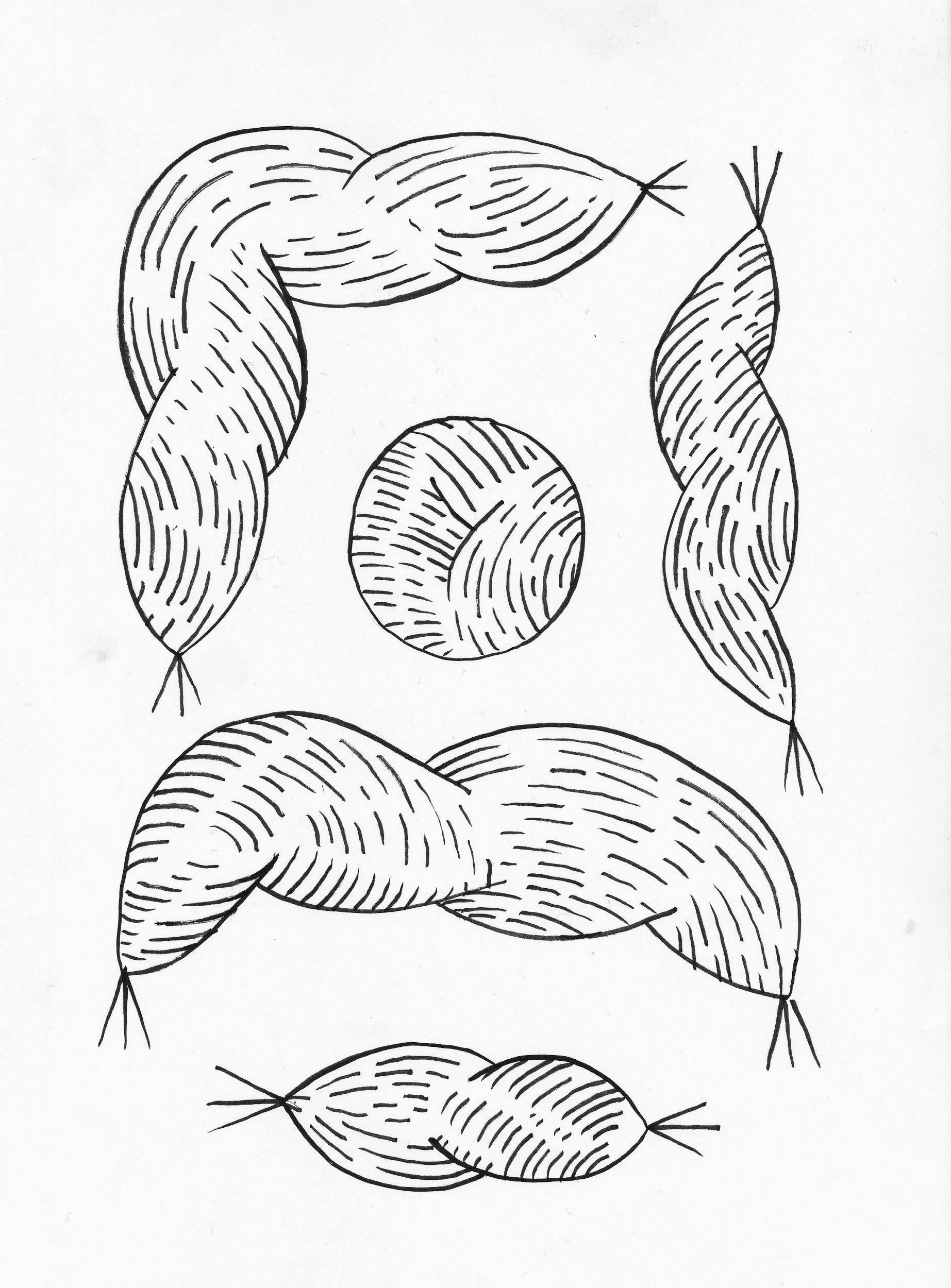

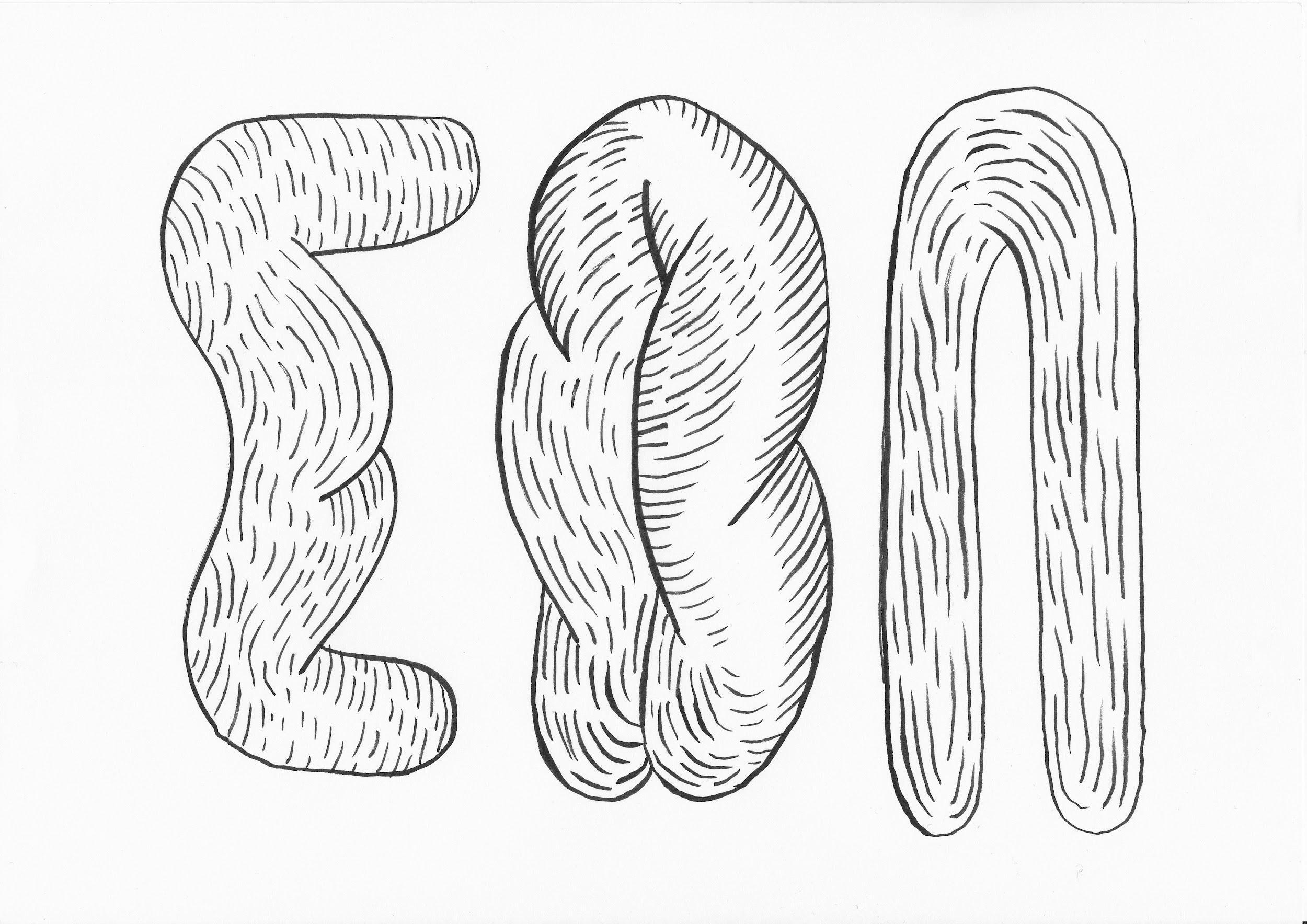
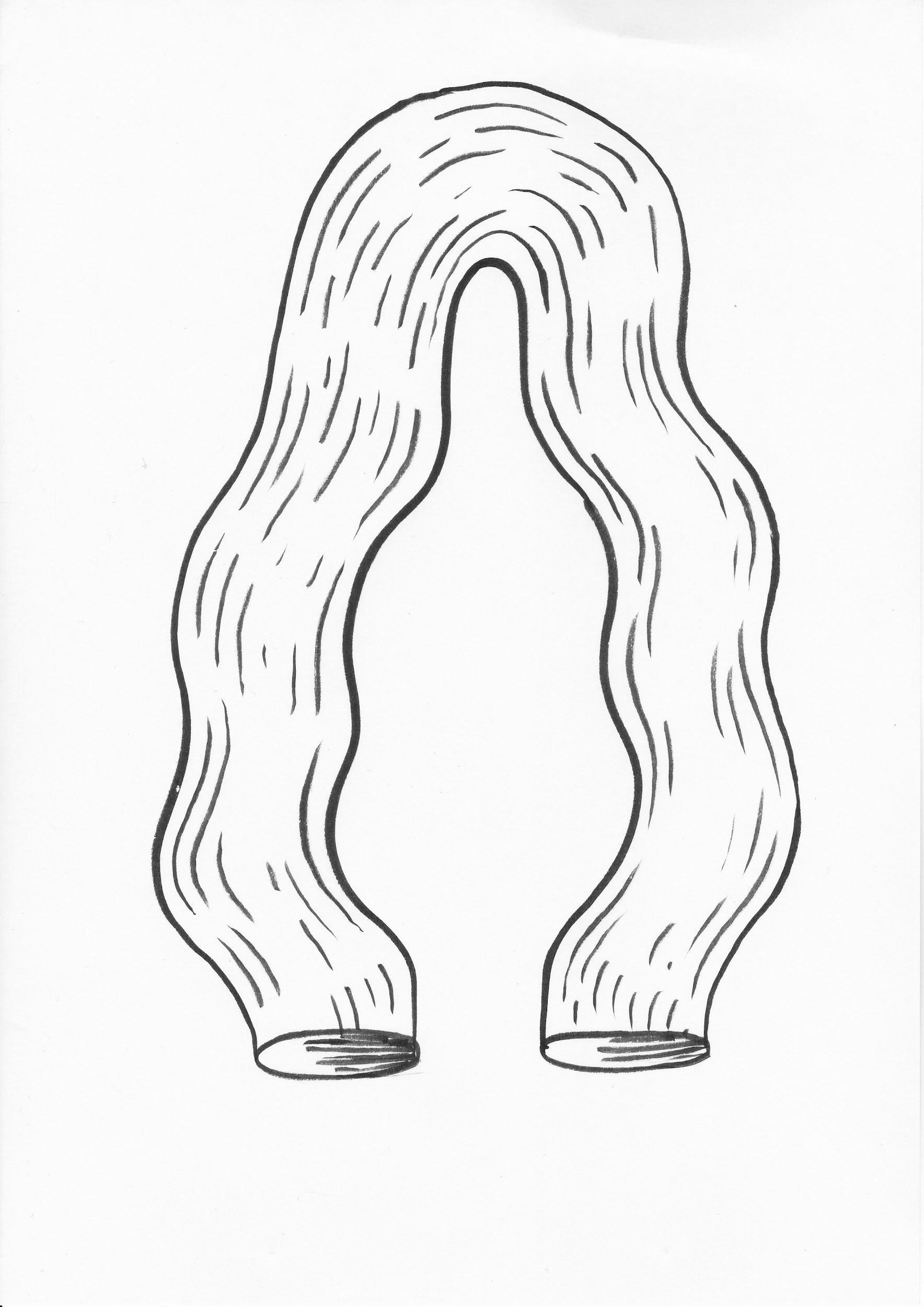
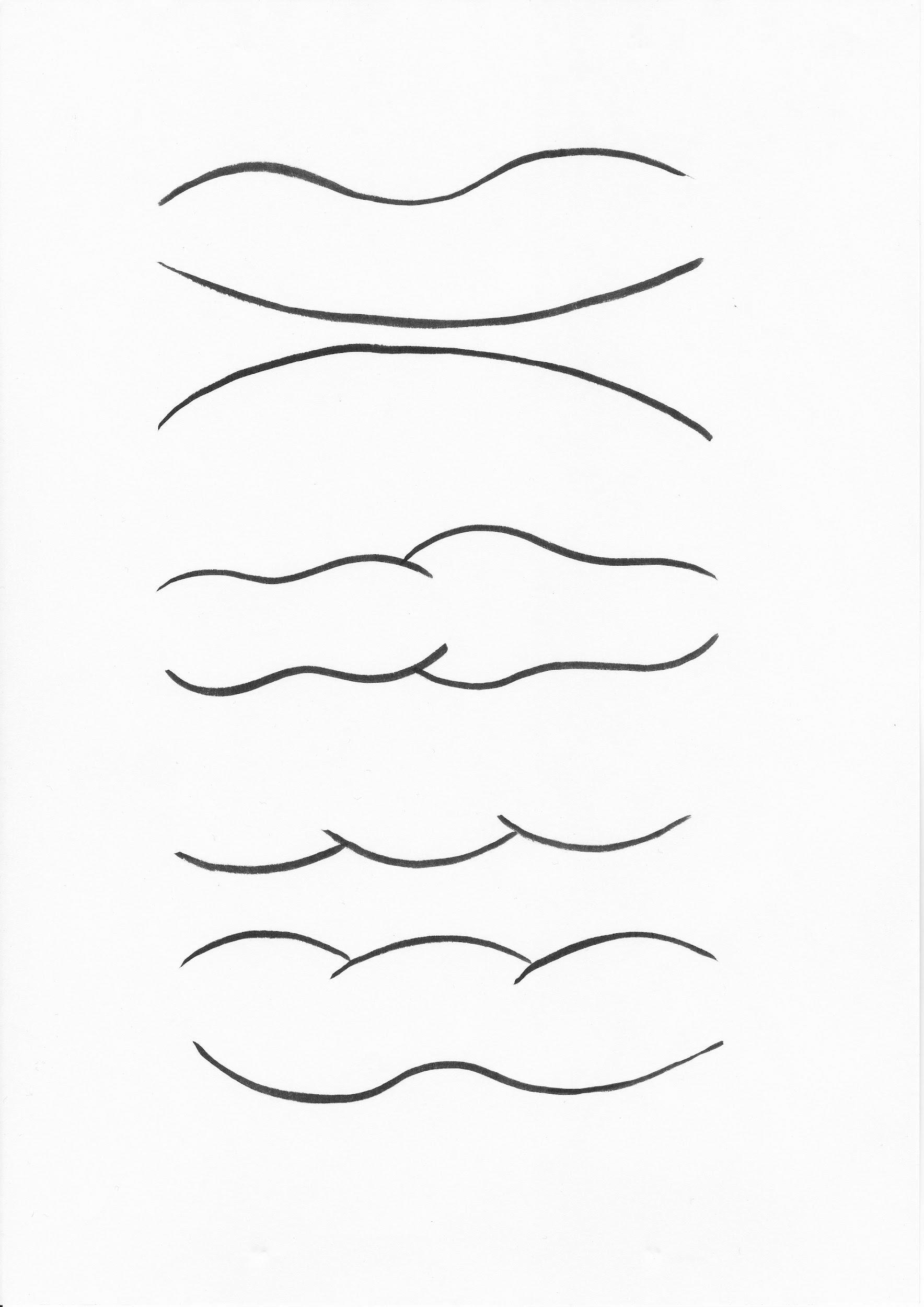
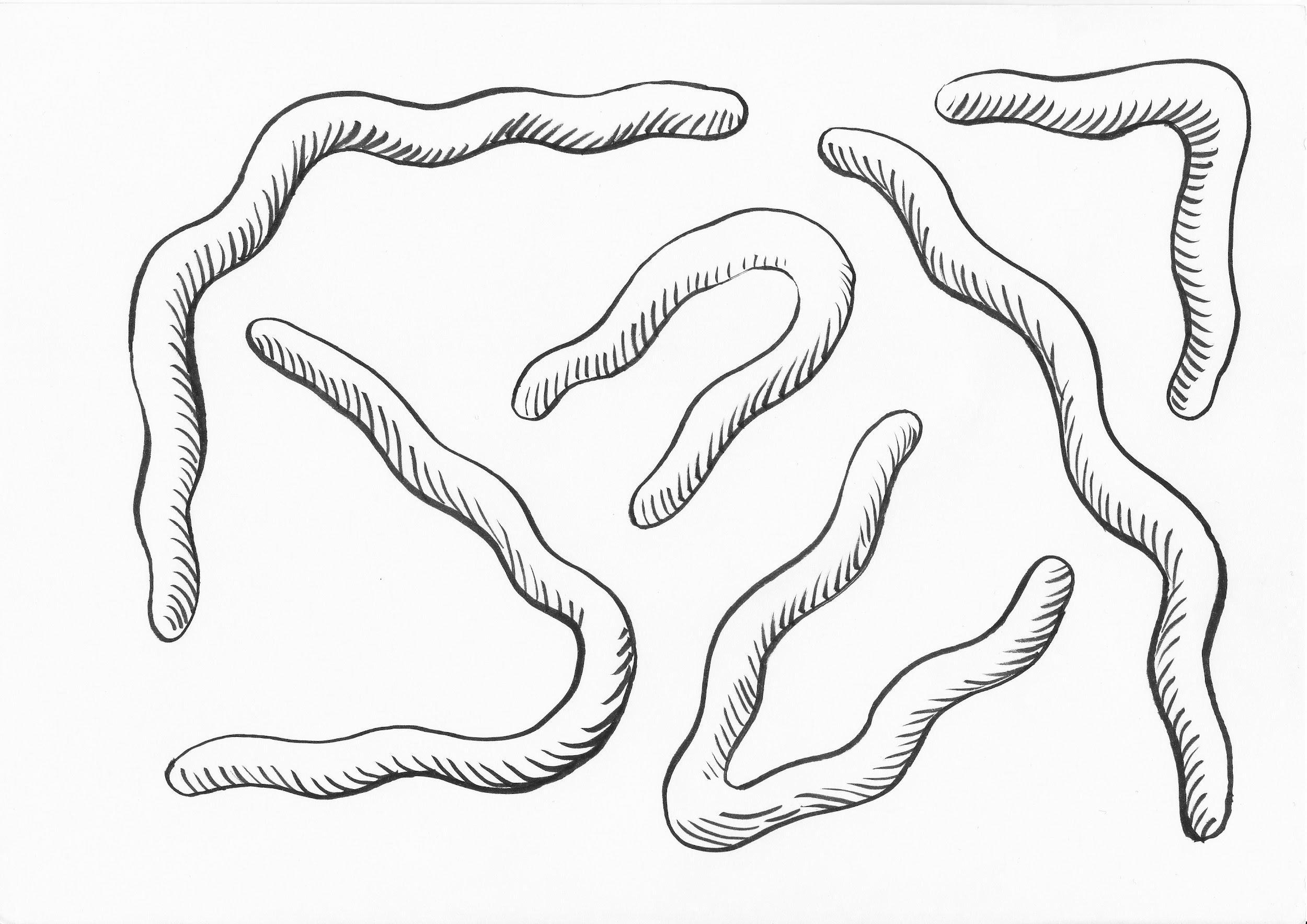
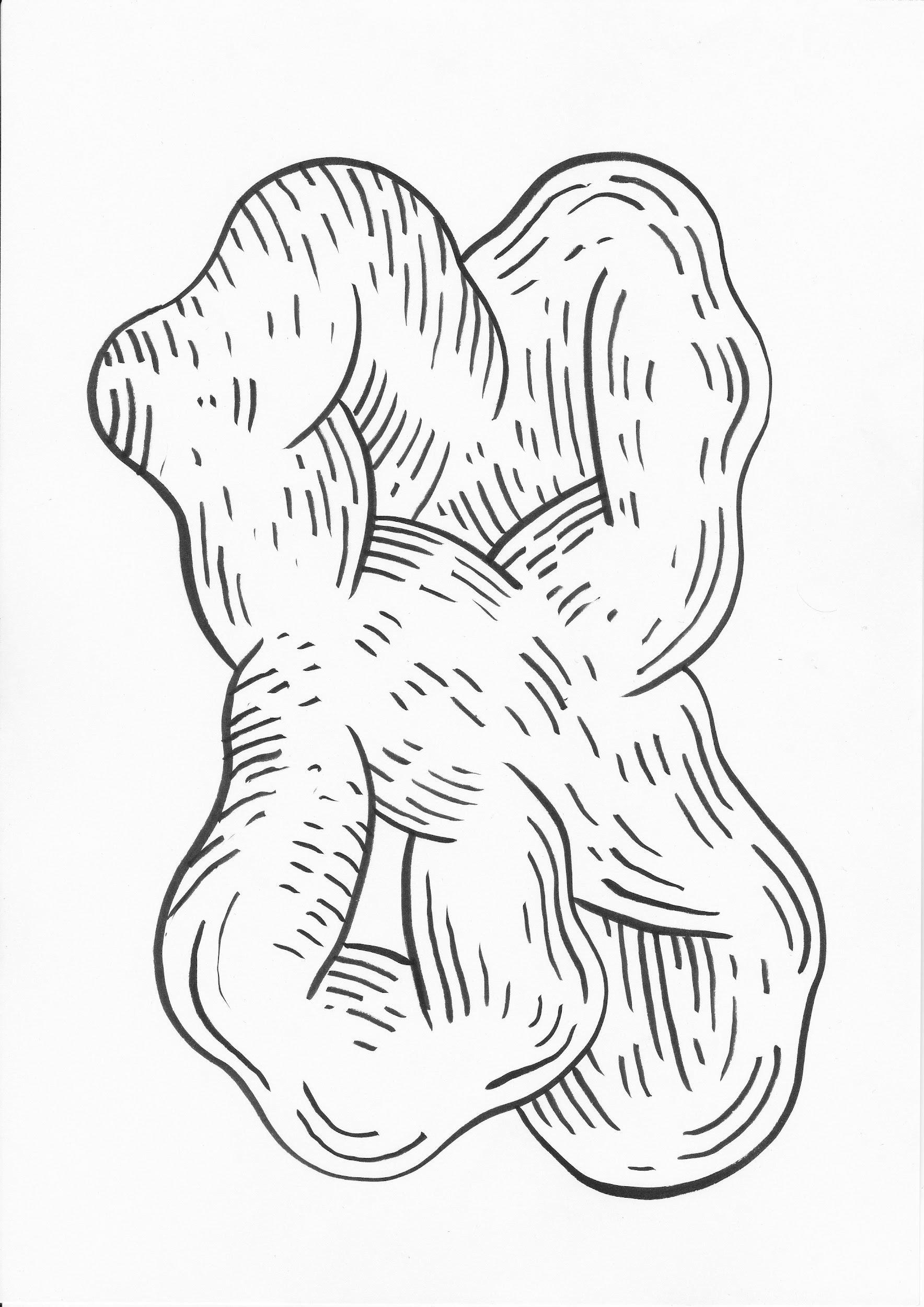
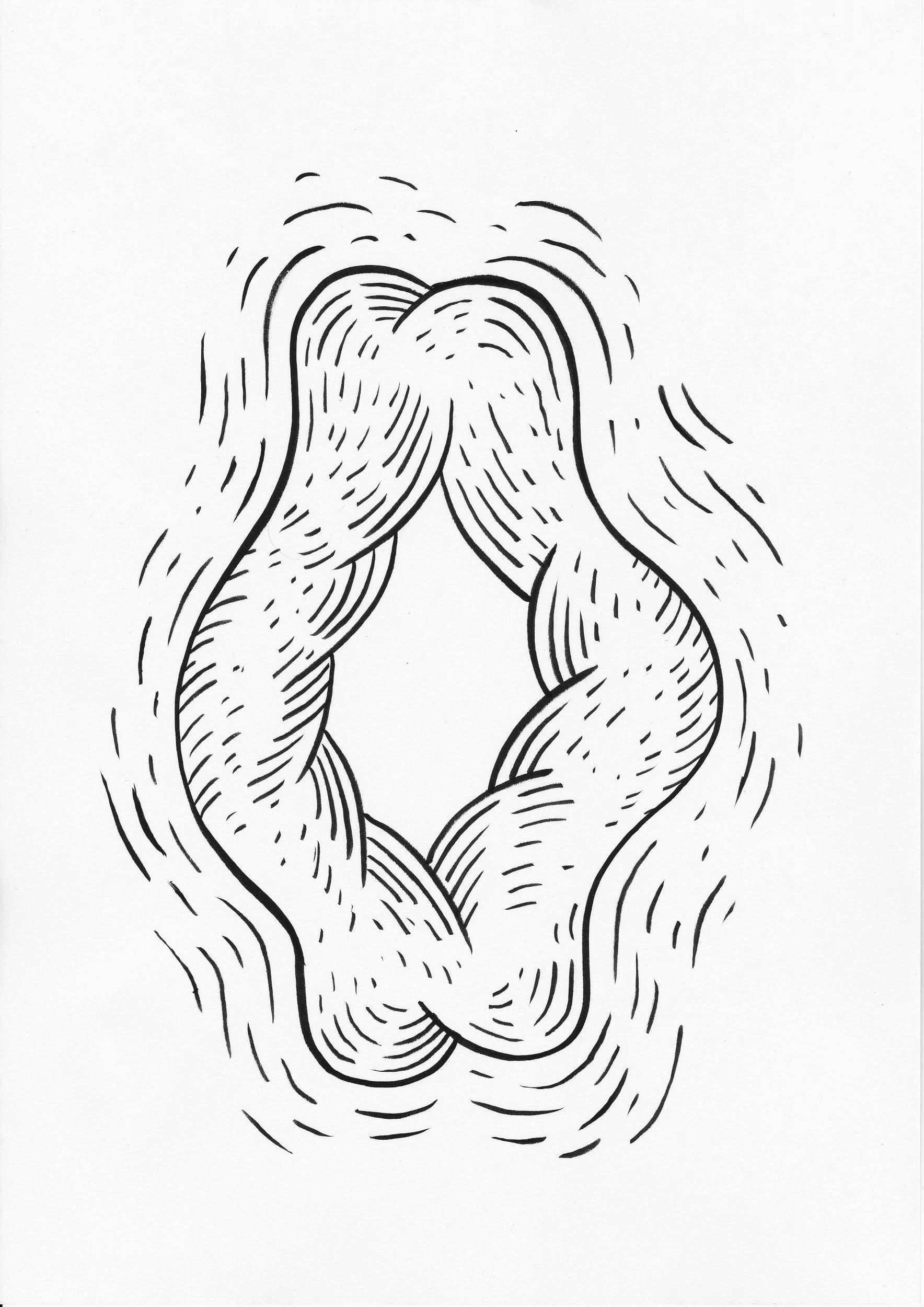


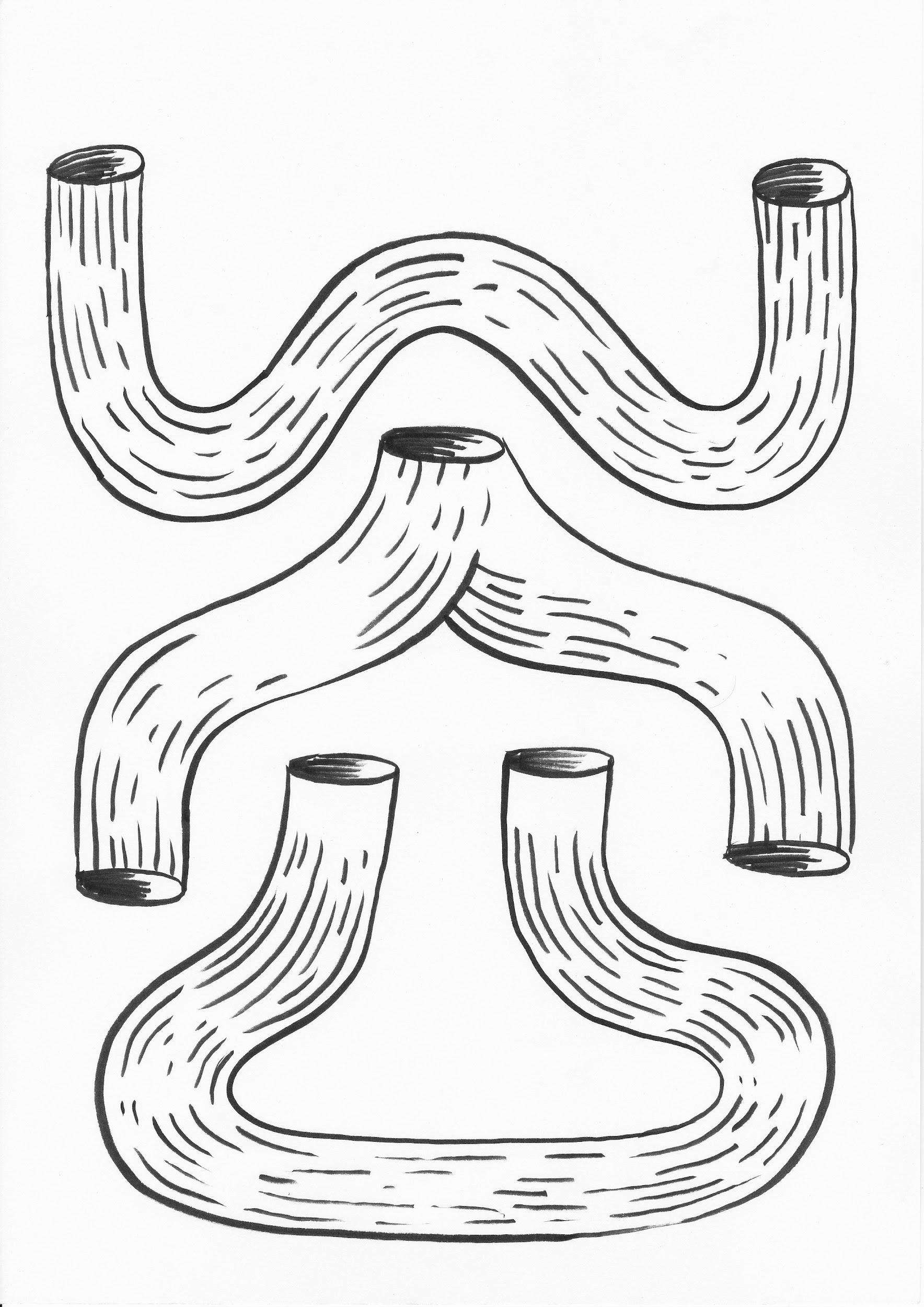

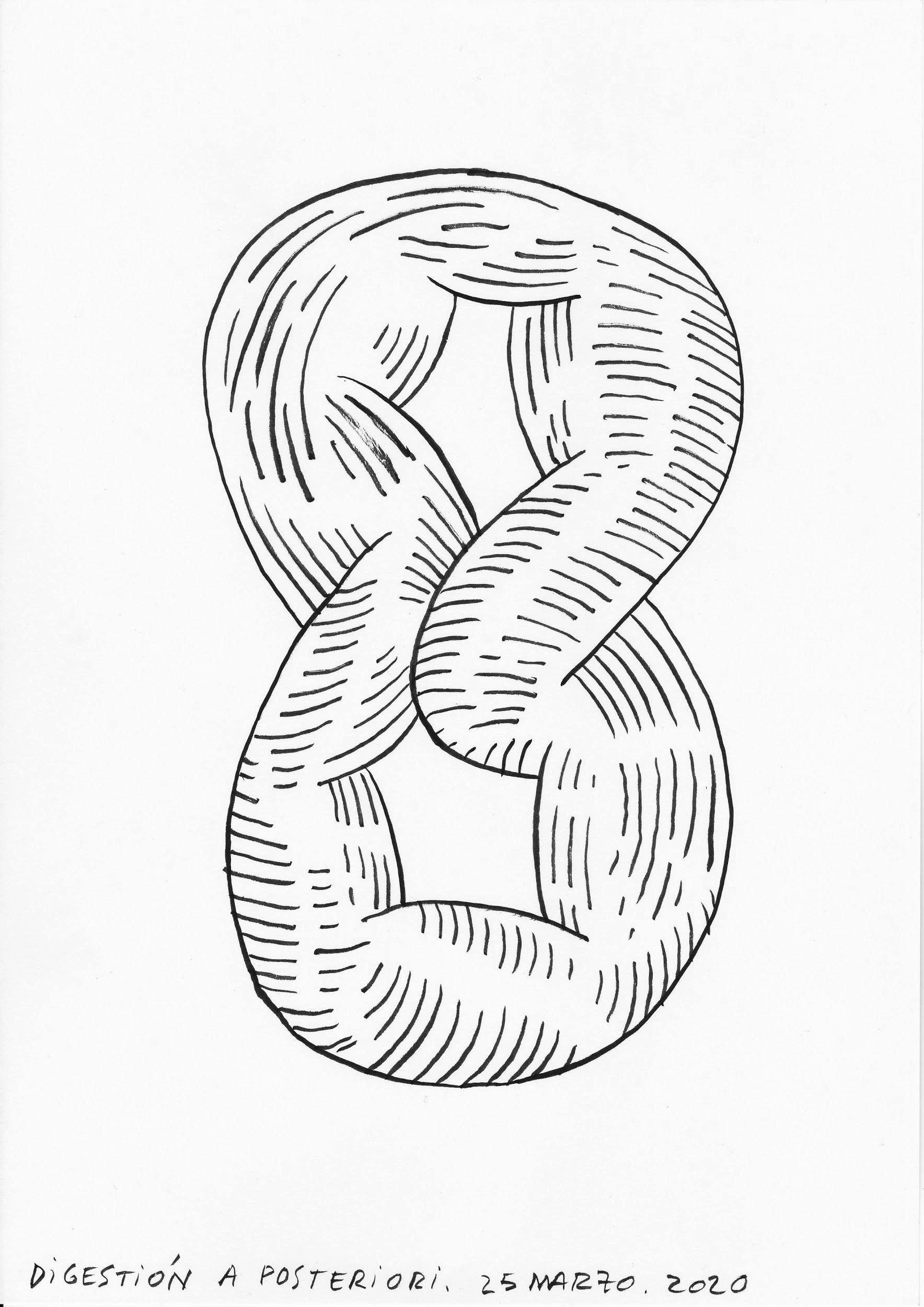
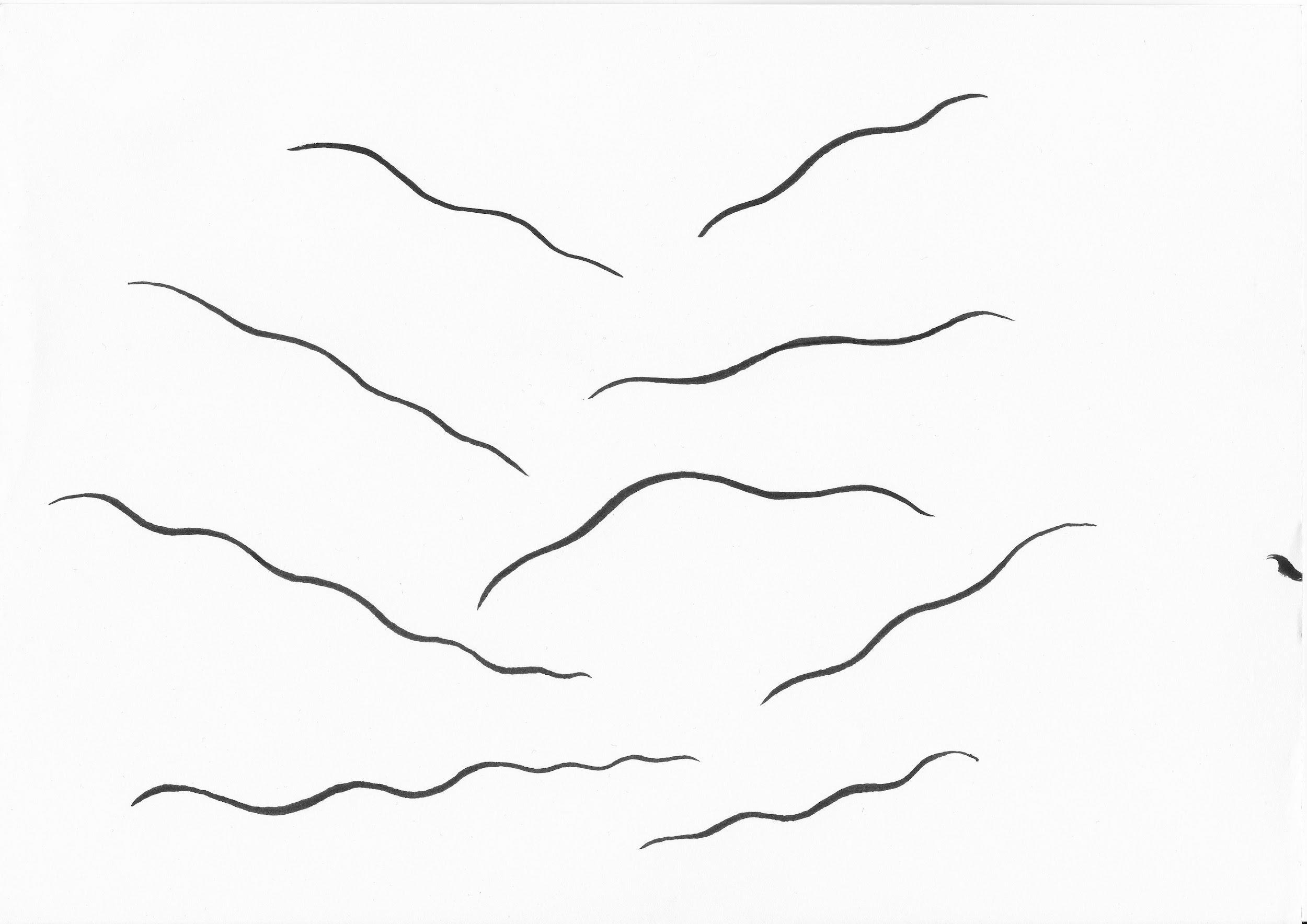

Objects of though
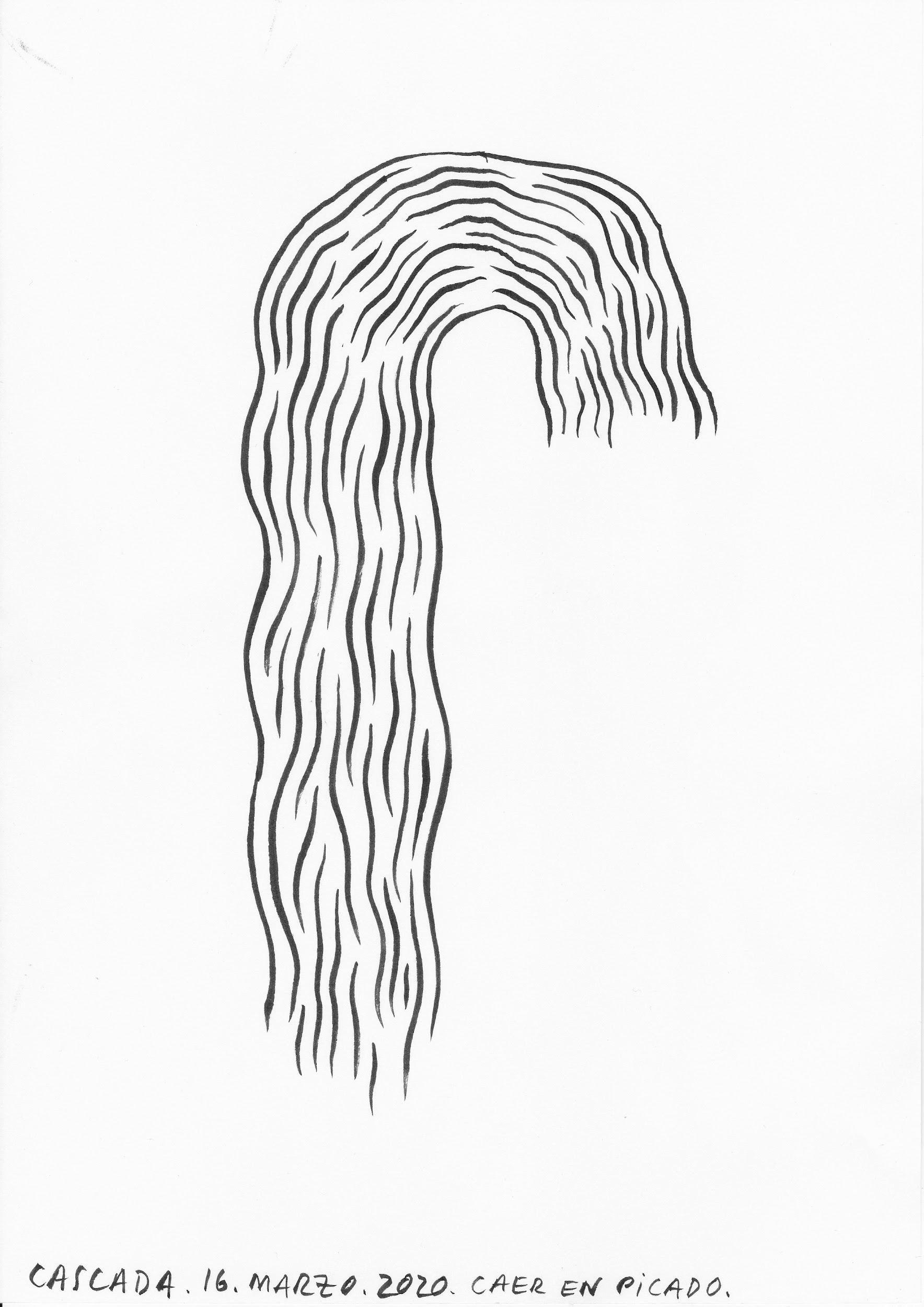
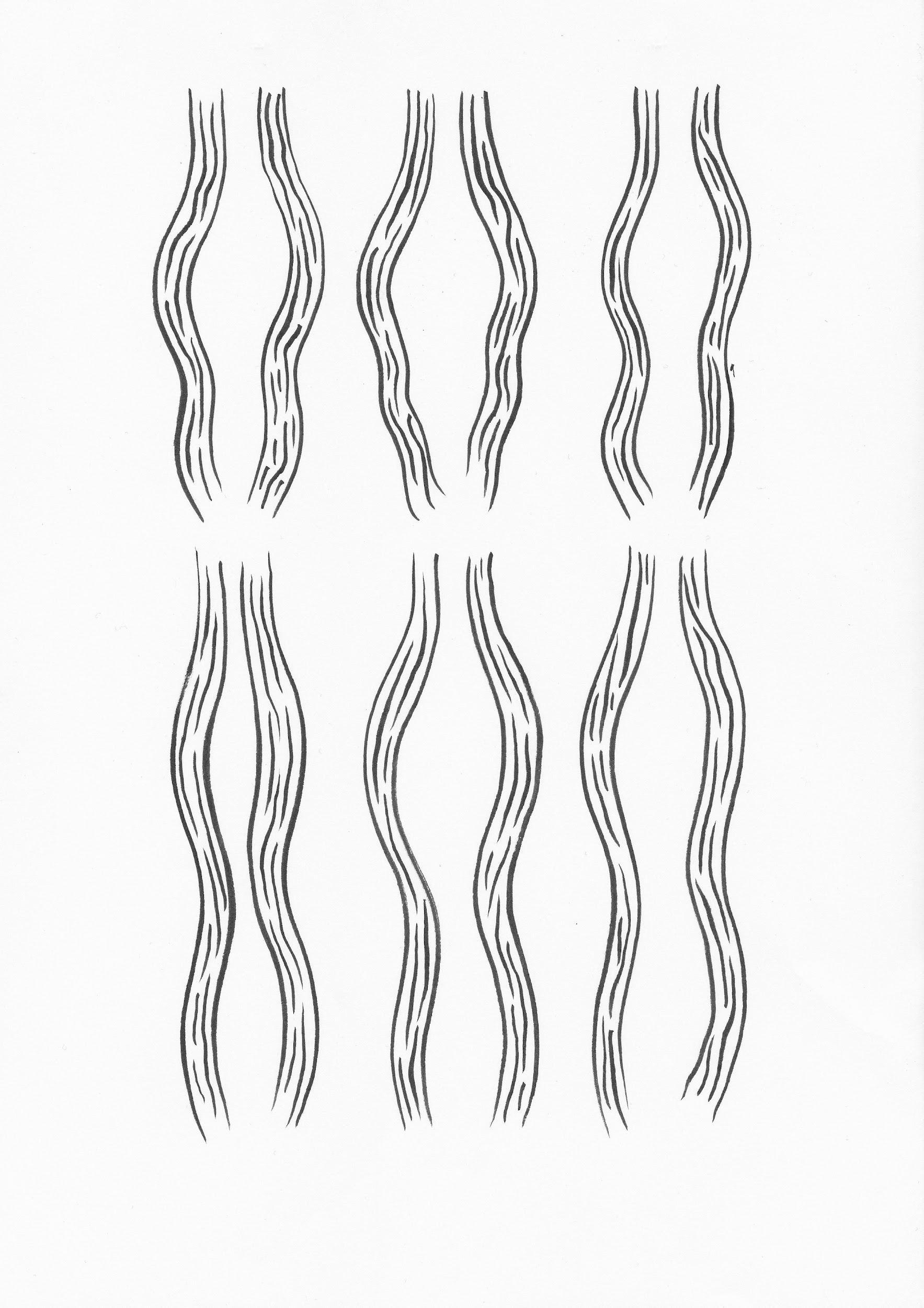
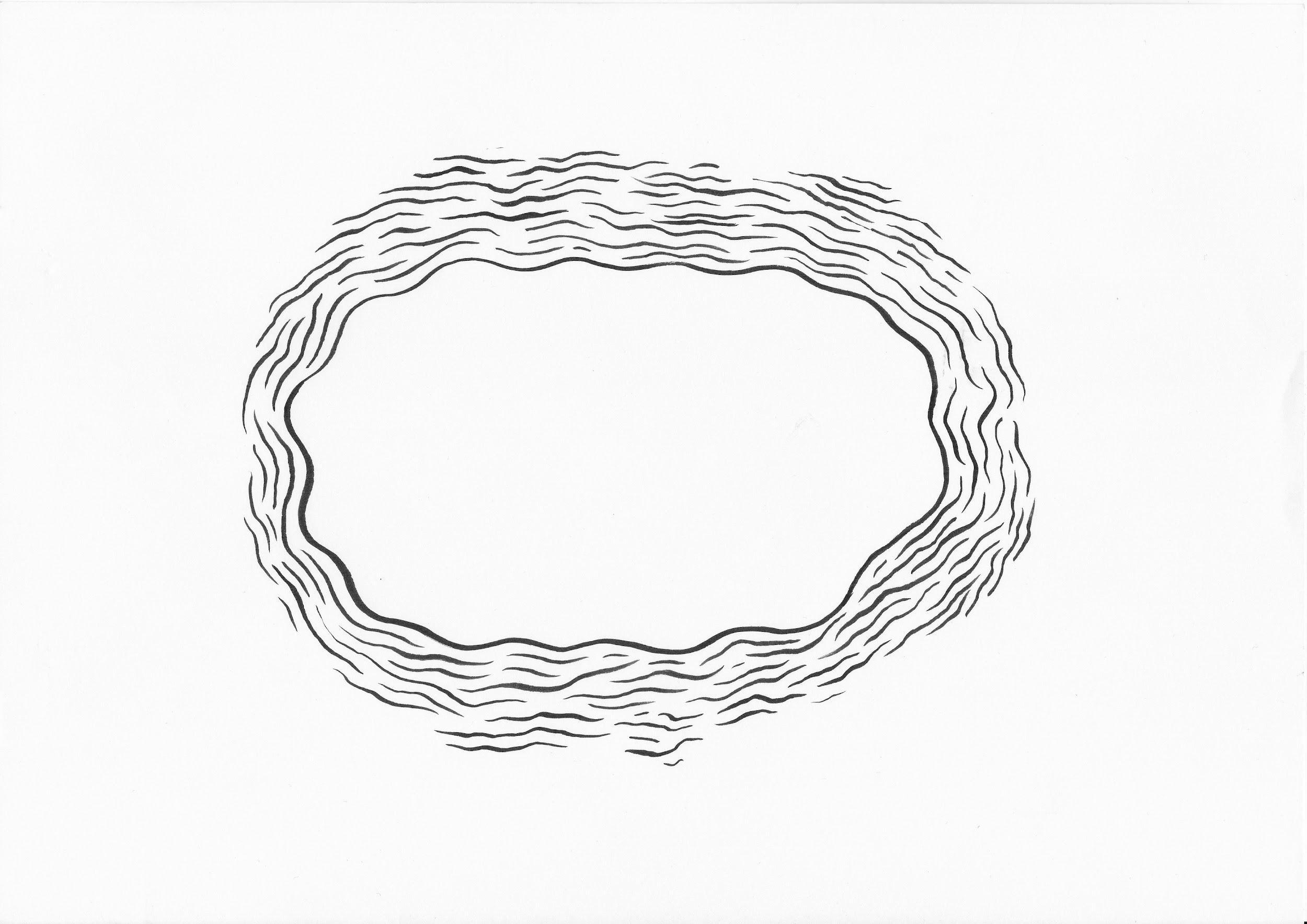
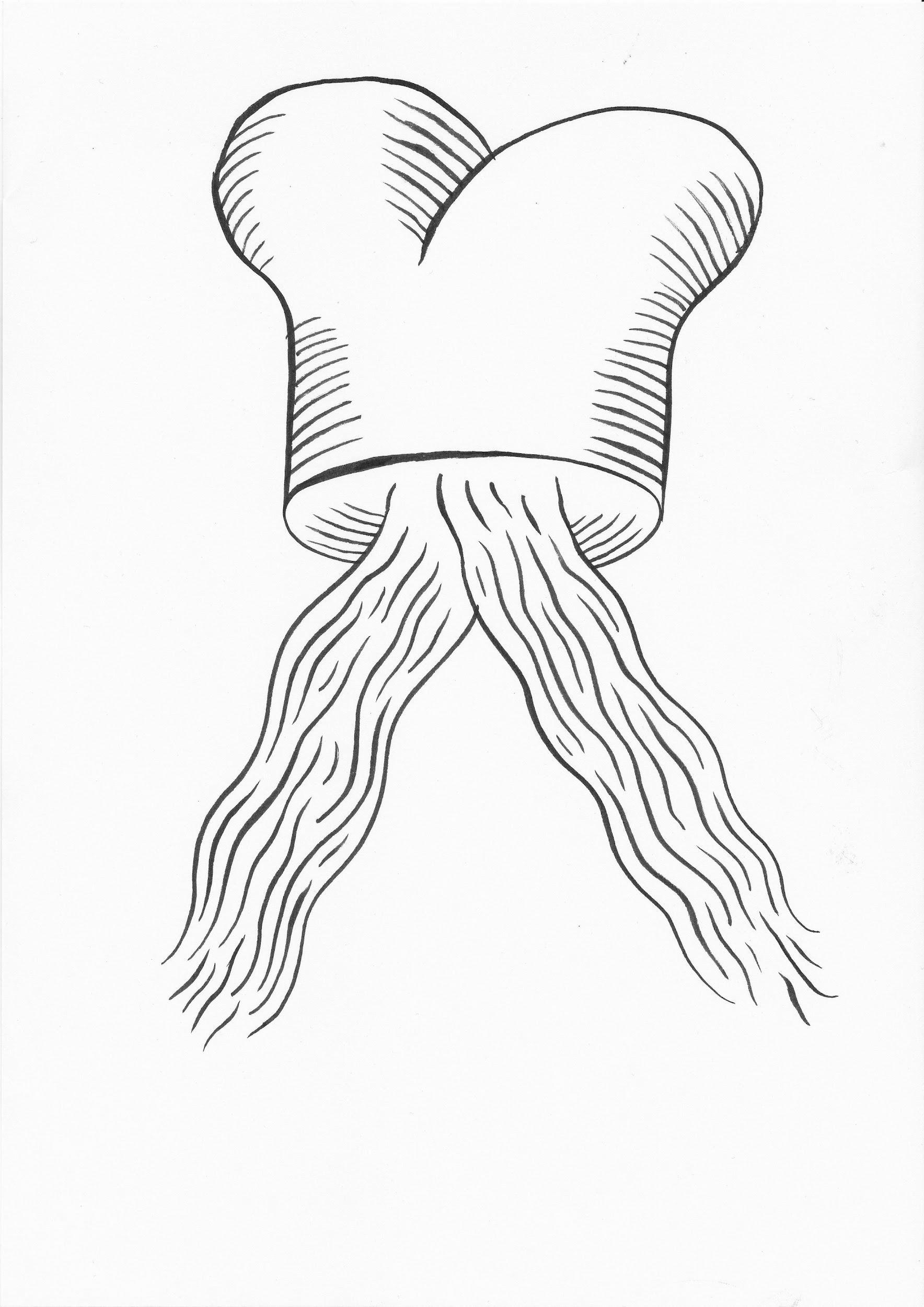
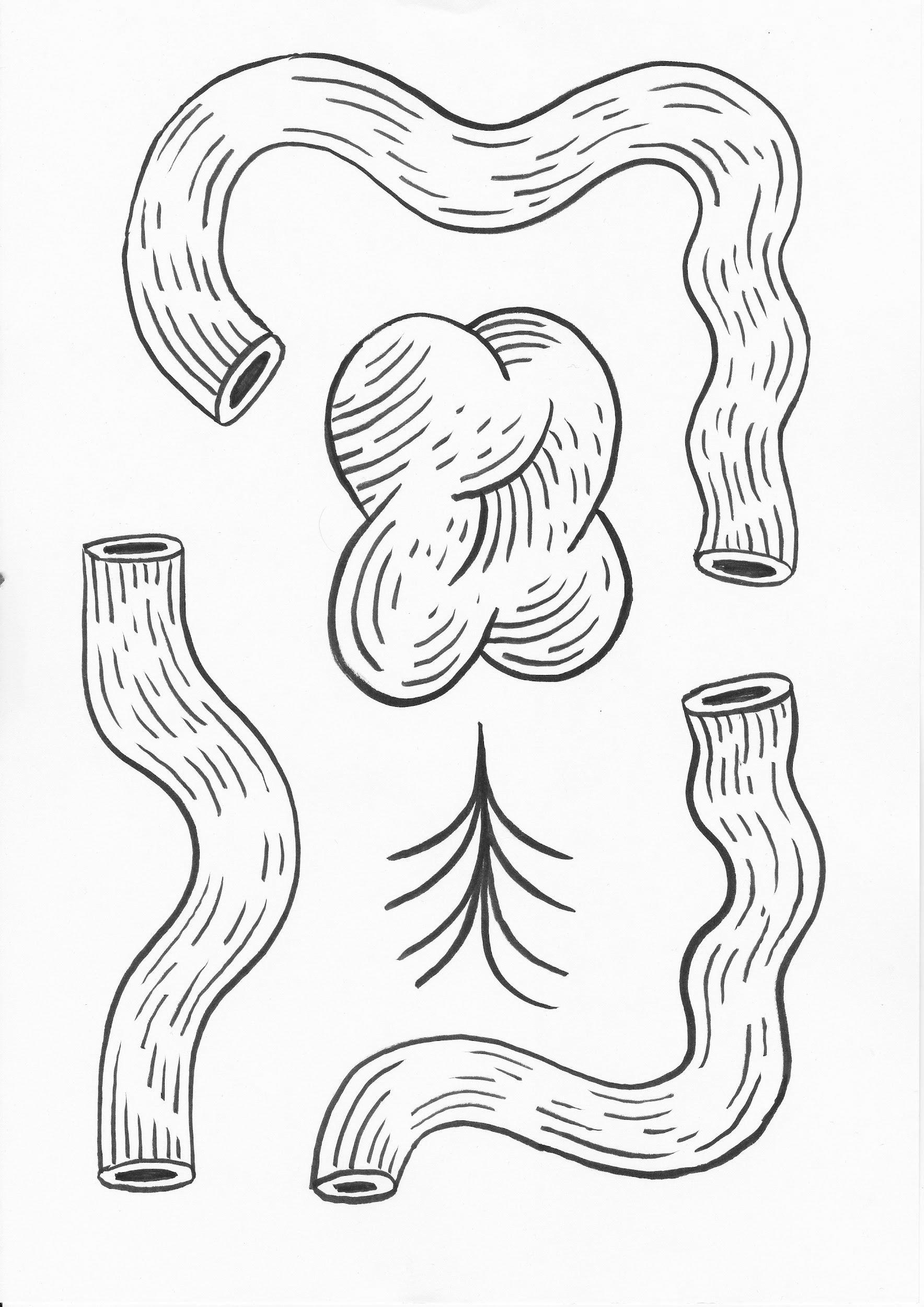
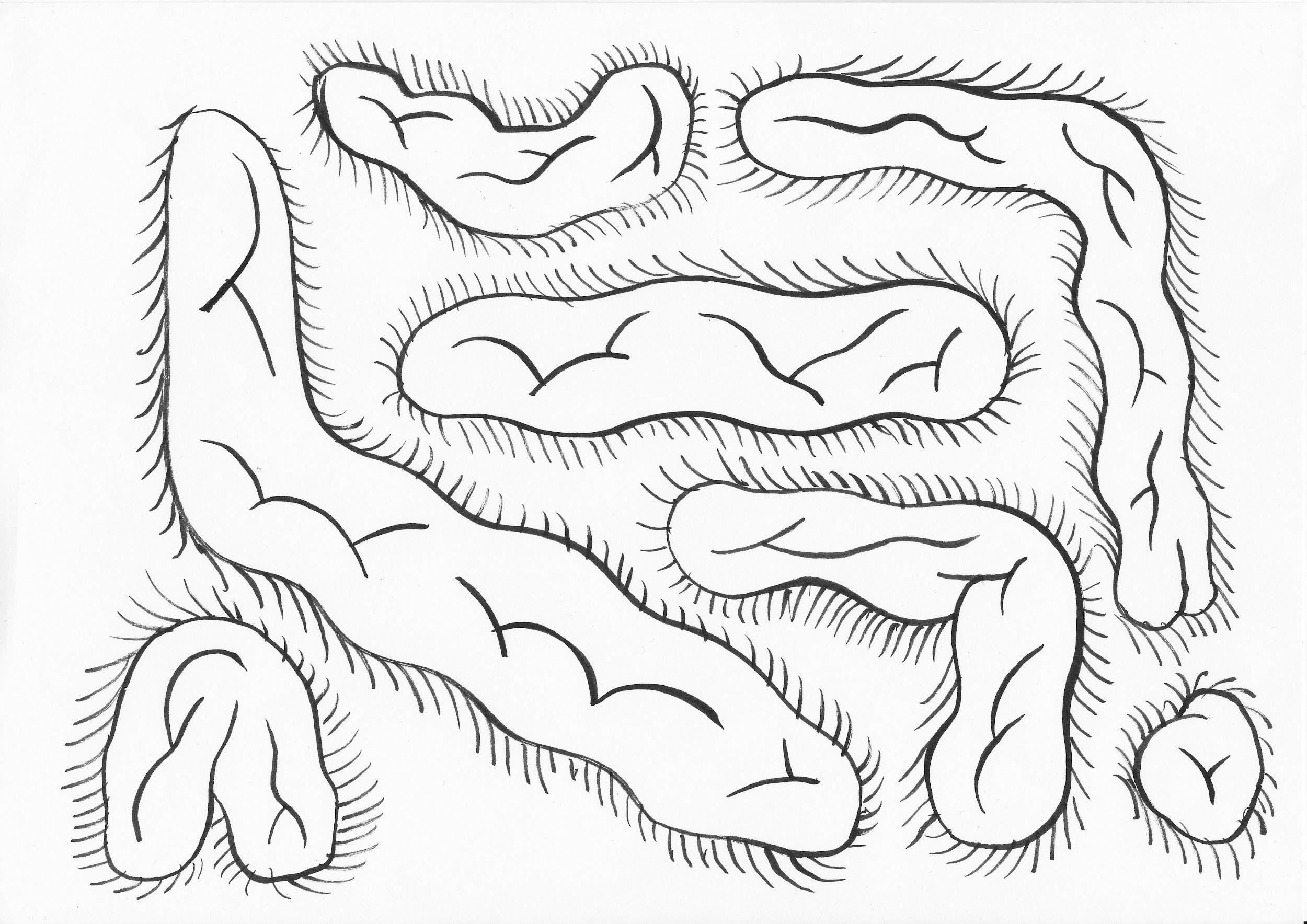
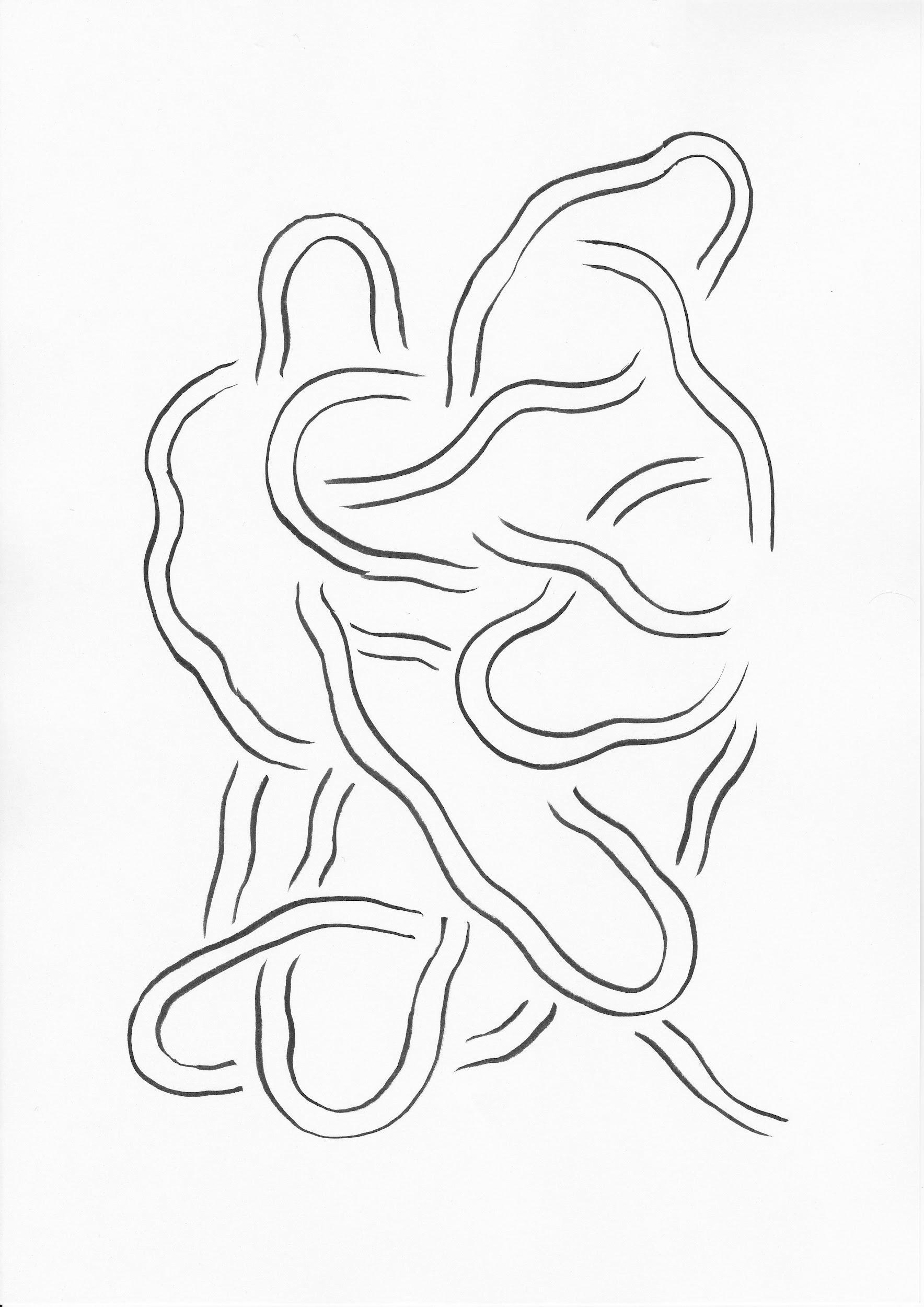
Can we think by drawing?
Coco Moya
(2020- ongoing)
Ink on paper
Size A4
There's a difference between what you find aesthetically pleasing and what you enjoy doing. They're distinct things. In my life, I think I've always had this inner conflict that has led to so much frustration and a sense of failure, or of never reaching my goals.
But purpose is perhaps something else entirely. Surrendering to what comes naturally, letting it flow like a waterfall. It's not an exercise in building or constructing, but in levitation: surrender, channeling, transparency, the feeling of having already arrived, without having to pursue anything but oneself (Diana hunting herself embodied in a deer).
To be what one is, says Nietzsche. That, which seems so easy, becomes entangled when we approach it from the perspective of what interests us or what sparks our aesthetic curiosity. This yardstick—the pleasurable sensation of doing something—should be, I believe, the only guide, although I find it difficult to accept what emerges from it without judgment.
We must also recognize that we are not only what we are, but also the tension between what we are and what we want to be.
I believe the artist's task is to invent a kind of memory. To imagine a kind of archive. A strange category that must find another way to preserve itself. New containers for information yet to come.